In the Chair avec Jeff Davis
Conférenciers
 Zehra Sheerazi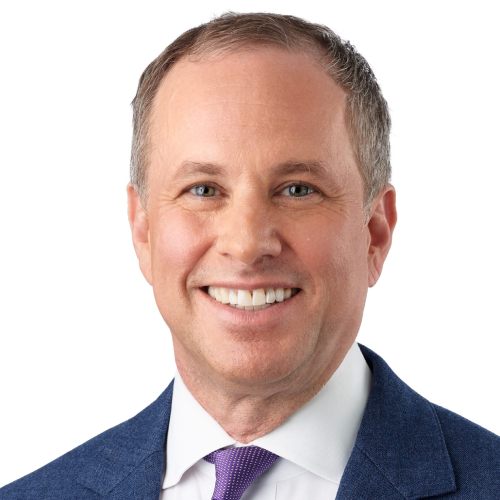
Jeff Davis
Dans cette série de balados, Zehra Sheerazi, associée chez Torys, s’entretient avec des chefs de file du milieu des affaires canadien pour discuter de leur parcours vers le succès, des enseignements tirés des défis et des occasions qui ont jalonné leur trajectoire, ainsi que des leçons apprises en cours de route. Visitez notre page d’accueil de In the Chair pour découvrir davantage de contenu et de nouveaux épisodes.
En 2019, Jeff Davis, chef des affaires juridiques et des affaires générales du Régime de retraite des enseignantes et des enseignants de l’Ontario, s’est vu décerner le titre de « conseiller général canadien de l’année ». Lorsqu’il s’est levé pour prononcer son discours de remerciement, il a surpris tout le monde en ne parlant pas de ses réussites professionnelles, mais des difficultés liées à la santé mentale auxquelles sont confrontés les professionnels du droit. Même si ce discours a pu surprendre certaines personnes présentes dans la salle, celles qui ont travaillé avec Jeff savent qu’il accorde une grande importance à la vulnérabilité, une caractéristique qui a marqué sa carrière et son style de direction.
Dans cet épisode, Jeff explique en détail pourquoi il est important de promouvoir la santé mentale au travail et donne son point de vue sur la manière dont la mise en place d’une culture de sécurité psychologique contribue à la réussite tant de l’entreprise que des individus.
Jeff Davis (00:00:07)
A lot of my career, I've been told that I'm different or I'm not quite a lawyer, I don't sound like a lawyer. I have felt a degree of being different or an outsider. I didn't want to be that person who was silencing himself. I thought to myself, “If I win this award, I don't want it to be, like, this sanitized, distorted version of who I am. I have the space to be myself, use my creative thinking, and work with an incredibly talented group of people.” I would take chances and risks, and I learn from taking those. They often led me to, like, kind of the biggest things in my life.
[Music]
Zehra Sheerazi (00:41:52)
Today, I'm pleased to sit down with Jeff Davis. Jeff is an award-winning executive serving as Chief Legal and Corporate Affairs Officer for Ontario Teachers’ Pension Plan. Jeff oversees board governance, legal compliance, tax and plan policy, and crisis management.
I was just saying to Jeff when we first sat down to put his bio together, it was over a page and it was not easy to try to make this compact. So, you've done a lot, and we're really grateful that you're sitting with us today.
With over 20 years of experience at Teachers’ alone, Jeff specializes in international expansion and managing the complex risks that come with moving billions of dollars across different borders. It's an impressive track record that is further supported by Jeff's unique reputation for a modern leadership style with a “people first” approach.
His dedication to championing mental health and diversity very openly while effectively managing the expectations of running a top pension plan portfolio is both ambitious and highly commendable.
Thank you so much for sitting with us today. It is a privilege to have you here.
Jeff Davis (01:46:12)
Thank you for inviting me. I'm really happy to be here.
Zehra Sheerazi (01:48:34)
Jeff is not a stranger to our studio here at Torys. You've come here and have recorded a number of podcasts with us. You've spoken to our team here. And the last one, I think you did—around in this space, around mental health—was Mental Health in the Legal Profession. It can be found on both the IBA and the Torys website.
It's also worth noting that Jeff is a Torys alum. You were an associate here back in the… 90s?
Jeff Davis (02:13:35)
Yeah.
Zehra Sheerazi (02:13:54)
Yeah. And so maybe we start there, Jeff. It's always nice to understand somebody's journey from their perspective. You've been in an organization for a long time, which is not common anymore. Take us through your journey. You came to Torys, did you think you were going to be here for a long time? Was private practice always in the cards? What, what prompted the move?
Jeff Davis (02:32:34)
If I go way back, like, I went into law and went to law school because I had a bunch of friends when I was undergrad who were getting jobs and I didn't know what to do. And I really liked English Lit, and I liked words, and so I kind of went into law because I thought words—it was close to, kind of, law and, and I went to law school. And then I, I came to Torys—I summered somewhere else for a short summer and then I came to Torys as an articling student, worked as an associate for about six years.
It was great. I felt like I had incredible mentors, teachers that I got to work with, folks like Sharon Geraghty, Peter Jewett, Jim Turner, Linda Plumpton, Sheila Block. They helped me, really, introduce a kind of standard of, like, hard work, discipline, high standards, which I probably didn't have as much before I came here.
Zehra Sheerazi (03:25:57)
We didn't pay Jeff to say any of these things.
[Laughter]
Jeff Davis (0:28:16)
No, it's really, it's really true. I think that, like, I can think, like, Sharon really made me work really hard and I think I benefited from it. It kind of set my work ethic, I think, at Torys.
And then I moved in-house because I wanted to do something different. That was about my fifth or sixth year at Torys, and Torys were really accommodating of that. I worked—for a brief stint—at a small portfolio company owned by Onex and Marsh MacLennan and Warburg, and then I joined Teachers in 2004. And so I've been there for, coming up in May, to 22 years.
Zehra Sheerazi (04:00:33)
Wow.
Jeff Davis (04:01:07)
Yeah. I was drawn to Teachers because I wanted to do M&A, but I wanted to do it at a place that felt like it had some type of social purpose associated with it, and that opportunity came up, and it was great.
Zehra Sheerazi (04:14:27)
How big was the legal team when you joined?
Jeff Davis (04:16:15)
It was me and another guy, really. So there was, there was a general counsel who kind of left; another Torys alum, Mike Padfield and I, did the investment side. So, both of us did that stuff. And when I started, we were starting to do controlled transactions and things like that. So, it was a, it was like, really doing M&A with external counsel from all over the world on their deals.
Zehra Sheerazi (04:36:50)
And now your team is over 80 across the world.
Jeff Davis (04:40:55)
Yes.
Zehra Sheerazi (04:41:43)
So, so talk to us about that. You are based out of—between New York and Toronto.
Jeff Davis (04:46:01)
Yes.
Zehra Sheerazi (04:46:11)
So you're constantly traveling between those two places. But you have teams in London.
Jeff Davis (04:50:28)
And Singapore. Yes.
Zehra Sheerazi (04:51:56)
Singapore, okay. So how often are you on the road trying to get to your teams, see people... What does that look like for you?
Jeff Davis (04:58:44)
So, I try to get to our, our offices at least annually, and some of them come to Toronto or we meet in different places: like we're all meeting this week in New York. I'm not the boss of 80, 85 people. I have a small senior leadership team who then manage those people. So, like, it's not like I’m the only leader, there's a lot of great leaders in my team. I try to spend at least a few times in London, try to get out to Asia at least once a year. I was just at our Mumbai office a couple of weeks ago.
There is a degree of travel that's associated with work, and also, I'm in New York, really that's for personal reasons, that I fell in love with an American and so I went down there to live. And Teachers’ was pretty accommodating of that. So, I come back to Toronto a fair bit.
Zehra Sheerazi (05:44:15)
Teachers’ now, as of June 30th, 2025, is the last stat we had, manages almost $270 billion in assets. It spans 50 countries in terms of investments and asset classes, public-private infrastructure, real estate venture. You, for such a large organization, have been highly regarded, Jeff, for your ability to develop your team to deal with really complex transactions; being in the pension space where the regulatory landscape is constantly changing; supporting really complex governance frameworks on how to think about these things, all while keeping a, you know, a pensioner perspective in mind.
You talked about the fact that going to a pension plan was important to you. Having a social purpose and a cause was important. What keeps you motivated? You've been in an organization for 22 years.
Jeff Davis (06:37:24)
Yes.
Zehra Sheerazi (06:37:40)
It’s changed. It's evolved. Your role has evolved. What are the things that keep you grounded and engaged at Teachers’?
Jeff Davis (06:44:35)
Sure. And like, it's a, it's a great question and I'm not the person with the longest attention span.
[Laughter]
So like I, if you asked me this, how long I would be at Teachers’, I would have been, like, “Five years.” There's no world—like, 22? I even, like, it's—I kind of choke on it when I hear those, that number come out of my mouth.
But if I look over my trajectory there, I've had a lot of really different experiences. And those experiences, like, foundationally shifted every four or five years. Like, at first I was doing deals and I loved that. And then I got on some more, like, it was more kind of, like, in the infrastructure and private equity space. Then we started doing different types of transactions.
Then I started, started leadership when Melissa Kennedy joined as our general counsel, and she asked me to lead the investment counsel team. I'd say every four or five years there's been, like, big, kind of, change. Even more recently, the tax department became part of the corporate affairs group. And so, starting to work really closely with Hersh and the—managing that team and that's different.
So, there's that piece and then there's the environment that we're in, and it's super challenging. And I think that it's the complexity of trying to manage through that environment at an organization that somehow continues to embrace different ways of approaching problems.
Probably one of the biggest things is, I'd say, a lot of my career, I've been told that I'm different or I'm not quite a lawyer, I don't sound like a lawyer, but I've had bosses, including my current boss, who always would say things like, you know, “You think very differently, and with ideas that are kind of different from what the rest of the team is, and please keep doing that.” So, I think as long as someone's continuing to say that, that motivates me a lot—
Zehra Sheerazi (08:24:15)
Here, a place where you want to be, yeah.
Jeff Davis (08:24:29)
—it kind of gives me the space to, kind of, come up with these outside concepts that half the time fall flat because they like, maybe, like—
Zehra Sheerazi (08:31:19)
But someone allows you to entertain them, right?
Jeff Davis (08:33:14)
Yeah. But then sometimes they're like, “Oh wait, what was that?” And so, I feel like I have the space to be myself, use my creative thinking, and work with an incredibly strong, talented group of people that tend to have a degree of, like, thoughtfulness and kindness in their nature. I think that's what drew them to the organization.
Zehra Sheerazi (08:51:35)
And where do you think that creative ability comes from, for you? Right? Like, most lawyers tend to be a little bit more in the box. We're risk-averse. We like having certainty around things. Like, was it something you did as a child growing up?
[Laughter]
Like, where is this fostered from this, this outside-the-box thinking?
Jeff Davis (09:12:45)
It's hard to—I don't know exactly. I know this: risks that I've taken in my life and in my career have tended to be the kind of basis back to, like, success. So taking risks where I could fail or something that could go wrong, I learned at a certain point that was the right move for me. That was the right approach for me: that where I wouldn't take them, where I would be on a telephone call and have a thought, but I wouldn't say it—
Zehra Sheerazi (09:37:01)
Yeah.
Jeff Davis (09:37:13)
—and then I hear someone else say it 20 or 10 minutes later—
Zehra Sheerazi (09:39:51)
Like, “Oh, I had that thought. Why didn't I just say it?”
Jeff Davis (09:41:41)
—yeah. I started feeling as though I didn't want to be that person who was silencing himself. So, I would take chances and risks. And I learned from taking those, that they led me to new opportunities. Sometimes they led me to, like, failure, but I learned from that. But they often led me to, like, kind of the biggest things in my life, like, including the role I'm in, the woman I'm married to—
Zehra Sheerazi (10:02:40)
So yeah, talk to us about one of those. Like, in, in hindsight, what do you think one risk you took or chance you took where you weren't sure of the outcome, but you made a decision because you thought that was the right one in the moment with the information that you had and it turned out great. And then talk to us about one where maybe it didn't turn out so great and you learned something from it.
Jeff Davis (10:23:05)
Sure. So the one that turned out great, I mean, a good example—so, this is at a time, it's 2013, I think, and my boss, Melissa Kennedy, who made an incredibly psychologically safe environment for the legal department at Teachers’, she announced that she was leaving and, and she said “You should go for this job.” And I was like, “Okay, I think that someone else has to choose that.”
[Laughter]
And I said that I was interested and I went through the interviewing for the role, and it was a long process, and I knew they were interviewing other people externally and all that. So that came with some degree of stress. But at the very end, I remember getting interviewed by the CEO at the time and he asked me this question, and it had to do with my wife—who's now my wife, Darien—he said, “So one thing we haven't talked about is like, who is this woman in New York that you're seeing? What's that about?”
Zehra Sheerazi (11:12:17)
Not that that's part of the interview.
[Laughter]
Jeff Davis (11:14:04)
And—right? Yeah, he probably won't appreciate me sharing this. Darien and I hadn't been together for very long, and I, and I said something like, “It's new, but I'm in love with her. And she has two kids, so they're never moving to Toronto. So, I come with that problem.” And why do I think that was a risk? I think there was a lot—there's some people that would say like, “Okay, well, you're bringing a complexity to this role that I'm not willing to handle or take,” but I think being able to draw those lines in that moment allowed me to start the relationship with my new boss in a way that also allowed me to kind of figure out a way that I could be with my family as much as I could, and that we'd have to figure out a way, a pattern that would work.
So that was a risk that I think now, 12 years later, I've had an incredible time, like, living in New York along with Darien and Grace and Tessa, having that family life that I thought I might not get. Coming still—not having to leave Teachers’, being able to be grounded in Canada and travel here, like all of that stuff, I think was connected to a risk that I took that I might have otherwise—you know, might have taken a different choice.
Zehra Sheerazi (12:15:22)
And we talk about that a lot, is, being able to sustain these careers that are really high intensity and pressure. A lot of the times the advice you get is, “Make sure you understand what your values and priorities are,” and that you don't stray from them, and that you're confident in being able to articulate those to the, to the people that matter.
And that's what you did, which is not easy when you're up for a GC role of a, one of Canada's largest pension funds.
Jeff Davis (12:39:55)
Yeah.
Zehra Sheerazi (12:40:21)
Well done on that.
Jeff Davis (12:41:28)
Thank you.
Zehra Sheerazi (12:41:50)
But I imagine for, you know, at least every one of those, you've done something where it's not gone as gracefully or it's been harder to bounce back from. And we don't talk about those as much, but I know you do—
Jeff Davis (12:53:42)
Yeah.
Zehra Sheerazi (12:54:15)
—with your vulnerable leadership style. So, is there an example where you can think of one where you, you were honest and open and maybe it didn't go so well?
Jeff Davis (13:02:36)
Yeah, I remember—as an executive team we meet quite frequently, but we were having this setup of it—probably it was an offsite, an executive team offsite, and I was being asked to give a presentation, and the presentation was going to be about corporate affairs, the division that I run, and articulate its value and what it does and what we're doing, over the next, kind of, two to three years.
Rather than take a more conventional approach to that, I decided to go really outside the box and tried to give my executive team a real overview of some of the readings that we did in our, in our division, and, like, books, like, by Brené Brown and by Simon Sinek and Dan Harris and, like, I literally had these books, like, on a PowerPoint projector, like, against a timeline, it's, like, “First we started on vulnerability here,” and, and it has nothing to do with what they were asking. It had a lot to do with what I was passionate about and, like, cared about it. And I think it did have some context, like, we did talk about these books, like, also, Amy Edmonson's on fearful—The Fearless Organization, but like, I lost everybody.
[Laughter]
Like, in the meeting, like, literally everybody. I think our CFO at the time, he was like, “This is great.” And I—
Zehra Sheerazi (14:15:51)
“What do I do with this?”
[Laughter]
Jeff Davis (14:17:20)
Yeah, and, like, I remember coming back to my office and Joe, our CEO said, like, “I think I need to give you some feedback, Jeff.” But that was something that I'd say was well-intentioned, but, like, really, I didn't think about the audience. Yeah.
Zehra Sheerazi (14:30:17)
Right. Okay. Well, you recovered. You took something away from that—
Jeff Davis (14:34:07)
Yeah, I did.
Zehra Sheerazi (14:34:36)
And you learned from it.
Jeff Davis (14:35:28)
Yeah.
Zehra Sheerazi (14:35:50)
I want to go back to 2019. I think it was a big part of this vulnerable leadership that you have talked about so openly. You were awarded Counsel of the Year at the Canadian General Counsel Awards. That in and of itself is a huge accomplishment and a major defining, I think, piece of success in your career.
But your speech, I think, became the bigger piece of that. And I want to come back to that because it's been, it's been celebrated and we've talked about it a lot, I know, at Torys and other firms, when I've talked to friends about this.
You used that platform that you had in that moment to share some pretty intimate reflections on both the, the good and the more challenging struggles that come with a career at the level that you're at. And that took real courage that we don't often see so publicly. So first of all, thank you for that.
But what made you decide to be so open in that moment? Had you thought about it before you got there? Like, did you know that this was going to be the moment that if, if this went through, I was going to talk about this raw topic and put it out there?
Jeff Davis (15:41:22)
I did, but I didn't know—I didn't expect what would happen as a result of it. So what happens is you get this notice ahead of time—I think it was like in January and those awards were in June—of, like, that you've been nominated for this thing. And then, you don't know if you win until you're there.
Zehra Sheerazi (15:57:45)
Alright.
Jeff Davis (15:58:28)
Like, it's Academy Awards-style. And so they say, “You got to write a speech.” And so, I really toiled over it because I have felt a degree of being different or an outsider for a lot of reasons. I thought to myself, “If I win this award, I don't want it to be, like, this sanitized, distorted version of, you know, who I am, this perfected version of myself getting up there and saying, like, ‘I'm a big deal, and I won this thing.’” I didn't want that. I wanted it to be honest, and that I could be proud of what I said, and also, kind of, give a speech that the second-year associate in me would be like, like, proud of.
Zehra Sheerazi (16:35:31)
I can—yes, or you can relate. Or there's something people could take away that made you relatable.
Jeff Davis (16:41:42)
Yeah. And so, I really wanted it to kind of, like, acknowledge the struggles that our profession had at that one—you know, my dad had passed away in October 2018. I think that we all struggle with different, kind of, issues in our profession, two times more than most of the general population: things around anxiety, depression, like, all that—substance abuse—and I think that I wanted to, kind of, speak on that matter, or speak to that matter.
I also had people in the room. My friends bought a table, like, actually showed up. Not lawyers, like, actual friends—
Zehra Sheerazi (17:15:09)
Just who wanted to be there to support you. You’re like, “I got to give them something.”
Jeff Davis (17:18:07)
—and I was, I was like, you know what, I was more—those are the people who kind of really stood by me during very hard times. I wanted to say thank you to them. And so those are some of the reasons, and I, I didn't know that it would garner the reaction it did. But I really still believe in leaders being open and vulnerable is a good way to kind of, like, set a model of what courage looks like and the kind of courage that we need in today's society. Still.
Zehra Sheerazi (17:43:39)
I agree, and you've continued that at Teachers’, so I think it was last year, or maybe the year before, the entire Teachers’ legal team came in—or a big chunk of them came in—and we talked to Carol Dagher about her journey. Right?
Jeff Davis (17:55:45)
Yeah.
Zehra Sheerazi (17:56:02)
And you don't often get those kind of conversations at large organizations like this. But not only are you putting yourself out there as being a vulnerable leader, you're bringing that to work.
You're allowing the people that you work with to experience the same to the extent that they want to. And it was really nice because a couple of your colleagues stood up at the front of the room and talked about their stories, and things that were hard for them, and there were some tears in that room. Right? And emotions that you don't typically see, you know, on Bay Street very often.
Jeff Davis (18:28:07)
I think sometimes we dehumanize ourselves in the workplace too much, and that hasn't been my approach. My approach is, you know, I try to kind of bring out the best in myself and in other people. And I think in order to do that, you got to let them be themselves. And, and knowing that people are different and flawed in many ways. And that’s okay. It’s probably where their good qualities come from, in a sense.
And so, I don’t use the word “vulnerable” as much as I used to because, well, I don’t want to get sued by Brené Brown—
[Laughter]
—my daughters tease me about it sometimes. Like they still will like be joking, like, “Oh, are you feeling vulnerable, Jeff?”
I also think that some people really struggle with the word, but to me it's still the same thing. It's like, if you want to be innovative, if you want to, if you want to be courageous, if you want to kind of have resilience, it all kind of relates to allowing yourself to live in uncertainty and manage through that, rather than try to kind of pretend that everything is certain and under control.
Zehra Sheerazi (19:26:00)
Are there things you do at Teachers’ in your role to connect with your team that allows you to develop these relationships, where people would feel comfortable taking risks and being open? Like, are there any things that other leaders could take away from how you operate and develop relationships?
Jeff Davis (19:41:40)
Sure. Well, other leaders have their own style. But one thing that—I mean, the notion of psychological safety, which has been studied a lot, has been kind of key to success for a lot of organizations. That's the thing that—you name that with a team, if you're a leader, they'll want to take advantage of it. Because what it means is, it doesn't mean, like, you're going to make people feel comfortable, it means that every idea is okay. You can challenge your boss, their thinking. You don't have to, kind of, like, because they said something it goes.
And I live that reality a lot with my team. So, if I say, “Well, this is what I think about this,” someone else will, like, “Well, I disagree with that.” And they'll do that with a broad audience in the room. They'll do that in front of my boss. Like, I feel it's a safe enough environment that they're willing to challenge me and we're okay challenging one another and sharing our different ideas.
That, at the end, leads us to a better place. I think sometimes we get a little too stuck in this idea that because I'm the boss or on the leader, I should have the right idea. I must have all the answers. But the thing is, like, that's not really how creativity works.
Zehra Sheerazi (20:48:12)
Or how teams work, right?
Jeff Davis (20:49:43)
Yeah.
Zehra Sheerazi (20:50:22)
Yeah. Okay. So, you had mentioned at the beginning when we were chatting, we talked about how the investing landscape is changing with everything going on in the world, global factors. How do you think—or how do you think about in your role—investing and advising a global investor when the landscape is so uncertain and it's so challenging?
Jeff Davis (21:12:52)
Yeah. This is the way I think about it: not to push away the concept of uncertainty. I think what we want to do if we want to de-risk things and get away from the notion of things being uncertain, so, we try to build these bridges in our mind, or in how we communicate, that I've got this figured out. “I know how AI is going to change everything, so don't worry, this is what it's going to look like.” So, we build these kind of narratives to help us manage that uncertainty.
I, I don't do that. I don't—it's not like I'm saying like, “Hey, it's all chaos. Let's go get wild with that.” But I think it's important to bring to the conversation the fact that things are uncertain and that we need to build conviction, and we need to figure out and remember that we're going to run into, like, impasses along the way that are going to cause us to question our conviction and the path that we've chosen.
It's okay to change path, but also make sure that you're not just doing it at the moment: that you kind of think back why you made this decision, what was the process that got you to that point? And I think it's important to not try to spend too much time saying, “Oh, I can predict what the outcome is going to be,” because I really—if anything I've learned in the last, I don't know, six or seven years is, like, so many of us are trying to predict what's going to happen. And I don't think that that really is possible.
Zehra Sheerazi (22:24:59)
Things are changing too quickly, right? I mean, I was listening to a podcast the other day that said, you know, pre-1950, maybe every ten years, 15 years, there would be some sort of large event or change that would impact the human race. Now it's sort of, you know, every six to eight months. There's, you know, change in AI, more robotics, global pandemic. It's—the, the shocks to the system are increasing and the frequency between them is, is shortening.
Jeff Davis (22:55:38)
So for me, I agree 100% with what you're saying. And so, for me what you need to do with that is recognize you have people who are in an organization who are experiencing that, and that's going to lead to a lot of outcomes, including, kind of, uncertainty and anxiety. And so, helping teams, kind of work on that and expect that and kind of say, “Well, what do we do when we can—"
Zehra Sheerazi (23:16:15)
Factor that in.
Jeff Davis (23:16:49)
“What do we do when we get into this scenario of uncertainty or a decision—if the bad decision happens, does it take us down? Do we then make it into a much bigger narrative and kind of really undermine ourselves?” Or we go like, “Oh, wait, okay, so that wasn't good, but it doesn't destroy us.” How do we pivot and how do we move forward to, kind of, getting closer to the objective we wanted or the thing that we're trying to achieve?
And so, try to make sure that you're building resilience in your teams to kind of manage through those environments.
Zehra Sheerazi (23:45:26)
And you spoke about AI. Tell us your view on AI. What are you guys doing at Teachers’? How are you implementing it?
Jeff Davis (23:53:08)
Sure. So we're—I think we're, like, with a lot of people, I'd say 2025 was a year where we had a lot of tools. We put out a lot of experimentation, a lot of use cases, and now at Teachers’, we're really trying to get more, kind of, building a strategy and a vision for how we're going to use this. Not just about experimentation and getting people familiar with the tools, but like, what's the ROI on some of the things that we can use? What's the longer-term vision on how this is going to change for me, like my division, this organization, how we deliver support?
And to me, again, that's one that can scare some people. For me, I'm a little more of a technology-first kind of—I like new technology, I think it's important to, kind of, embrace this and start thinking forward on how it should shape an organization that I, you know—my corporate affairs division. And I think that others in my organization are doing similar things, like, thinking, “How does this involve—how does this change how we invest? The processes behind it? Where can we embed AI into our workflows or processes?” So I think it's exciting.
I also think that, not to take it—I think there's a real risk that people lose the sense of critical thinking: that they take the outputs of it and just kind of go forward along and send it. I think making sure that we own the space of human judgment, which involves, like, all sorts of stuff like empathy and the ability to kind of, like, zoom out and see, well—
Zehra Sheerazi (25:25:44)
How does this fit into our goals and our objectives? Right? Because often that context is not something AI has that you bring as a human.
Jeff Davis (25:34:31)
Yeah, but I do love it. I took a course in December from Harvard's—Harvard Business School online called AI for Leaders. It was great. I really I loved the program and I, I intend to do more, and I use it a lot personally.
Zehra Sheerazi (25:46:57)
You talked about a lot of books that you read. You’re technology-forward. What are your go to, sort of, life resources on staying up to speed in what's happening in the world, maybe in the industry that you work in. How do you consume news and information?
Jeff Davis (26:02:53)
So, I have two phones, in some ways I consume—
Zehra Sheerazi (26:07:15)
They’re both sitting here right on the desk, yes.
Jeff Davis (26:08:12)
I read, like, newspapers. I read the Financial—
Zehra Sheerazi (26:11:50)
Physical newspapers?
Jeff Davis (26:12:43)
Yeah, I do! I still read—
Zehra Sheerazi (26:13:22)
That is so nice actually.
Jeff Davis (26:15:00)
Yeah, on Saturdays and Sundays I read the Financial Times and I'll read the Wall Street Journal and the New York Times. I will, if I can get through them—
Zehra Sheerazi (26:23:14)
Okay, i.e., like, you have enough time to get through them or—
Jeff Davis (26:26:52)
Yeah. So, my to do list, which—I have one for most days—will always on Saturday, start with news. Like, I’ll make sure that I try to spend some time reading news, staying up to speed and that will be about, like, stuff like that. I also get The Economist and try to read that, and then also online resources and podcasts.
On top of that, I try to still continue to have some type of connection to, like, out-there thinkers. I feel this is going to be a bit of a fail because, like, most recently, the one that I started reading again was I went back to Brené Brown's new book called Strong Ground. I've kind of not been listening to her podcast for a while, because I feel like I totally understood it and got a little bit too involved in it, but now this, this book that I'm about halfway through it now, I think is actually pretty good for the time we're in. Other news—
Zehra Sheerazi (27:13:13)
Favourite podcast?
Jeff Davis (27:14:25)
Favourite podcast? When I—
Zehra Sheerazi (27:16:23)
Maybe one you listen to regularly?
Jeff Davis (27:18:08)
Yeah, they're often news podcasts. So like, Financial Times puts out a bunch of actually pretty good ones. I wouldn't say—I mean, honestly, my favorite podcast that I listen to the most is a podcast called Beats in Space by Tim Sweeney. It's a music podcast. There you go, Tim Sweeney. There's a shoutout for you, but more—
Zehra Sheerazi (27:36:07)
And Jeff has interests other than just the news and…
Jeff Davis (27:38:55)
Yeah, yeah. And then, I don't know, whatever comes up on my feed on Instagram, which is usually cats.
Zehra Sheerazi (27:44:33)
Jeff does have three cats.
Jeff, you've talked about a busy career, your leadership style. Can you talk to us about... We use the word work-life balance, but I don't personally—on any one day there's no sense of balance. But we talked before this podcast started about your two girls. They’re away. You went to go visit them. You seem to find a way to keep very connected with your family.
You are—from the people on your team that I chat with, you are a very involved leader. You are present. It seems that would be really hard to do and somehow you manage to do it. And I'm, you know, from the outside that's what it looks like, I'm sure it's not as easy to actually do it. How does it actually work for you?
Jeff Davis (28:29:06)
Sure. Happy to talk about it. You know, the way scarcity sometimes forces you to kind of, like, really think about how you're going to use your time well? I think that's probably something that I've learned and got better at. And so, knowing that I was not going to be at home with my two young girls and Darien all the time, made me very thoughtful about the time there. And knowing that I wouldn't be here in Toronto all the time with my team made me very thoughtful about how I would use my time here.
And so, at first, I was really kind of trying to make sure that, like, I can look at the calendar and see what I'm doing, and spend nights when I was here, I'd spend one night, like, with my mom, one night with friends. One night was a work night. When I'm in New York, I'd be very intentional about what I was doing in the evenings there.
I'd say, though, that at the beginning got a little bit too much because I was booking everything constantly, and it was exhausting.
Zehra Sheerazi (29:17:44)
A lot of planning has to go into that. Being so intentional.
Jeff Davis (29:20:44)
So that's when I kind of, like, you say, work-life balance, I kind of got to this place of, like, thinking, “Okay, what is it that I really, what do I need?” So, some foundational stuff: I need to take care of my health and my body. So I want to make sure that I find a place for, like, both mental and physical health.
And I'm making that consistent. So I'm going to do that.
Zehra Sheerazi (29:40:10)
And you've been good at that. You mentioned.
Jeff Davis (29:41:31)
Yeah, I've gotten better. Yeah.
Zehra Sheerazi (29:42:16)
It’s over a year where you've consistently been good about going to the gym or taking care of your health.
Jeff Davis (29:47:42)
Yeah. I mean—
Zehra Sheerazi (29:48:40)
It's amazing.
Jeff Davis (29:49:18)
It's funny. Like I—we create development plans at work. But I created a few years ago—
Zehra Sheerazi (29:54:08)
A personal development plan?
Jeff Davis (29:55:18)
I totally did.
[Laughter]
And like it had, like, physical stuff. So, it would be about, like, you know what weight I want to get to? What kind of strength? That kind of thing. Like, different things I was going to do.
Zehra Sheerazi (30:04:20)
And if you write it down, you're more likely to stick to it.
Jeff Davis (30:07:51)
Yeah. And then, mental health stuff in there that I was like, “Okay, I'm going to try to do, I should try to do meditation.” And I'm not really the person that you think of as doing meditation. I'm very distracted. So doing that.
I thought about the friends that I wanted to spend time with and kind of intentionally, kind of, focusing on that.
And so, I had it in my little book that I carry around and make sure I check in on that. I'd say that did help me develop habits, that I don't go and look at that thing anymore. I didn't create one for this year, actually.
Zehra Sheerazi (30:36:18)
Cause you're so on track from last year, just like—
[Laughter]
Jeff Davis (30:39:20)
But I do—I think it kind of like, it was—it's a way of setting personal priorities.
Zehra Sheerazi (30:43:58)
For sure.
Jeff Davis (30:44:24)
And, kind of, making sure you get at those, because I didn't want to become a person that felt like I compromised so much away that I was resenting my work.
I knew, it's a great job.
Zehra Sheerazi (30:54:48)
Yeah.
Jeff Davis (30:55:02)
I love the place and I love the work, but if I compromised a bunch of stuff in my personal life, I knew I'd start to resent it.
And the job's worth more than that. To have someone in the role happy. So, I tried to make sure I could find that balance and how to do that, and kind of sorting through that with your own boss, too. And like, being clear about, “This is what I'm trying to do. This is how I'm going to try to make it work. How does that work for you?”
Zehra Sheerazi (31:17:44)
And we often get so wrapped up in just going through the motions of a very busy life that we don't often sit down, or at least I don't, and think about, “Okay, who are the friends I want to spend more time with? What kind of focus do I want to have on my health?” And so, when you sit down and intentionally think about it, you have to focus and make sure that you're sort of committing to that once you write it down. And so that's, that's great.
Two more things before we wrap up, Jeff. Anything that you're currently working on, either learning, unlearning, trying to get better at? Work, un-work related?
Jeff Davis (31:49:09)
Sure. I think what I am trying to learn and get better at is, it's hard to really articulate the value of what we produce and the outputs to our organization in a quantitative context.
So, like, what I mean by that is that no one's pushing for this but, but me really. In an organization that is a financial organization or investor trying to think about like, “Okay, what do we do and how can we articulate this in the organization is better than saying, like, ‘We provide proactive strategic support to the, to the company on these things,’ and trying to think like, what's the purpose of the organization? What's it trying to achieve in this year? And what are we doing that's directly tied to that purpose?” Like so, if it's like, “We're going to try to make 7% this year,” what trade-offs and priorities are we going to do and change how we actually work—
Zehra Sheerazi (32:38:18)
To achieve that.
Jeff Davis (32:38:37)
—and what we focus on to help achieve that goal, as opposed to just being better at what we do.
Zehra Sheerazi (32:43:15)
And do you think that's more relevant in non-revenue generating roles? Like, you hear people that are support roles in organizations that are really important.
Jeff Davis (32:52:45)
Yeah.
Zehra Sheerazi (32:53:00)
But because they're not revenue-generating and there isn't an obvious tagline to the bottom of, like, “This is how much we produce, this is how much we deployed.” Supporting those groups sometimes can be a little bit more challenging.
Jeff Davis (33:04:30)
I think it definitely can be, but I think what I've learned is that if you actually set this goal of saying, “Well, let's try to achieve that. Let's contribute something, let's contribute $30 million, let's contribute $40 million. Let's figure out a way that we can actually do that—"
Zehra Sheerazi (33:20:13)
And measure it. Yeah.
Jeff Davis (33:20:25)
—and measure it and articulate it to the organization. At first, in supporting roles, there'll be a lot of people, and I'm sure people who are listening to this would say like, “That's not appropriate for a governance function.” I get that, you don't lose the governance side to your, what you do, but I think it is important to actually strive for something like that, because as a business owner, I can understand that. It’s like, I want to know if my support functions are helping me achieve my corporate objectives.
I think they're capable. They're smart people, doing this job. I'm not going to like—yes, they can be excellent lawyers or tax professionals, but I think that they might be able to kind of use that creativity and make prioritizations in how they're conducting their roles that thinks about this, yeah, this objective.
That, I'm, I'm really trying to push on. It's been a couple of years that we've been thinking this way. We're getting better at it, but it is still kind of new for me.
Zehra Sheerazi (34:13:36)
Yeah. And not easy.
Jeff Davis (34:15:43)
Yeah.
Zehra Sheerazi (34:16:04)
Yeah. Not obvious to, to take what you're asking and turn it into measurable output in a role like this.
Jeff Davis (34:22:23)
I think we've had some successes though, I really do.
Zehra Sheerazi (34:24:23)
That's amazing. Last question, Jeff. Who would you say has been the most influential figure in your life and career, or career?
Jeff Davis (34:34:15)
I don't know how much time you have, like there's... so that kind of question, I've had tons of, like, leaders that I've been around that have been so impressive. Like Claude Lamoureux, Jim Leech, Ron Mock, my boss, Jo Taylor, Melissa Kennedy. Those—to name some of them, had incredible impact on my life. From Torys too, like Sharon Geraghty plays an outsized role I’m thinking of as a mentor.
So from a career standpoint, but then I'd say influence in my life, I've got like people like my teams, like I think about Rossana or Melanie or Hersh or Sharon Chilcott. I can think of, like, Tara and Mariana. Like, team members who’ve, like, helped push me in my thinking. Anna, Diana, like, I could, I have a long list.
And then I have, like, all these people in my life who’ve made me feel safe to be myself and kind of think the way I do and take risks and fail. And those, a lot of those people are my friends. I'd say that I've been lucky and fortunate to be surrounded by a number of people that have had a great influence in my life, so to narrow it down to one person—
Zehra Sheerazi (35:40:07)
It's too hard.
Jeff Davis (35:40:21)
Too hard. But I'd say if I would like, you know, the one, listing off a bunch of those names, I probably, I probably need to see, like, Darien’s name about 100 times.
Zehra Sheerazi (35:51:01)
[Laughter]
You said it many times here. I feel like she's gotten good shout outs.
Jeff Davis (35:54:11)
Well, no, it's not that. I just think that, in that there's somebody, you know—we talked about being vulnerable as a way of being seen and being safe. And I've got a person who knows me inside and out. We were friends for a good 10 or 12 years before we started seeing each other. So, she knew me before we were together.
She is somebody who has been a support, who challenges me, still challenges me to this day in terms of my thinking, and so she's probably the greatest influence in my life. I guess that’s not a surprise to say that your spouse, but, but in this case I think—
Zehra Sheerazi (36:25:21)
Not a surprise, but everybody can't say that. So, you're lucky to be in a partnership where that works. And how fortunate are you, Jeff, to have so many people on this list.
Jeff Davis (36:34:06)
Yeah, I think that’s right.
Zehra Sheerazi (36:35:21)
You're very—Yes. Everyone doesn't get that privilege. And so, it's really nice for you to have that. And so many support systems, I imagine, with very different perspectives that have helped you at different points in your career and life.
Jeff Davis (36:46:12)
I think that's true. But I think also like here's the, about the question itself. When you think about it, when you're exposed to good, smart people in your career, which as you are, here, I think, kind of, resorting to the one person, like it’s—
Zehra Sheerazi (37:01:28)
Too hard.
Jeff Davis (37:01:40)
Yeah, it's not even to say it’s too hard, it's like, so many things influence us at different phases in our life.
So that's why I'm kind of like it's, it's really a long list of people.
Zehra Sheerazi (37:12:13)
Well, thank you for sharing the list with us. Thank you for sitting down with us. Your time is valuable and we appreciate you coming and sharing with our listeners your story.
Jeff Davis (37:21:44)
Thanks.
Si vous souhaitez discuter ces enjeux et ces questions, veuillez contacter les auteurs.
Cette publication se veut une discussion générale concernant certains développements juridiques ou de nature connexe et ne doit pas être interprétée comme étant un conseil juridique. Si vous avez besoin de conseils juridiques, c'est avec plaisir que nous discuterons les questions soulevées dans cette communication avec vous, dans le cadre de votre situation particulière.
Pour obtenir la permission de reproduire l’une de nos publications, veuillez communiquer avec Bryn Turnbull.
© Torys, 2026. Tous droits réservés.