March 19, 2026•Calculating...
Authors
 Anne Merminod
Karl Boulanger
 Sarah E. Whitmore
 Krystelle Metras
Alexandra Lawrence

Ivan Hsieh
In 2026, the Canadian class action landscape remains exceptionally active, establishing the country as a leading jurisdiction for class action development1. The subsequent review will discuss the 2025 class action statistics and identify the key trends that are shaping the area’s growth.
National overview of new filings
Figure 1: Applications for authorization or proposed class actions filed, broken down by jurisdiction
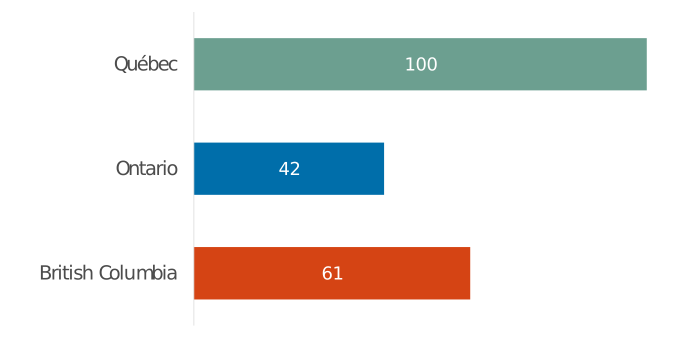
In 2025, 203 new applications for authorization (Québec) or certification (common law provinces) were filed in Canada’s leading class action jurisdictions, Québec, Ontario, and British Columbia. This represents an increase of 11% in filings in comparison to 2024:
- Québec: With 100 new applications filed (49% of the Canadian total), Québec once again led the country, reflecting the province’s low authorization threshold under its Civil procedure rules.
- British Columbia: British Columbia followed, with 61 filings (30%), and continues to attract a substantial share of the proposed class action market.
- Ontario: Ontario recorded 42 new filings (21%) and remains a key forum. However, certification has become more demanding following amendments to the Class Proceedings Act, which may have contributed to the lower number of new filings in the province.
Key trends and emerging risks in class actions
Figure 2: Applications for authorization or proposed class actions filed, broken down by area and jurisdiction
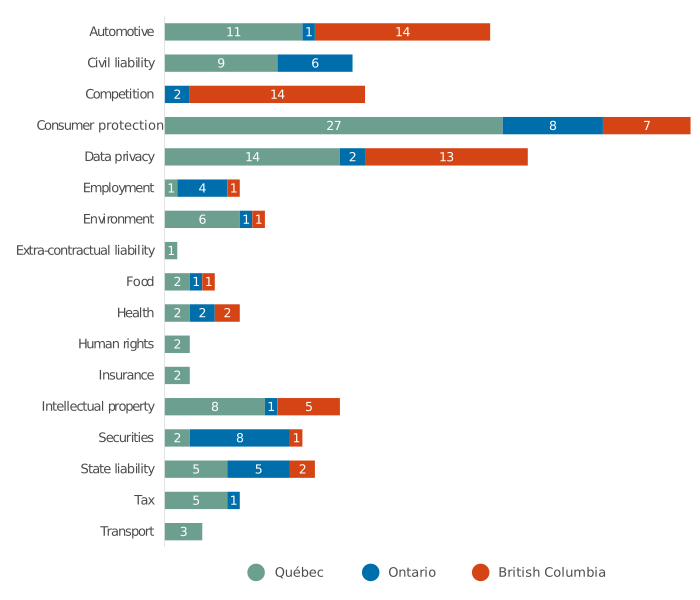
The Canadian class action landscape shifted in 2025, with data privacy filings almost tripling and AI making its impact felt on intellectual property (IP) claims. Automotive filings rose more than threefold, while both securities and state liability actions dropped markedly. Our review of the 2025 data reveals these and other notable trends that help to decipher the ongoing evolution of class actions in Canada.
Consumer protection filings in 2025
Consumer protection remained the leading driver of class action filings in 2025, with 64% of activity taking place in Québec. Alongside traditional consumer protection claims, such as alleged misrepresentation regarding goods and services, and product-liability claims, the 2025 filings reflect emerging trends:
- Drip pricing: “Drip pricing”, a practice where additional fees are disclosed only at the end of the purchasing process, was a major trend in consumer protection-related filings. The rise of e-commerce has created new risks for businesses operating online, and courts are increasingly attentive to the manner in which digital interfaces present pricing information, how fees are characterized, and whether the consumer’s path to purchase is confusing or misleading.
- “Maple-washing”: A class action was filed for alleged “maple-washing”, a term used to describe the illegal use of “made in Canada” branding to promote imported food products. This early trend reflects current trade tensions among various countries. Given heightened consumer sensitivity to country‑of‑origin claims and litigation related to tariffs, these allegations may become more common in the coming years.
- Door-to-door sales: In two filings, the plaintiffs alleged that companies conspired with door-to-door sales agents to mislead consumers, particularly seniors, into entering disadvantageous agreements.
Data privacy class actions
The number of data privacy class actions continued its sharp rise in 2025, with 29 filings across the three provinces (as compared to 10 in 2024). Two main trends stand out from the 2025 data:
- Claims alleging the unlawful acquisition and collection of personal information, followed by the sharing, disclosure, or use of that information without previously obtaining mandatory consent.
- Claims alleging negligence or non-compliance with privacy obligations leading to data breaches (e.g., following a third party’s cybersecurity attack).
While privacy actions span a wide range of sectors, technology, online services and platforms, artificial intelligence (AI), and social media companies appear as frequent targets. Governmental organizations holding large volumes of personal information also remain exposed.
Intellectual property filings and the rise of AI-related claims
In 2025, 14 IP filings were recorded, 13 of which were AI-related. These numbers reveal the direct and immediate impact of AI developments on the judicial landscape and the corresponding need to adapt IP law to address its new challenges.
The dominant theme in this category centers around allegations of unauthorized use of copyright material. Notably, most claims allege an unauthorized reproduction of copyrighted works in the context of the development and training of AI language models (e.g., large language models). Several claims also allege that the data used to train the models was pirated.
Beyond copyright issues, we have also identified the early emergence of “AI washing” claims, alleging deceptive marketing tactics in the promotion of products or services by overstating the role of AI.
Further details about AI class actions are provided in our previous article, “AI class actions in Canada: new legal ground or same old claims?”.
Other notable areas of class action activity
Several additional key sectors stand out in 2025:
- Online services and platforms: A total of 38 filings targeted online services or platforms (18 in Québec, 16 in British Columbia, and four in Ontario). Many of these involved fee‑disclosure and pricing allegations (e.g., drip pricing), while others focused on data privacy.
- Automotive industry: Filings targeting the automotive sector increased markedly, rising from a total of eight in 2024 to 26 in 2025. 11 were filed in Québec and 14 in British Columbia. The majority of these claims involve allegations of defective components.
- Competition: Two filings involved allegations of price-fixing conspiracies among competitors.
- Environment: Proposed environmental class actions increased in 2025, with eight filings—twice the number recorded in 2024—reflecting the growing influence of US litigation trends on the Canadian landscape. These filings included actions targeting alleged contamination from PFAS, commonly referred to as “forever chemicals”, as well as claims concerning the undisclosed presence of microplastics in consumer products. The year also saw a proposed class action alleging “greenwashing” practices, namely the dissemination of misleading environmental marketing designed to convey a false or exaggerated environmental image. The sectors that saw the biggest declines in filings as compared to 2024 were state liability (12 in 2025, down from 23 in 2024) and securities (11 in 2025, compared to 28 in 2024).
Authorization and certification outcomes in 2025
Figure 3: Class certification and authorization decisions, broken down by jurisdiction
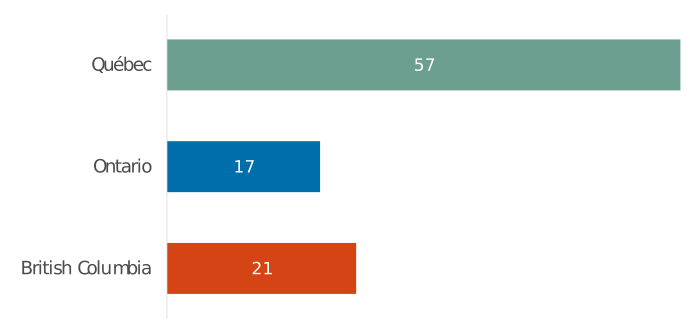
Figure 4: Total proposed class action filings, with certification/authorization granted vs. denied
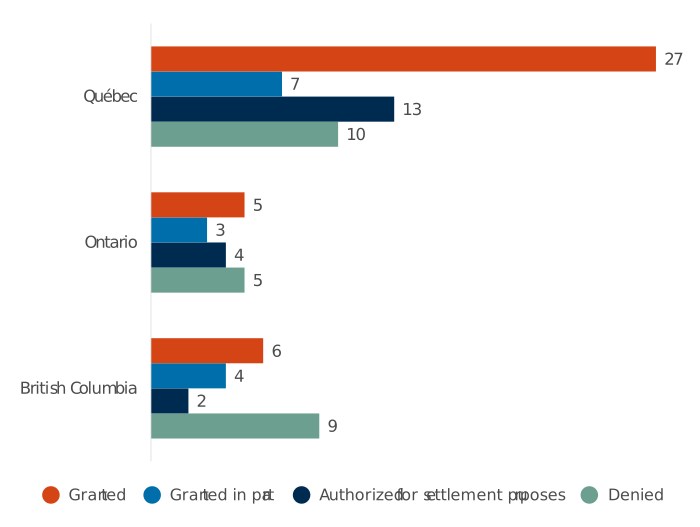
In 2025, 95 authorization or certification decisions were rendered across the three provinces. Québec courts were particularly active, with 57 decisions, far ahead of British Columbia (21) and Ontario (17).
Québec remained the most active jurisdiction in both filings and authorizations. Québec courts continue to authorize class actions at a higher rate (82%), reinforcing the province’s reputation as Canada’s most permissive entry point into class proceedings. Ontario recorded a certification rate of 71%, followed by British Columbia at 57%.
Conclusion
Looking ahead, Canada’s class action landscape remains highly active, with continued growth in filings across areas, such as data privacy, AI‑related claims, intellectual property, and digital consumer practices, particularly in Québec. The 2025 trends underscore growing litigation exposure linked to data governance, AI deployment and marketing, and the operation of digital platforms, reflecting the continued evolution of class action risk in Canada.
To discuss these issues, please contact the author(s).
This publication is a general discussion of certain legal and related developments and should not be relied upon as legal advice. If you require legal advice, we would be pleased to discuss the issues in this publication with you, in the context of your particular circumstances.
For permission to republish this or any other publication, contact Bryn Turnbull.
© 2026 by Torys LLP. All rights reserved.
Subscribe and stay informed
Stay in the know. Get the latest commentary, updates and insights for business from Torys.
Stay in the know. Get the latest commentary, updates and insights for business from Torys.
Subscribe Now