The next era of AI: Q&A with Mark Shulgan
Featuring
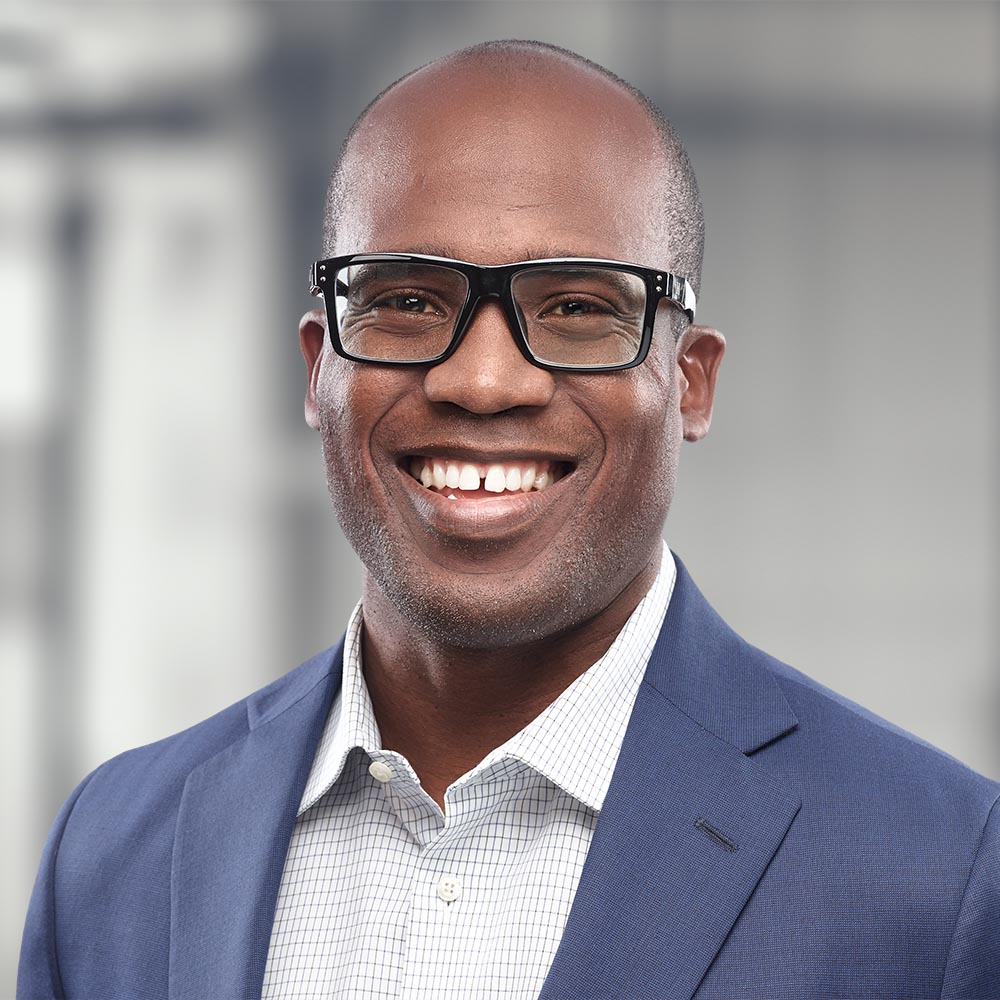 Konata T. Lake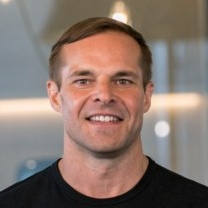
Mark Shulgan, Intrepid Growth Partners
Read commentary from our lawyers on the latest legal and industry trends within the AI sector in our article “A new era of innovation in Canada: AI”. And for more industry insights, read our Q&A with Julien Billot, CEO of Scale AI.
AI is increasingly woven into everyday life, reshaping how we work and access services. Konata Lake, head of Torys’ Emerging Companies and Venture Capital practice, and Mark Shulgan, Co-Founder and Partner of Intrepid Growth Partners, discuss how investors, founders and business leaders can cut through the current buzz to get to real value in AI.
Konata: The acceleration of AI—both in terms of its capabilities and its integration into business operations—is very unlikely to slow down. Which industries stand to benefit the most from AI and in what ways?
Mark: In this first wave of AI, services-oriented industries stand to benefit the most. Those that have rudimentary tasks that can be easily automated are the ones where the most value can be captured. Over time, AI will become a lot more pervasive and will impact all industries but, in the initial wave, those with a high hourly rate will see this compression of monotonous tasks, which will ultimately benefit the users of those technologies.
In its current iteration, AI is really good at search. You can go through reams of documents and summarize things, allowing you to cut through all the noise and get to the signal. When we work with service providers—whether on due diligence, quality of earnings with accounting firms, commercial due diligence with consultants, or legal teams—we are going through a lot of information to try to ultimately distil down to a signal. These industries will likely go through a transformation over the next couple of years because of the impact of AI, and new pricing models will be created to reflect that.
Currently, there is a lot of investment in the infrastructure layer of AI, such as semiconductors and foundational models. Over this next phase, the application layer is going to be where the value is created—and that’s where we are spending a lot of time investing. I’ve invested through all the prior waves of technology since the dotcom bubble, and this is so much bigger than any of that. When people comment that they think they have too much exposure to AI, I question that. AI is different in that it will ultimately become relevant for every industry and every function. It will be so pervasive that it will almost be like a layer of fabric versus a specific technology that is being applied. And that’s part of the reason why we’re so excited about it.
Konata: Intrepid focuses on growth stage companies building at the AI application layer. What use cases are you most excited about?
Mark: Health is another industry where we are already seeing an incredible impact, and this will only grow. There are so many interesting applications around diagnostics. We are currently working on an investment where the company not only uses AI to identify patients for drug trials but acquires research sites and clinics to have full control over what’s happening in those studies. Because of this, it’s bringing drugs to market much faster than previously possible. When you look at where the constraints are around drug development, this is a super positive phenomenon where people that require life saving treatments are now getting access to those at an earlier stage. In the long run, the greatest AI benefit to humanity is going to be delivered through health care—and we need it. We need to limit the constraints and inefficiencies within our healthcare systems.
Humanoid robotics and autonomous vehicles are also very interesting domains. I think all encompassing general applications of AI, like AVs and humanoid robots, are far more difficult than LLMs, which basically predict the next word in a sentence. They are getting better at complex reasoning, but the real world is very big and interactions are far more complex. I often think about the butterfly effect and how one small change can dramatically change outcomes. Ultimately, AI will do a lot of human tasks but humans and their ability to adapt is something that has helped us to be at the top of the food chain and I don’t think that will change anytime soon.
Konata: As an investor, how do you cut through the noise to identify companies and products with real value?
Mark: We are very careful. In part because Ajay Agrawal is one of our co-founders. Ajay is an economist by background who started the Creative Destruction Lab, which has been a huge boon for entrepreneurship in Canada and is now in 15 countries worldwide. Ajay is very deliberate and has incorporated this discipline into our investment process, so we are very careful about extracting the return on investment that comes from AI.
As part of our investment process, we really dig in so that we can understand user engagement. We get pretty granular in the data that we request from companies, and if we don’t get it then we’re not going to invest. The kinds of questions we ask ourselves when assessing a potential investment are “what did it look like before the AI?” and “what does it look like afterwards?”. Many people will articulate measures such as time savings, faster product sales or increased customer satisfaction. We take that information and break down the math. If, for example, you say you have achieved 30% of time savings, we want to know where that time was being previously applied and at what hourly rate. We want to calculate that into a number and compare that to the investment in AI. If we can’t do that in a clean way, then it’s not going to be an Intrepid deal.
We also have a unique advantage through our other co-founder, Mark Machin, the former CEO of Canada Pension Plan (CPP), which is one of the biggest investment pools in the world. That position gave Mark tremendous insight and access. So, when we are assessing a product, we can often get C-suite feedback from someone who is a customer of one of the products we are considering.
Konata: What advice do you give to large enterprises that are assessing AI applications for use?
Mark: You can’t just implement a tool and hope that people use it. Top-down alignment is really important. You have to find small wins that you can talk about to the wider organization. You have to teach people how to use the tools and applications and champion their adoption. You have to invest in training—and instill a bit of paranoia. There is a well-known quote, which says that you shouldn't worry about AI taking your job, but you should worry about the person who’s using AI taking your job. The point behind that is that people should learn how to use this technology, because if you don’t somebody else will and you’re going to become less relevant.
Konata: In addition to your significant investment experience, you have served on the board of several industry leading technology companies, and you are a mentor in the AI stream of CDL. What key insights do you think every AI entrepreneur should know as they scale their company?
Mark: One of the things that’s very important for the companies that we invest in is go-to-market. We're very focussed on profitability, and we will get into a very granular measurement of how efficient you are in terms of your sales and marketing spend. You oftentimes will hear VCs or growth investors say to just “step on the gas” and “go, go, go”. We don't agree with that at all. Efficient growth is extremely important. Conduct a lot of small experiments and analyze the data to really understand where you see success happening—that is the area where you should start stepping on the gas.
Talent is critical. Even though we’re talking about technology, it’s the people that are delivering the technology that make a difference. Global experience is also really important and it is one of the things that we (Mark, Ajay and I) try to bring to the Canadian landscape. We have all invested and built companies in markets outside of Canada. There are learnings from that wider market experience and from an executive team that has those insights. A trend I have noticed is that many Canadian founders no longer feel that they need to relocate their company to the U.S. to be successful. Many more feel like they can have a Canadian base. There are a lot of success stories about really meaningful Canadian companies that have hit multimillions in terms of value, selling primarily to the U.S. market and to some degree in Europe—you should leverage them for mentorship.
Of course, culture beats everything and, ultimately, culture will show through in employee retention and performance numbers. If you don’t have culture right, or if you see that there’s a lot of employee turnover happening, then that is a sign of something that should be addressed. There are KPIs that you can look at around employee retention and regrettable departures that can be good indicators, but I think a lot of it ultimately comes down to communication.
I would be wary of investor tourism. By that, I mean a firm that comes from outside of your geography and does a deal, but they don’t really have a long-term commitment to that market. So, when there is a bump in the night, they are a lot more likely to pull back or disappear. If you have somebody who is in your home country and has a reputation within that home country, they have a long-term reason to try to help you to survive and ultimately be successful. It’s part of the reason why we set up in Toronto and London (U.K.). Both of those markets lacked really strong growth-stage capital, or had a gap relative to other markets, where you could really support the companies that you're investing in and have long-term, trusted relationships.
Konata: What is your 20-year forecast for the industry?
Mark: I think AI will still be the most important technology 20 years from now. I think it will be pervasive in everything we do and will transform the way we live and work. A lot of the mundane, monotonous stuff that nobody really enjoys doing, and a lot of the dangerous jobs out there, will become automated. My hope is that, because of AI’s integration into diagnostics, we won’t have debilitating disease with a long period of suffering, but instead healthier communities. I really hope that’s how this all plays out. There’s a lot of dystopian perspectives out there, but I don’t believe those. We will see conflict arise as we always have but, ultimately, I think humanity will prevail.
To discuss these issues, please contact the author(s).
This publication is a general discussion of certain legal and related developments and should not be relied upon as legal advice. If you require legal advice, we would be pleased to discuss the issues in this publication with you, in the context of your particular circumstances.
For permission to republish this or any other publication, contact Bryn Turnbull.
© 2026 by Torys LLP. All rights reserved.