Speakers
 Zehra Sheerazi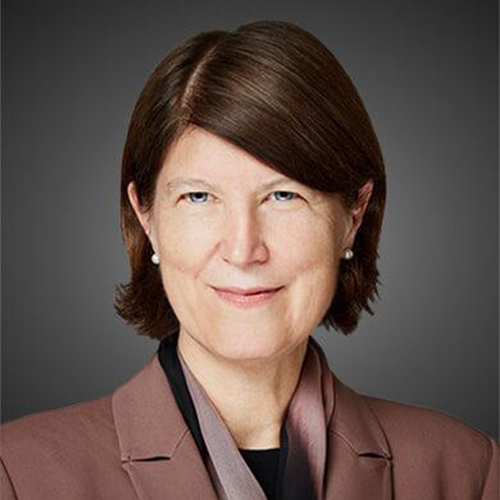
Sharon Geraghty
In this podcast series, Torys partner Zehra Sheerazi sits down with leaders from across Canada’s corporate landscape to discuss their road to success, the insights they’ve gained from facing challenges and opportunities, and the lessons learned along the way. Visit our main In the Chair page for more content and new episodes.
After a 30-year career as one of Torys’ top dealmakers, Sharon Geraghty made a bold career move by becoming Executive Vice President and General Counsel at Great-West Lifeco. Swapping the legal world for a corporate environment was a challenge Geraghty knew she was up to—but what about trading the collaborative dynamic of a law office for overseeing hundreds of employees across global offices?
In this wide-ranging conversation with Zehra Sheerazi, Sharon shares her journey from private practice to executive leadership, and offers insight into the importance of prioritizing health along the way.
Zehra Sheerazi (00:00:28)
Hello everyone, and welcome to In the Chair, a podcast spotlighting Canadian business leaders and the lessons and experiences that have made them who they are today. I had the incredible pleasure of sitting down today with someone who's really special to me: Sharon Geraghty, Executive Vice President and General Counsel at Great-West LifeCo.
For many years—over 30, in fact—Sharon was a partner at Torys, and she was one of the top deal lawyers in this country. She talked to us today about the lessons that she's learned and how she's built on success in her current role.
In my conversation with Sharon, we talked a lot about adapting the way that we show up in our careers. For example, for Sharon, a change from private practice to executive leadership required her to shift how she engaged with the details, with managing teams across different geographies, and getting comfortable with not being able to always control the outcome.
Throughout our discussion, Sharon's passion for taking on really hard, difficult problems came through. But more importantly, she talked a lot about the steadiness in how she's been able to keep focus on her own wellness and find routines that make sense for her. This conversation was really engaging and interesting, and it's one that you won't want to miss.
[Music]
I'm smiling and I'm smiling wide today because we're sitting with someone who's really, really special to me, and I'm thrilled she made the time to come sit with us today.
So, we have Sharon Geraghty. My whole career, Sharon was at Torys, and in my head, she still is here. And she was saying when she walked in this morning, everyone still knew who she was, and I thought it was weird everyone wouldn't know who she was because you were and still continue to be such a big part of this place.
But now Sharon is at Great West Life, and she's the Executive Vice President and General Counsel there.
She brings a wealth of experience with her. When she was at Torys, she really did it all: she did public and private work. She worked with our most complicated, sophisticated clients on transactions that needed to get done quickly with the expertise and the skill that not a lot of people had, other than Sharon.
And I remember when I started at Torys, I asked Karrin Powys-Lybbe, I said—Karrin was my mentor—I said, “Karrin, what kind of work should I be doing? What type of deal should I work on?” And the one thing Karrin said to me, she said, “If Sharon ever calls you to work on a deal, you should say yes. That will be your best gift.” And I did. Right before Sharon left, I got a deal with her and I, I then realized what Karrin meant.
So, thank you so much for sitting with us today.
Sharon Geraghty (02:32:16)
It's very kind of you. I was asked when I walked in if it—how it felt to be back, and every time I come back, and I don't come back as often as I like, but when I come back it is like stepping back and a very, very, very good time. And it was so many years here. 31 years. And when people asked me about leaving, I always said, “The question is remember how long I stayed?” That's the that's the real telling story in my mind is how special a place it was to grow and develop in my career that I stayed for that long. It was—so it's a very special place to me.
Zehra Sheerazi (03:08:09)
I'm happy to hear that. We're always happy to have you back.
So, Sharon, I think for some of our listeners who may not know your story, it would be nice to hear from you how you got here today. And, you know, whether law was always in the cards for you. And then we'll dive a little bit after that into your transition from private practice to being in-house.
Sharon Geraghty (03:27:38)
Well, no, law was not always in the cards. I didn't know any lawyers. And I really ended up at law school in an indirect way. I went—I had some vague, and I think uninformed, idea that I wanted to go into business.
Zehra Sheerazi (03:41:43)
Okay.
Sharon Geraghty (03:42:28)
My dad was in business, and, and at the time I ended up in economics. I took a course in economics. Well, my father was—he managed a financial branch of a financial institution. Now it's HSBC, but you wouldn't remember the name of it. And he traveled and moved a lot. So. we moved, we moved every year, basically, until I hit high school. So, I didn't end up in one space. But it was always outskirts of Montreal, outskirts of Toronto, so it wasn’t really—
Zehra Sheerazi (04:09:35)
No big cities.
Sharon Geraghty (04:10:29)
No big cities. And yeah, small—suburbs, really. He was he'd grown up on a farm and he was never looking to live in a city. He hadn't finished any university education. My mother had moved in to bridge during her university education, I think, and so neither of them had had a full university education. But all of their kids ended up getting university education.
And I went to—ended up taking economics and I think I thought, being uninformed again, that it was, it was business, but it was very theoretical, quite academic. And I knew when I finished that it wasn't—I didn't want to go on studying that. And law, you know, was something that you could do with no prerequisites, really.
There was no, you know, you could just, you—
Zehra Sheerazi (04:52:50)
You didn't have to have to have any specific undergrad. Yeah.
Sharon Geraghty (04:55:23)
So and—so I ended up going into law school because I didn't have the—and I think about a lot of young people in their careers now, I didn't have that fear of “I better get going. I, I should start something.” I thought, “I'll just do another degree. "
Zehra Sheerazi (05:08:27)
Study a bit more.
Sharon Geraghty (05:08:57)
That's right.
Zehra Sheerazi (05:09:21)
Figure out what you want to do.
Sharon Geraghty (05:10:36)
Yeah. I mean, we were fortunate in Canada because it wasn't horribly expensive to keep going. You know, you could get loans and work and stuff. So anyway, I went to law school. And I think there are lots of routes I could have gone into business. And I think of myself ultimately as being in business because I was in business law.
But law ended up being a really perfect route for me. And I figured that out really quickly when I was at law school. I just really liked the way lawyers were taught to attack problems. And I loved that there were a lot of principles and there were rules, but they were ones that developed over time, you know, evolved as courts face new cases, I—there was that element of analytical ability that you needed to exercise, but with a little bit of creativity and, and advocacy.
So anyway, I really did enjoy it. And the great thing about law is that once you're in that funnel, you know, then you come out and you get recruited and you kind of—
Zehra Sheerazi (06:05:04)
Yeah. There's a process.
Sharon Geraghty (06:06:08)
There's a process.
Zehra Sheerazi (06:06:47)
Makes it easy. If you wanted to do—
Sharon Geraghty (06:09:23)
Exactly. I found that hard with my kids when they were trying to think about what to do, because I just, I think I—once I went to law school, I didn't lift my head for another 20 years, basically—
Zehra Sheerazi (06:18:18)
It’s a very unique process, unlike I think any other. Maybe medicine is similar, but—
Sharon Geraghty (06:23:47)
It is probably similar. I think the professions are helpful in that way because there's a real process.
And they can be traps for some people. You can end up doing that and thinking it's a good idea, and then you wake up many years later and, and not like it. I know people that have felt that way, but that wasn't my, that wasn't my experience.
I really—I liked it, and I'm sure if I had attacked business in a different way, like if I had done a commerce or accounting or MBA or something, I would have ended up—
Zehra Sheerazi (06:52:45)
In one of those streams, maybe.
Sharon Geraghty (06:54:00)
I would have ended up in one of those streams, and I would have ended up, I think, I think I would have gravitated to business, some type of business anyway. But I, I ended up going through law and I really loved the—it's very collegial, right? Even at law school, it's very—there's a lot of trading of ideas, a lot of discussion.
It's, it's not something—I've always said to people, “Law is not something you do alone in your room by yourself.” There’s a lot of reading and everything, but it's the exchange of ideas where you get that richness of thinking.
Zehra Sheerazi (07:23:26)
And I didn't appreciate that either. So, I did a commerce degree where everything was group-work and your grades were dependent on the groups that you were in and how much weight everybody pulled. And that was hard, right, to learn to be okay with allowing other people to dictate where you end up in a class. And then I went to law school and I thought, “Oh, how how insular this is. I'm doing 100% finals on my own.” And then I started practicing law. And you realize, especially at big firms, the whole point of having institutions like this, at least at Torys, is being able to pick up the phone and sit together and brainstorm.
Sharon Geraghty (07:57:47)
Yeah. It's a team effort in law. And I knew this at Torys, it's—and it's probably true of other professions, but when you sit down with that team at Torys, you're sitting down with—I, I always said everybody was smarter than me in the room. And you—
Zehra Sheerazi (08:12:40)
I think nobody felt that way. By the way.
[Laughter]
Sharon Geraghty (08:15:13)
You learn, now, you, you learn to love that. And so yes, you're working in a team, but the calibre and the drive of the team is very, very high. And the objective is—it's such a, you know, it's such a clear objective, doing the best for the client and trying to find a creative solution to something. So it's, it's just a very energizing experience working in a team with people like that.
Zehra Sheerazi (08:41:55)
And so, then you came to Torys right out of law school? Okay.
Sharon Geraghty (08:45:31)
Right out of law school. I didn't summer here like everybody else. I again, I was such a—I went to law school out west, at UBC. And so I was really out of that stream. The summer programs had just started a few years before I graduated. So I was an articling student, but there were like six or seven, you know, summer students who had been there and done that.
And they were very helpful in helping me get through. But yeah, I spent the whole time here, and I, I didn't have—back when I joined, you really just had two rotations.
Zehra Sheerazi (09:16:29)
Oh, we had rotations.
Sharon Geraghty (09:17:59)
Litigation and corporate. Those are the two. Yeah. So.
Zehra Sheerazi (09:21:18)
And then you spent a few decades here teaching and growing and learning and I, I still remember when the announcement came out that you were going to leave. It shocked me. I don't know, I like—it shocked me because I just always thought you would be here. And so, help us understand a little bit. And we've talked about this before, because, that—I think that was the first thing I asked you, like, “Why are you going?”
It would be really nice for our listeners to hear what you thought about when you were making—which I think was not an easy decision for you.
Sharon Geraghty (09:51:25)
Oh, it was so hard. I think I realized after about 20 years. I never—as I said, I never looked up and thought about what else I could do because what I was doing was so terrific and with amazing people. So I mean, these were not just, as I said, smarter people, but these became my best and most trusted friends.
I mean, that's where I, you know, I—so I, I walked down the halls in the office and no matter whether things were good or bad, I was, I was among my people. Right? And I—
Zehra Sheerazi (10:21:00)
It was a good feeling.
Sharon Geraghty (10:21:31)
It was a great feeling. And so, I really, I always tell people, they tell you—they say when you leave something, there's often one or two things at play. You're, you're running away from something, or you're being pushed away or you're being pulled. I wasn't running away from anything at Torys. In fact, the tie to Torys was so strong that breaking it was probably the hardest thing I've certainly done professionally. Really, really hard.
One are the things that I loved about Torys was—and about my work—was that I was, constantly feeling… I've tried to find the right word to describe this: stress. Good stress. Like pressure, fear. There—I always felt on the edge of, you know, my ability. And I liked that.
Zehra Sheerazi (11:05:18)
Yeah. You were constantly being pushed.
Sharon Geraghty (11:06:44)
Constantly being pushed. And the problems were bigger, more challenging, more interesting. I don't think transactions are the only way you can get that experience, but it's an amazing training ground for that feeling that you have: that edge. Everybody, there's high pressure, it's often high profile for the client, lots at stake. And not just transactions, but sometimes big crises they were facing.
You'd be in all of that.
Zehra Sheerazi (11:31:17)
Yeah. Strategy meetings, governance, like you were—
Sharon Geraghty (11:33:03)
So many different issues you were at play with. So many different people you had to deal with. So many things you had to learn and really understand that were outside your ability. But you had to learn and understand them to be able to help the client. So that feeling that I—every day of waking up and feeling like I was that, that—you know, I would look at the clock and it would be like, “I can't believe it's already like—what I, where did the day go?” Every day, all the time.
And I knew that I really thrived—that's how I, that's what I wanted. I didn't want a career that was going to just become quieter. And so I wasn't running away from, you know, work. I wasn't running for work-life balance or anything. I, I, I love—
Zehra Sheerazi (12:14:23)
I mean, you definitely don't have work-life balance.
[Laughter]
Sharon Geraghty (12:16:07)
I have a very, very happy life.
Zehra Sheerazi (12:19:11)
Yeah. But, like, you work a lot still.
Sharon Geraghty (12:21:26)
But I but I still—so it wasn't that. It comes back to what I said, I really—not only was I surrounded by great people, but the, the types of problems that I could that needed me and needed my full attention, they'd come and I go, “Good, there's another one, there's another one.” But, you know, it was always a feeling of, of—at some point, the people here are not going to need me for this because they're quite able to do this and there won't be—
So I, I, I was looking to be challenged and to know reassuringly that it was going to be really hard. And that was very scary, though, because the type of challenge when I switched was a very different kind of challenge, I think.
And, and I'd been approached before. When I was approached this time, the people grabbed me first.
That's—and that's, you know—
Zehra Sheerazi (13:11:48)
The culture, right? Like, you talk so much about having close friends here and the reason, so much of—
Sharon Geraghty (13:17:19)
We're lucky in law because the—we are grounded in a very strong ethical… Like, there’s this very strong ethical aspect of what we do. You know, there's certain things you just don't do and you're, you're brought up that way in your education. And it was instilled in me when I was here. And I could see right away at, at the company that that was their—in, in the CEO the very first moment I met him. Very, very smart guy. He's just retired recently, but super smart, highly analytical, willing to engage deeply. But the ethical strength and moral centre was just so—and very people forward. So, he would spend so many, much time on people decisions. So that really appealed to me. And I—
Zehra Sheerazi (14:01:18)
Resonated with you.
Sharon Geraghty (14:02:08)
I could tell that would be a good environment. What was not so clear is what was going to be the challenge, but I knew it was going to be kind of frightening and different, and was I going to be up to it? And, and I think they took a big chance on me because I hadn't been inside a corporate environment, and I took a big chance on that.
So I, I was a bit terrified, but that's kind of why I did it.
Zehra Sheerazi (14:22:14)
And what's been your biggest learning? You said like, you know, there are different challenges and so what… if you had to think about maybe one or two.
Sharon Geraghty (14:29:53)
Yeah. The first one is the one that they anticipated and that they told me—and that I think I probably was a bit dismissive of—was managing people.
Zehra Sheerazi (14:40:38)
And how big is your team? How many people do you manage?
Sharon Geraghty (14:43:35)
Corporate environments are so different. But there's—if you look at my team, and I now have legal and global compliance, it's, it's in the hundreds. I you know, there's lots and lots—
Zehra Sheerazi (14:51:15)
That's a lot of people.
Sharon Geraghty (14:51:49)
—of people and they're everywhere. They’re in Canada—we have three cities in Canada, but they're in Ireland, the UK and Germany.
Zehra Sheerazi (14:59:02)
Hence the need for you to travel.
Sharon Geraghty (14:59:10)
—and they're in the U.S., and hence the need to travel and to also be able to pay attention to things that aren't right in front of you. Unlike when I was at Torys, the teams I managed, they were right in front of me—
Zehra Sheerazi (15:10:14)
Right there in your office.
Sharon Geraghty (15:11:45)
—the problem was immediate, and I was, no question, you know, that style of management, it's very different. And when you're managing a team in a corporate environment, you're a boss. And I remember one of my great mentors here actually saying when I decided to leave, that was his biggest warning to me. He said, “Remember that you're a boss. Not that you have a boss, that you are a boss.”
Having a boss, I actually adjusted to very well. I would say being a boss is the hardest adjustment because, he said, “Watch out, people will do what you say, even if you they shouldn't, because you said to do it.” You know, you just have to remember to—getting that collaboration that I had at Torys, naturally, nobody ever did what I said, you know, always lots of challenges, and always—
[Laughter]
I mean, everybody was always telling you their ideas and people had that. So, that was the big adjustment, I would say. And I think that was where they took a real chance on me, because I hadn't been a boss before, and I hadn't been responsible for just keeping the thing humming. Right? You know, just keeping it humming.
Zehra Sheerazi (16:11:14)
And did you, did you do training around it? Did you read books around it? Like, how did you—
Sharon Geraghty (16:15:35)
Oh, yes, I read.
Zehra Sheerazi (16:16:49)
You read a lot. Of course, you read a lot. Of course you did.
Sharon Geraghty (16:19:14)
Yeah, I read a lot. I crammed as much as I could, but I learned the way that I think I learned when I was here, was watching people who are really good at it. And there's lots of, there was lots of, the, you know, HR group and the—and really my boss, my, the first boss, he was the first boss I had. When he retired—
Zehra Sheerazi (16:38:02)
It’s weird to say, like—
Sharon Geraghty (16:39:19)
Oh, I know. And it's so—I, I actually like saying this, I would tease him, you know, “You're my first boss. You know, better do this well.”
[Laughter]
You know, so—but he, when he left, I, it was really hard for me when he left because he was an amazing boss. Because he, he wasn't—he was just very intellectually curious, and he dove in, so he was really great that way.
He was very, very, very terrific to have as a boss.
But I think the other, you know, and I think about the other adjustment. So that one I anticipated. Maybe downplayed a bit. But the bigger one comes back to something you said earlier. The bigger adjustment was, I think you don't realize at Torys how much control you have over the outcome.
You know? You, you have one thing that you're doing, which is producing great advice to help make something work, you know, and you, you, you, you control the whole outcome in a way. I mean, yes, you can't control the client and all their people, and you have to work with them, but you’re—
Zehra Sheerazi (17:36:10)
But your workstream, right? You have control over your workstream and your team, and the inputs.
Sharon Geraghty (17:40:02)
You can do a great job. And it will be clear that you did a great job. And you’ll know when you don't do a great job, but you actually—whereas when you're in a, and I'm very competitive, and I loved—
Zehra Sheerazi (17:50:39)
Shocking.
[Laughter]
Sharon Geraghty (17:51:41)
I loved being here knowing I was at the best place. I really did feel like I was at the best firm, and I had the best people around me.
And I still feel that at Great-West LifeCo, and all of the companies we work with, but that my control over the outcome is not there. It’s not the same. And what is the outcome? You know, you want the business to succeed.
Zehra Sheerazi (18:11:22)
Yes.
Sharon Geraghty (18:12:12)
And I want our business to succeed. I want to do the right thing by our customers and our, all of our stakeholders. And so, making that happen, you always have to operate through a lot of people. But it's like, it is across functions, across businesses. It's, it's making sure you're leaning in where you need to and living in the gray all the time and, and trying to be comfortable with that and really driving yourself in the same way you've got to—I really believe that here at Torys, the drive was you, you couldn't avoid that. It was just constant.
Zehra Sheerazi (00:18:47:45)
I think it's just around you. Right?
Sharon Geraghty (18:49:14)
Exactly.
Zehra Sheerazi (18:50:07)
In sort of professional, sort of, service industry settings, like, it's there. There's a buzz, there’s a…
Sharon Geraghty (18:55:48)
Yeah. And you're, you're, you know what you're working on and you're getting it done. When I go in every day—
Zehra Sheerazi (19:00:25)
You don't know what's coming your way.
Sharon Geraghty (19:01:50)
I have no idea what's coming my way. I mean, I think I know what's coming my way, but I have to be alert to a whole variety of things. And then I have to figure out how to help the organization get to the best place possible.
So, controlling the outcome was the was the biggest adjustment, to, to learning to still have that, have that same… Put the same effort and drive into it, but directing it in the right way to, to get the outcomes.
It's, it's much more complicated than I thought.
Zehra Sheerazi (19:32:13)
And how much time do you spend on the road?
Sharon Geraghty (19:34:08)
I think about pre-Covid and post-Covid, because there is a difference. We, we really tried to leverage Covid—
Zehra Sheerazi (19:39:14)
So are you back in the office?
Sharon Geraghty (19:40:44)
Oh, yes. Five days a week. Yeah. I'm—our organization, we are now at “three plus,” we say—
Zehra Sheerazi (19:47:34)
What does that mean?
Sharon Geraghty (19:48:40)
That means we are expected to be in the office three days a week at a minimum. More is nice. And they're fixed days, which I think has actually been very helpful.
Zehra Sheerazi (19:59:08)
Because you have sort of some mass—
Sharon Geraghty (20:01:01)
Exactly. And, and so I think that's been very helpful. But it's been a big adjustment across our organization. And it was really hard because you may have, I don't know if you experienced that here as well, but you know, it was just a long period of time. So, the hiring practice, like where we had people and the space and just getting people back in the office and figuring out how to make it work was, was huge, hugely complicated across the organization, in different parts, different cities and different places, we’d do it differently, but I'm in five days a week, whereas before I would have a pretty regular travel schedule of getting to all of our offices, and there are a lot. I would go to—
Zehra Sheerazi (20:40:27)
Multiple times a year?
Sharon Geraghty (20:40:47)
Yes, I would try multiple times. And some of it was easy, because in Canada it was pretty easy because we do… they’re sort of really scheduled. Like, for board meetings, we were in, be in a particular city and the entire management team converges there. So that—
Zehra Sheerazi (20:53:39)
So that makes sense for the timing.
Sharon Geraghty (20:54:17)
Yeah. It was the ones outside that—so I would always do kind of like a, a loop in Europe. The first time I went to Europe I landed at 6 a.m. or whenever you’d land, and I went to Frankfurt first, where we have an office, and I hadn't met anybody there. Right? And, and my EA had arranged things, that, that there was going to be a place I could shower at the airport, you know, like the things you would want to be able to do.
[Laughter]
And the General Counsel in Germany had insisted, because he's such a wonderful person, meeting me in person at the airport, which is—
Zehra Sheerazi (21:24:33)
You’re like, “I just need to get that shower done before I meet you for the first time.”
Sharon Geraghty (21:27:47)
The showers didn't work out at the airport, and he's there and I'm going like—I, “Magnus, like so nice to meet you, but I need to shower.” And he said, he was offering, “You want to come to my house?” Like, “No, that's not appropriate.”
[Laughter]
But. So, it was a long—I did get that shower and I struggled through that day. But I've learned since then. But it's kind of like, one day in one city, one day in the next city, and meeting people you don't know. And it's better—
Zehra Sheerazi (21:51:40)
So that’s quite different too from, from your job before, where you didn't have to travel so much. Right? This is a big component now.
Sharon Geraghty (21:57:11)
It is. But post—as I said, post-Covid, we've tried, you know, with trying to reduce our carbon footprint, trying to travel less. So we did make an effort to travel less. It's creeping back, I have to say, it's creeping back. Whereas before I would be traveling many days, now I would say it's much more contined.
I would bet if I had to put a number on it, it's probably about 50% of what I was traveling before. So it's less.
Zehra Sheerazi (22:21:44)
Wow, okay.
Sharon Geraghty (22:22:30)
During Covid, we did about three or four really large transactions in the U.S., transformative acquisitions, Divestiture just before Covid and then three really big acquisitions during Covid. And we did them all virtually.
Which is—none of us thought we could have done. I mean, those were like, you know, where you would have been in a boardroom for, like, weeks on end. We did it. We had to.
Zehra Sheerazi (22:44:50)
We worked on a deal together during Covid, if you recall.
Sharon Geraghty (22:48:28)
Yes. The ones in, the one in Canada.
Zehra Sheerazi (22:50:00)
The Canadian deal.
Sharon Geraghty (22:50:59)
The Canadian one. Which was also, you know, such a—I, I do think there's an advantage in getting together. Because these things stretch out.
Zehra Sheerazi (22:59:42)
We, we were just getting together online for hours on end. But, but we then got it done.
Sharon Geraghty (23:04:32)
Got it done. But as a result, people now realize they can get it done. I think the last—I don't think I've traveled on a deal since then. I think that's a bad thing. I, I, I think there is the crunch where you should get together.
Zehra Sheerazi (23:16:49)
Right, the value of sitting together in a room.
Sharon Geraghty (23:17:47)
Because it's, it's easier to resolve things when you’re in person—
Zehra Sheerazi (23:20:18)
So, I just want to say the one thing that reminded me when we worked on this deal together. So, after you left and you took on this great role, I assumed most of your work would be, you know, strategy and high level.
And then I did a deal with Sharon, and Sharon was reading the agreements, and Sharon would have comments, which we don't, actually don't see very often anymore and it was really nice to see that. But also reminded me of clearly how much you like the actual paper and the work, and that you make the time and effort to read it.
Sharon Geraghty (23:49:51)
I think that I have a reputation at the company of reading things. That is true.
[Laughter]
Somebody, I often say—
Zehra Sheerazi (23:56:24)
Which is as a lawyer, like I think that that’s part of your job.
Sharon Geraghty (23:58:21)
It's, it's, you know, sometimes at a company too. They can—I used to say when I was there, “We're not the Department of Reading, you know, if it happens to be more than a page, that doesn't mean it automatically goes to legal, you know, because we can't read that.” But I think that, you know, when I think about the things I've learned, tried to learn, letting go of that personality that you just described is my constant effort.
[Laughter]
When I first arrived, when we sold the business in the U.S., that was one of the first big acquisitions—it was divestiture, and our company never sells anything. And it was selling hugely complicated structure I'd never worked with, it was by reinsurance. It was such a learning. And I emerged from that, and I realized and I—my boss, Paul Mahon, the CEO at the time, he and I had long chats about it.
He said, like, “You've just lapsed right back into your person, like, you know, love it, but not—you are supposed to be working on strategic things.” And I have an amazing team, including on the M&A side.
Zehra Sheerazi (24:56:21)
Yes. You really do.
Sharon Geraghty (24:57:04)
I did. So—I do still have an amazing team, and I did on that deal. So that urge to dive in, it's a way that I work. And it's disconcerting to people, I think when I—because you can—the danger is that you—people go, “Okay, you're going to go do this. I won't.” You know, they step back and I, I think I've had to learn to let people—they’re so smart, they, they know what they're doing. I, to let it go a bit.
Zehra Sheerazi (25:23:08)
That's a really hard trade though—
Sharon Geraghty (25:25:04)
It is. It's really challenging.
Zehra Sheerazi (25:26:28)
—when you’ve been trained, I think, in the job that we do to look at everything, to read everything, you, you know, often have teams of juniors that are working with you who produce work product that you then look at, the partner relies on you to read, and all of a sudden you're like, “Oh, I, I, I don't need to be doing this, but what part don't I need to read? Should I read part of it and not all of it?”
Sharon Geraghty (25:46:27)
And then when you read it and you find something, then it really hard reinforces that bad habit. And it is a bad habit, it's—for one thing, just because you read something and find something doesn't mean you should have read it or, or needed to find it. Your team can do that job. It's harder to step back and, and just figure out where you do need to lean in and where you do need to, to spend time, and that's a constant development for me.
Zehra Sheerazi (26:12:48)
Yeah. No, I hear you. So, switching gears a little bit, but maybe on the same point, we're hearing lots about AI in every space, but specifically in the insurance space. Talk to us a little bit about how Great-West Life is, thinking about that and maybe impacting the kind of work that you do.
Sharon Geraghty (26:31:48)
Well, first of all, I, I think it's an incredibly exciting opportunity. And it's not, you know, you will find and it's not just at our company, but I think other companies—this isn't, we haven't just started this year, it's something that we've been—
Zehra Sheerazi (26:43:51)
Thinking about for—
Sharon Geraghty (26:44:50)
—a while. Because where what is AI versus what is, you know, just using data really well, there's it can get a bit muddy. But—and we talk about insurance, we're in wealth and we're in retirement—a lot of this could be and will be, I think, hugely transformational for the industry. We focus on what—we like to say, human-led AI and I think that's really important because the way I see AI and the way we see AI as an organization is it really lifts. It doesn't make decisions. It lifts up your ability to make good decisions or it—we focus particularly on the client experience, frankly, and making that streamlined and better and faster. Making the work we do better for the customer.
Zehra Sheerazi (27:30:33)
Elevating your work.
Sharon Geraghty (27:31:16)
Absolutely.
Zehra Sheerazi (27:31:54)
Rather than replacing, sort of, the process already.
Sharon Geraghty (27:35:11)
You, you, you, but you can—probably used it, but you can imagine what it does to, to use that, that technology and then focus on the actual decisions, focus on the human part at the top of the—it's hugely powerful.
In an organization like ours, we are—our business, I think about what I just described, you know, insurance, wealth, retirement—it's, it's our customers rely on us. There's such the, the trust that our customers put in us. It's incredible how close that is to us. That's the very, very center, we think about that a lot. So, we can't take chances with that. You know, we have to do that right. And that's where I think as a lawyer and compliance it's, it's an incredible—we're right, and the risk group, too, we’re right at the center of making sure we do this right. So, make sure that we're taking care of the clients. The basics: the clients information, but also that what we're doing is fair and that it will withstand scrutiny. So, there's a lot of involvement of the, of the legal and compliance team in that process.
And it's very, very exciting. But it's, I think it's iterative too. You know, we've, we've come a long way, like I, you know, we obviously have policies in place and we're constantly—each use case is, is really, really carefully scrutinized to make sure that it meets those thresholds of doing the right thing by the client.
Zehra Sheerazi (28:55:58)
Do you have a group that focuses on AI and is constantly testing new platforms and ways to integrate?
Sharon Geraghty (29:02:22)
Yes. And, and we do that in each of our segments, like our business segments, because our businesses are different. So we do it in each segment. And there is a group at the top of the house, so to speak, that is looking at it from a strategic perspective and making sure that where use cases in one jurisdiction can inform another jurisdiction, that we're building on that, and technology and data are so critical.
So, making sure our technology and our data is accessible is—and that's a lot of people at the top of the house making sure that's the case so that we can do it well. And I, you know, when you think about how important it is to our business, I think it's really important to what I do, like the actual legal compliance work, too.
So we put up our hands for our, you know, use cases as well and making sure that we are leveraging it as a legal and compliance team.
Zehra Sheerazi (29:53:39)
Absolutely. Yeah. Before we started this segment, Sharon and I were chatting about how committed she is to taking care of her health and her well-being. And so, I just want to go back to that. And, Sharon, can you maybe share with the listeners this incredible commitment you have, because so much of being able to perform at the level that you do and take on the stress of the job that you do, requires you to feel mentally healthy, physically healthy, and focusing on that and integrating that into your life in a consistent way is something I'm trying really hard to do.
I have not gotten to where you are yet, but I think it's really inspiring. So, will you talk to us a bit about that?
Sharon Geraghty (30:33:16)
Yeah. I think one of the things that I—I think our jobs require us to push ourselves and to do that, you do need to be at your best physically, your well-being. And it's easy, easy, easy to let that go. And I, I, listen, I've done this for so many years. I was not perfect that whole time, but I did when I started, I did have a real commitment to, to staying fit. I think, you know, we talked about this. I think being physically fit, getting sleep, eating right. These things are kind of basic.
Zehra Sheerazi (31:08:11)
They're seem so basic. Right?
Sharon Geraghty (31:08:38)
But and I, I know I have not done really well at the sleeping part. And the eating, you know, always improving. The exercise for me was a habit I had very early on that I think was really important to have as a habit, but I had to make place for it.
You know, you have to work it into your schedule. You have to be super committed to it, but you also need to surround yourself by people who are supporting that. And so I was lucky. I, my partner—now my husband—and everything was very, very, very committed to not only to his own physical fitness but to supporting mine. And so that was very important. But I think you're, you know, everyone I've talked to who does jobs like ours has said how important it is to your—it's a long game. Like, I mean, it's a really long game. I say, having done it for way more than 35 years now, it is a long game and you need to, you need to commit to that.
And it was particularly hard when I had kids. That's when it, you know, your life—
Zehra Sheerazi (32:12:18)
And Sharon has two girls and, and now a grandchild.
Sharon Geraghty (32:16:20)
Now a grandchild.
Zehra Sheerazi (32:16:58)
Congrats on that. Very new.
Sharon Geraghty (32:18:26)
Thanks. It is. But it's, when they were young—
Zehra Sheerazi (32:22:25)
This is all the information that I need. Yes.
[Laughter]
How? How do you do it when they're young?
Sharon Geraghty (32:26:50)
When they're young, and you've got a job that consumes you, I found I had my life organized into just my work and my husband and my, you know, exercise. And then the kids came, and they, you know, as you know, they could, they take a huge amount of space in your life. And I think it's really important. I was saved by my kids. I honestly think I was saved because they, they dragged me out of—
Zehra Sheerazi (32:50:19)
What a nice thing to say. “I was saved by my kids.” Different perspective, right, because it forced you—
Sharon Geraghty (32:54:42)
It is, because it forced me to build a life outside of my work, which sustained me when things were hard. You know, it's, it's such a—your friends, your family, they sustain you through the tough times. So, my kids forced me to pay attention to them. I thank them for that.
And—but I had to find room again. And that took, you know, like everything in life, you have to sit down and recognize it's happening, that you're letting it go. I sat down, I talked to my husband and—who was a lawyer at Torys at the time, which was very helpful, because he knew the pressures—
Zehra Sheerazi (33:28:09)
I did not know that. Did you meet here?
Sharon Geraghty (33:29:46)
Yeah. I did.
Zehra Sheerazi (33:32:35)
Quite a few Torys love stories.
Sharon Geraghty (33:33:00)
Who else would you meet? Yeah, exactly. Who else would you meet? You know, whatever. It's—yeah. So it's… Anyway, he, he and I sat down and we, we literally blocked off a time in the day. The only time in the day that I knew that I could—I hate the morning with a passion—
Zehra Sheerazi (33:49:48)
But you committed to the morning.
Sharon Geraghty (33:50:19)
I committed to the morning because it was available, because, you know, there's no meetings being scheduled—
Zehra Sheerazi (33:55:20)
Consistently available.
Sharon Geraghty (33:55:30)
But the kids were often awake at 6 a.m., so he just said, “That's mine. I'll do that. I can, because you can go for your run and I've got this locked down.” And so, no excuses, also. No excuses. And, you know, I used to laugh because I do hate waking up. And he would always just say—
Zehra Sheerazi (34:12:56)
“Hey, you know, I'm on.”
Sharon Geraghty (34:13:33)
—“Going for your run?” Question mark. Gently. And that really helped me. But that was the, that was a life-saving thing. And it's now here I am many, many, many years later. And I know that that piece I kept for myself that start of the day piece where no matter what happened, I'd taken care of that, it, it has definitely—and, you know, you… it's a long, it is a long game. If you are not physically well and well-rested. Well-rested is a bit of a joke, but still. It did rest me in a way.
Zehra Sheerazi (34:41:58)
Yeah. It gave you energy and it, it gave you what you needed it to.
Sharon Geraghty (34:47:14)
It did. And I, and I think, I do say that to people. This is a, it is a tough job what you do, Zehra. It's a very, very tough job. But it's so rewarding intellectually but personally like—
Zehra Sheerazi (34:59:18)
Yes.
Sharon Geraghty (34:59:45)
It's so rewarding. It's worth working hard for. It, it takes hard work, but it's worth it. And you just need to build up all of these supports, you know, and, and make sure that you take care of yourself.
Taking care of yourself is critical.
Zehra Sheerazi (35:12:29)
Yeah. Thank you. Thank you for sharing so much wisdom and insight with us over the last little bit. I'm really happy you came. And, and Sharon said when she got here, she never turns her phone off. And she did for this. So we are really, really grateful.
Sharon Geraghty (35:28:18)
Well, thank you very much. I, it was just—it's always enjoyable to come back here, as I said. And I love the fact that, the, the place is still creating great lawyers like you.
Zehra Sheerazi (35:39:07)
Oh. Thank you. It's very kind of you.
To discuss these issues, please contact the author(s).
This publication is a general discussion of certain legal and related developments and should not be relied upon as legal advice. If you require legal advice, we would be pleased to discuss the issues in this publication with you, in the context of your particular circumstances.
For permission to republish this or any other publication, contact Bryn Turnbull.
© 2026 by Torys LLP. All rights reserved.
Subscribe and stay informed
Stay in the know. Get the latest commentary, updates and insights for business from Torys.
Stay in the know. Get the latest commentary, updates and insights for business from Torys.
Subscribe Now