Speakers
 Zehra Sheerazi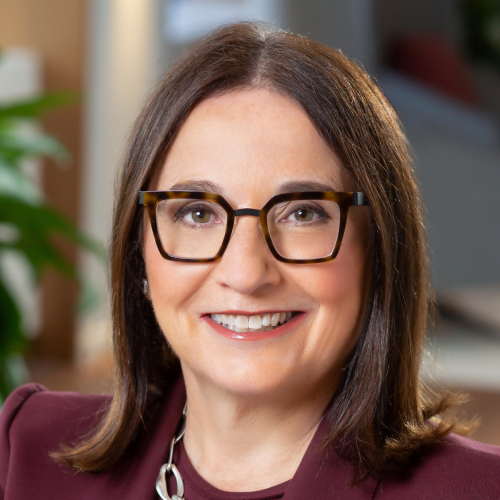
Sharon Haward-Laird
In this podcast series, Torys partner Zehra Sheerazi sits down with leaders from across Canada’s corporate landscape to discuss their road to success, the insights they’ve gained from facing challenges and opportunities, and the lessons learned along the way. Visit our main In the Chair page for more content and new episodes.
In a day and age where career changes happen fast and frequently, spending 25 years at any one organization is something of a rarity. But Sharon Haward-Laird—Group Head of Canadian Commercial Banking and North American Integrated Solutions and Co-Head of Canadian Personal and Commercial Banking at BMO Financial Group—has spent over two decades building a corporate culture worth sticking around for.
In this episode, Sharon Haward-Laird offers insight into why BMO is consistently recognized as having one of Canada’s most admired corporate cultures, and why setting the “tone from the top” is so critical in fostering a workplace grounded in gratitude.
Zehra Sheerazi (00:00:19)
Hello everyone, and welcome to In the Chair, a podcast spotlighting Canadian business leaders and the lessons and experiences that make them who they are today. I had the pleasure of sitting with Sharon Haward-Laird, Group Head of Canadian Commercial Banking and North American Integrated Solutions and Co-Head of Canadian Personal and Commercial Banking at BMO Financial Group.
It was an absolute privilege to talk to Sharon as she offered a window into her remarkable career. We talked about choosing roles based on what you can learn from them and the leaders you work with, being an advocate beyond the law, and whether a bank can be bold. The enviable corporate culture Sharon has worked so hard to build at BMO is in no small part thanks to a leadership philosophy that is driven by gratitude, empathy and thoughtful, sensitive coaching.
Our discussion was a wonderful reminder of the value of supporting your teams and colleagues in both big and small ways. Remember: it all matters. This conversation was insightful, and it's one that you won't want to miss.
[Music]
I'm pleased to be sitting here today with Sharon Haward-Laird. Sharon is an absolute force in commercial banking, payments innovation, sustainability, all with a deep legal expertise in governance and strategic transformation. Since joining BMO in 2000—and I had to look at that number again. 25 years, Sharon. That's a long time at an organization, and we'll unpack that a bit.
She's held a number of senior leadership roles, including General Counsel and Head of North American Treasury and Payment Solutions. And most recently—congratulations again—Sharon stepped into her role as Group Head of Canadian Commercial Banking and North American Integrated Solutions, and Co-Head of Canadian Personal and Commercial Banking at BMO Financial Group. Sharon is also an advocate for mental health and women's leadership, and serves on boards at the CAMH Foundation and Civic Leadership Action Foundation.
In her formal life, Sharon was actually here with us as a commercial litigation associate at Torys. Sharon and I first met tangentially, actually, when I was lucky enough to be working with the BMO team on the Air Miles acquisition, and Sharon had her GC role at the time. And the one thing I recall—because that was my first real foray into working with the BMO team at a cross-section from, you know, the investment team to legal to tax accounting—the one thing I recall about that experience, and it was a deal we did in a very compressed timeline and there were quick turns of everything, the BMO team always said, “Thank you.” Across the board, we would do something, and we'd always get a lot of gratitude back. They coordinated amongst themselves, they communicated amongst themselves, and that was really nice to see for a really large organization.
And so, I want to talk about that a little bit, Sharon, later, because, you know, as the, the GC role, I'm sure a lot of that is very intentional to try to foster teams that work in such a collaborative way. But before we dive into that, you know, there's no better way about learning of someone than hearing the story themselves.
And so, Sharon, do you want to share with us a little bit about your journey: where you started and how you ended up at BMO and, you know, the roles that you've taken on since you've been there?
Sharon Haward-Laird (03:22:53)
Sure. Unfortunately, 25 years is a long time, or maybe fortunate. [Laughter] so hopefully this story is not too long for—and, and I'm really pleased to be here and I, I laughed when I knew you were going to ask about, kind of, my journey from Torys to BMO, and it's like a four-minute walk, so it's not that far. And in other ways, really far apart.
So, the first part of my legal career was all at Torys. I was a summer student at Torys, and I articled at Torys, was hired back into, into the litigation group and learned so much in my time at Torys.
During that time I had three children. I was, I, actually I think I was the first associate at Torys who had a baby while I was articling.
Zehra Sheerazi (04:10:59)
Oh my gosh. Setting the—trailblazer.
Sharon Haward-Laird (04:12:13)
Trailblazer. I know, everyone was trying to figure out, including the Law Society, like, how you dealt with a maternity leave in the middle of articling, but everything worked out really well. I think it actually taught me a lot about how to, you know, balance work and, and family life because I had no choice, frankly.
So, I was an associate at Torys for about six years, and then I joined Nesbitt Burns in September of 2000 when my youngest son was about 18 months old. So I had three kids under five. And a former Torys colleague was running the litigation group at Nesbitt Burns, which was the—and still is—the wealth management and investment banking side of BMO. And at the time, very separate.
So, I spent the early part of my career there doing wealth management and investment banking litigation, securities litigation of various parts, working for someone who'd also been a litigation associate at, at Torys before she moved there. And I had that role during the financial crisis.
Eventually I moved up to be focused entirely on capital markets. So I was a member of the capital markets executive committee and basically the general counsel for capital markets.
And since it was the financial crisis during that time, I spent a lot of time with our investor relations colleagues or accounting colleagues on, kind of, disclosure matters and learned a lot about kind of how the bank worked.
So, one day I was sitting in my office and the general counsel, Simon Fish at the time, came in and said, “People think it'd be a really good idea if you went to be the head of investor relations.” And I was like, “But I'm not an accountant.” And, and they were like, “No, we got lots of accountants in finance. We think you can figure that out.” And it was really the best thing that I ever did.
It was a hard change because so much of my identity was tied to being a lawyer. But I learned—like I worked with every group within the bank through all kinds of different opportunities, issues, exciting acquisitions, you know, challenging things to explain at different, at different times. Got a lot of exposure to senior leadership.
And that ended up leading into the—Dave Kasper, who ran our investment banking in the U.S. at one point, had been my client, and then he'd moved to commercial banking and was our U.S. CEO. And so, in investor relations, I worked with him a lot. And he said, “Look, I really want you to be on my team. And I have this opening in Treasury and Payment Solutions.” And I said, “I don't know anything about payments.” And he said, “I think it will really round you out.”
And I've kind of chosen my roles based on what I can learn from the leader who leads it, and then whether it gives me an experience that I don't have before. And the one piece I was missing at BMO was “customer”. And, you know, it's very different working in a law firm. I had clients, right? Once you’re internal, your client is the bank. It's not actually an individual person. And so, getting back to client development, “How do you work with clients?” was interesting to me.
And then we needed to do a big technology transformation. We needed to get funding for that. And so, using my advocacy skills that I learned at Torys to kind of advocate and build a case for why we needed to invest in this business was just really exciting to me. And the next five years were just the best. And I had no intention—
Zehra Sheerazi (07:59:42)
Were you in Canada, in Toronto, even though you were supporting this?
Sharon Haward-Laird (08:02:06)
I was in Toronto, but it was, it was a cross-border role. So, I spent probably 30% of my time in Chicago.
Zehra Sheerazi (08:09:19)
Okay. And that’s—
Sharon Haward-Laird (08:09:46)
During that time period.
Zehra Sheerazi (08:11:07)
Couldn’t have been easy with young children—
Sharon Haward-Laird (08:12:58)
So by that point they—
Zehra Sheerazi (08:14:27)
—and a totally new role.
Sharon Haward-Laird (08:14:56)
At that point, they weren't too young, but my, one of my children was quite sick in this time frame. And so my husband actually stepped back from his job because there was a point when I was like, “I'm really not comfortable being in another country when she's not well, and she might need help,” and, and so, you know, I've been really fortunate to have a spouse who has a pretty flexible job and can still fulfill his career goals, but has generally been the one who leans in when the kid's needs have kind of exceeded our collective capacity, which happens from time to time.
Zehra Sheerazi (08:53:10)
And we're going to go into this more. But I really appreciate you, you actually give a shout out to him on one of your LinkedIn posts about how he's made a number of sacrifices that have helped you along the way.
Sharon Haward-Laird (09:04:03)
Yeah, and—
Zehra Sheerazi (09:04:42)
It was really nice to see that.
Sharon Haward-Laird (09:05:36)
The way I like to say it is, we are, we're a team. We've been—like, we've been together since we were 17 years old. I've never been an adult without, without—
Zehra Sheerazi (09:15:35)
High school romance, Sharon.
Sharon Haward-Laird (09:16:47)
Yeah, yeah, yeah. The—it was actually a restaurant romance where we both had part-time jobs. But—
Zehra Sheerazi (09:24:11)
This is a podcast number two. Podcast number two: Sharon’s love life.
[Laughter]
Sharon Haward-Laird (09:27:05)
Sharon’s love life, it's, it's a pretty short story, I'll tell you.
But, anyways, then I never really thought I would go back into, into legal. But one day my boss called me and said, “I think Darryl is going to ask you to be the general counsel of the bank.” And I was like, “Oh my gosh.” And I really—like, I'm so passionate about BMO’s purpose that getting on the executive committee and having the opportunity to really drive the vision for BMO—and obviously I still love the law, but I’d been out of, legal for, like, 10 or 12 years at that point.
And so, I knew I had a really strong leadership team. Simon Fish had built an amazing team. And so, you know, general counsel is kind of a cross between a legal role and, and a business role, so I went and I did that for between four and five years.
And then when Darryl kind of reformed the executive committee to take account of our larger U.S. presence, I got my current role and so excited to be back in the, in the business, dealing with clients, technology, you know, helping our customers grow their business at a really important time for the Canadian economy.
So, yeah, you know, it's amazing. 25 years, sometimes it's like, oh, you went to the same company and stayed 25 years, but—
Zehra Sheerazi (10:51:18)
You've done so many different things and have worn so many hats. And like you said, I thought it was really interesting, you always take things where you want to learn from either a leader that you believe in or it's a skill set that you don't have.
Sharon Haward-Laird (11:02:54)
Yeah. And I always think, like, people talk about taking bold, transformational moves in their career. I always think, you know, people will look and go, “Wow, you've had such an unusual career.” But if you step back, I always think there has to be something that you take from what you've learned, so you're not learning something and then abandoning it and starting something new.
For me, one of the main things has been advocacy, whether it's, you know, with a customer to bring their business to BMO, with our board of directors for funding for the business that I'm in, for my clients, when I was at, when I was at Torys, that kind of advocacy—and then for the last 25 years, knowing how to get things done at BMO because it's a large, complicated, very regulated institution and bringing, you know, the, all the tradition of that 200-year bank and then helping as we bring more, you know, innovative people from other places kind of helping integrate them into, into achieving what our strategy is, it's just, like, incredibly rewarding.
Zehra Sheerazi (12:17:43)
You talked about BMO’s purpose and that resonating with you. Talk to us a bit about that.
Sharon Haward-Laird (12:24:13)
Yeah. So, you know, a number of years ago we said, “What is it we're trying to accomplish at BMO?” And we, you know—Canadian banks in general, I think, have a really unique position in the economy and with our communities. So, our purpose—and we spent a lot of time on every word in the purpose—is to boldly grow the good in business and life.
And, you know, there's so many different pieces to that. Being bold, you know, sometimes requires taking changes. That was actually probably the most contested word: like, could a bank be bold? And I think we've shown with, you know, our acquisition of both M&I and Bank of the West that we are bold—
Zehra Sheerazi (13:12:19)
Transformative in the U.S., right? It's really changed your business completely.
Sharon Haward-Laird (13:16:13)
And then, you know, Darryl's latest re, re-constitution of the executive committee and saying, “Hey, we had the model right for the time, but we're so large in the U.S. now that we really need to go to market in a way that's more specific to the U.S. while, while maintaining all the strength of the North American businesses and knowing that the foundation of our business is our Canadian, our Canadian business.” You know, we've been a—we were Canada's first bank, like, you know, over 200 years old. So, so really important.
And then a strong sense of community, like, all of our executives, like, the—I'm our employee giving co-chair with my colleague Aaron Levine, from the U.S. this year. Like, we're one of the largest supporters of the United Way. I've served on a number of boards over time. And just that ability to, you know, give our advice on the board as well as our funds, our people's time to, to donate.
You know, we spend so much of our times—time at work. And, you know, obviously we all want to be compensated for that. But when it ties to what you really believe, which is that the bank will succeed when the communities that it serves succeed. If they don't do well, we're not going to do well either. If our employees don't do well, we're not going to do well either.
So, we have, you know, a lot of focus on wellness and, and mental health. And our people and culture group does a fabulous job, with, with that part, you know, providing an offering to our employees that really meets the times, which are quite different now than they were 25 years ago. What people care about, you know, childcare, mental health, elder care, all of those things are so much more important now than—well, they're probably not more important, we just realize—
Zehra Sheerazi (15:14:15)
We just talk about them more.
Sharon Haward-Laird (15:15:27)
We just realized that they're not in the back room where it's like, oh, somebody's taking some time off for stress and realizing maybe it's not stress, it's actually a medical issue. Might be mental health, might be how your stress and mental health can impact your physical health. So yeah, that so that, that purpose, it just resonates for me.
And, you know, I think the interesting part about the last couple of years is realizing that what people define as “the good” is not universal. Like, so when you say “boldly grow the good”—
Zehra Sheerazi (15:49:54)
There are nuances and differences, yeah.
Sharon Haward-Laird (15:52:28)
—like what, what is “the good”? In—we have to define what is “good” for, in, for BMO, in our values. And, you know, part of that is, you talked about people saying “thank you”. Like I can tell you, that is a part—that is not performative. Like, the sense of gratitude, so recognition is one of our key parts of our winning culture.
You have to recognize when people do great things. And what I always try to do is not just say, “Hey, thanks for that.” I say, you know, “Thank you for, you know, making so much sacrifice to close that transaction for us in a, in a short time frame,” or “Thanks for bringing the right experts” to get like—something that shows you're not just, like, saying thanks because it’s polite—
Zehra Sheerazi (16:41:34)
It’s not just lip service, but you're being thoughtful about—
Sharon Haward-Laird (16:43:09)
Yeah. And giving the person real feedback that they can maybe take forward with their next, you know, business interaction, whether that's you with another client and saying, “Oh, the client really liked how I kept them in the loop, or how I was available to them at different times, or how I simplified things.” Whatever it is you point, hopefully you tell people that that was appreciated.
Zehra Sheerazi (17:06:46)
Yeah. So, this is a great transition because I want to talk about your leadership style. It feels very natural the way you talk about it, and it doesn't feel like it's learned. But I wonder if it has been. Over the years, do you think your leadership style has evolved or changed? It seems grounded in some very core principles that matter to you, but that also matter to the organization at which you work.
Sharon Haward-Laird (17:31:41)
Well, you know, it's definitely evolved. I think it's always come from a place of authenticity. There's only one Sharon, like, I don't put a different face on depending on who I'm talking to, you know, whether that's, you know, our most important client or the person who's cleaning our office. At the end of the day, I speak to all of them like I would like to be spoken to, you know, in a way that's relatable to them and, and recognizes their, kind of, unique contributions.
My own style, I would say, has evolved. You know, law firms are intensive places, right? Like the, the people who are here at Torys are very, you know—and this is broad generalizations—but very driven. You know, they're high achievers, generally pretty extroverted, except maybe in some departments like tax, maybe not extroverted.
[Laughter]
And I think initially in my career, like, when you're a litigator, you have to think on your feet. So, the judge asks you a question, you have to answer. You can't say, “I'll get back to you.” And I think early in my leadership style, it could be intense for some people. So, some people would, I think, find it a little overpowering because I would get to a conclusion faster than they would, just, not because I'm smarter, but just because that was how I was trained.
And so, I think over time, I've realized as you get more senior, first of all, your title walks in the room sometimes before you do and so little criticisms or feedback, people really need to believe that it's given to them to help them improve, not to be mean or critical.
And so, I really try to choose my words, first of all, based on the person and what they might need at that time in their career. You know, a little bit of kindness can go a long way, right? Like, you know, sometimes you see someone and I, I hate when people say, “You look tired.” So, I don't generally say, “You look tired.”
Zehra Sheerazi (19:34:08)
Like it's not a good feeling when someone says, “You look tired,” like, “Oh, I should have put on more makeup.”
Sharon Haward-Laird (19:36:36)
I know. Or when someone says, “Oh, you look really good today,” and they're so surprised, it's like, how do I look all the other days?
[Laughter]
But you know, if I see someone who's a young parent, whether, you know, whether it's the father, the mother or co-mothers or, or whoever—or I know someone's parent is aging and they look tired, it's just like, okay, maybe now's not the time to give them that feedback. Maybe you do it in a different way or, or at a different time. But, but at the same time, I think people would say my style can be demanding because I build my teams with people who I know can do it.
And so, you know, I say to people, “I'm not a cheerleader, I'm a coach.” And sometimes the coach is cheering and sometimes the coach is resetting. I never yell. I don't like to be yelled at, so I, I don't find that to be a particularly effective. I shut down when people yell at me.
Zehra Sheerazi (20:38:34)
I think most people shut down when you get yelled at.
Sharon Haward-Laird (20:40:26)
Yes. Well, you know, I think there are different—you know, my husband was a chef at one point, that was very much a part of the culture of kitchens.
Zehra Sheerazi (20:50:07)
The chaos of the kitchen. Like, that’s just what it—
Sharon Haward-Laird (20:51:43)
Yeah. Because you have to be loud. People were loud and—but that's not the culture at the bank. And so, you have to make sure that you're operating with your unique style, but in a way that people appreciate.
And I've really learned that different—like, some people need a lot of external validation. Other people find that, you know, condescending and they just, you know, they're, they, they don't need as much encouragement because they're more internally motivated and confident. But that doesn't mean they don't need any of it.
So, like, I love leading people. I love people. I'm probably one of the most extroverted people you could meet. Although it is interesting, as I get older, I do need some introverted time on the weekends, like where nobody is talking to me. So—
Zehra Sheerazi (21:43:20)
Is that easy to get? I guess your kids—we were just saying, Sharon is recently an empty nester.
Sharon Haward-Laird (21:50:01)
I am recently an empty nester. My husband is an introvert and so—
Zehra Sheerazi (21:55:17)
That helps.
Sharon Haward-Laird (21:55:59)
I, I think he knows me pretty well. So, he knows when I just, you know, he shouldn't invite people over on the weekend because I've, you know, had a lot of events or whatever. But I also have to have fun. So sometimes he’ll push and say, “You'll be fine once we get there,” but, you know, that's what's good when you have someone who's known you for a long time. They kind of know when you've pushed yourself to the point where you need some time.
Zehra Sheerazi (22:19:36)
They give you space to recoup.
Sharon Haward-Laird (22:20:34)
One other thing I'll say about leadership style is a lot of people—and I've had leaders who were kind of sink or swim, like, go figure it out—I am not a sink or swim leader. If I hire somebody for a role, and I know that they don't have some of those skills, I might not handhold them through it, but I'll show them the resources and check in with them because I don't like people to spin—
Zehra Sheerazi (22:46:40)
Yes.
Sharon Haward-Laird (22:47:46)
—because I don't like doing that myself. So, you know, when I was in investor relations, for example, the people in, in the finance department, my very good friend, Cally Hunt, who was the chief accountant, would spend so much time making sure that I didn't feel lost and stressed for a reason that someone else can fix.
And so, you know, I really do think sometimes as leaders, we forget what we didn't know when we started. And so having young people in, in the—early in their career, as my children, I hear them themselves, like, be like, “My boss asked me to do this and I don't even have any idea where to start.” Or, you know, the things about office etiquette, like, where do you sit? How do you know when you go in a meeting room, you know, do you wait to sit down? How do you dress to go to work?
All of those things that we take for granted are—cause so much stress that's kind of unnecessary, because you can give someone a buddy or something to help them integrate.
Zehra Sheerazi (23:51:50)
Right.
Sharon Haward-Laird (23:54:51)
And you know, who, know who to ask those questions. So, I've learned a lot from my kids about being a leader.
Zehra Sheerazi (24:05:15)
Gives you such a good perspective too, right? To—you're at a different stage of your career, and it can be easy to forget.
Sharon Haward-Laird (24:05:15)
Yeah.
Zehra Sheerazi (24:05:38)
When you were going through those transitions, things that you just take for granted as knowing and being comfortable with.
Sharon Haward-Laird (24:10:30)
Yeah. For sure.
Zehra Sheerazi (24:11:04)
And now having a different perspective through them, it makes you more empathetic as a leader.
And for what it's worth, like, it's working, right? BMO was named Canada's most admired corporate cultures three times in a row. So, something is working with the leadership, people like you and Darryl and others, that are sort of seem like really zoned in and vulnerable and listening to people on the ground and making a difference.
Sharon Haward-Laird (24:38:11)
Yeah. And that's, you know, I think I've been attracted to that culture through my whole career. Like when I did my interviews to, for summer student, I selected to come to Torys, it was because of the people that I met. There was a common thread. They were all very different, but there was something about being a Torys lawyer that was not too braggy, very grounded in results, very focused on outcomes for the clients, very focused on learning.
And I really gravitated to that. And I think it's the same at BMO, like what you said about how you were treated as a part of our team when we did the Air Miles training—
Zehra Sheerazi (25:20:48)
I felt like I was at BMO.
Sharon Haward-Laird (25:22:14)
Right.
Zehra Sheerazi (25:22:47)
Like, I really—I didn't feel like an external advisor. It was, “Thank you for being part of our BMO team.”
It’s a great feeling.
Sharon Haward-Laird (25:30:09)
Yeah. And we recently, we had a really challenging litigation matter when I was general counsel. And when, you know, we had, you know, not the worst result but not a great result at trial, and later the, the litigators that did that said, “You guys were so professional in how you dealt with us after that.” And then we did the appeal and we were completely successful, which is what we had expected in in the first place, and our lawyers were so happy and they kept saying, “We wanted to win for you guys as well as for us, because you were so engaged and appreciative and respectful and you didn't”—and like, that's just how BMO—like, it's not perfect, right? There's, sometimes we have to reset, you know?
And now in commercial banking, I've had the real privilege to meet some of our, biggest clients, and they'll say things to me like, “I feel like your banker is a part of my team,” and that, I think—it's, it's a very unique place, and it's hard to put your finger on what it is. But, you know, we've hired a lot of people recently, especially in the U.S. from different banks, and they all say what's different is the culture.
Zehra Sheerazi (26:51:39)
Yeah.
Sharon Haward-Laird (26:49:33)
But it is kind of hard to put your finger on it.
Zehra Sheerazi (26:52:42)
Exactly. It’s almost these small little acts consistently over and over again that form this culture that you talk about.
Sharon Haward-Laird (26:57:45)
And it’s tone from the top, right? It comes right from—I had the great pleasure this week of doing a fireside chat with our chairman of the board, George Koepp. And he told the story to our bankers of, you know, he—people think of him as, you know, the head of Bell, you know, one of Canada's biggest, you know, most important industry leaders.
But he started with a startup company, you know, in a trailer in Pickering. And he's so humble and spoke to people. And I've seen him like, you know, handle some really difficult decisions that we've had to make and guide our strategy with our—and, and then our CEO, Darryl White, like he genuinely gets pleasure out of helping us as an executive committee and all of our teams achieve our strategy because he wants to win, but he wants to win in a way that's consistent with our culture and our values.
And, and that's sometimes hard to do. It's hard to balance those things. And I think that tone from the top, from, from George and Darryl is what inspires me.
Zehra Sheerazi (28:06:47)
Yeah. And so, you alluded to this. Like, it's not—the end result is wonderful, but it doesn't come with its, you know, lack of challenges. And I'm sure there are bumps along the way. Can you talk to us a bit about maybe a challenge or a difficult time that you've had to navigate in your career and how you handled it?
Sharon Haward-Laird (28:25:22)
Yeah. And you know, I've spoken really publicly about this time in other forums with my daughter's permission. But I would say for me, the most challenging time was my daughter was very sick. She was in the hospital and we did almost lose her. And I came back to work after she was well and her dad was taking care of her—probably came back too early. And we had an investor day happening. And—this is like 2018, I think—and then we had a technology incident in my business that was very, very stressful.
So, I, I came back to work, I was on a call. I felt tired, but okay. And then the call became, like, people started to disagree on the call, and I just completely could not handle that—like when things were not calm. It was like, you know, now—
Zehra Sheerazi (29:29:54)
Set you off or something, yeah.
Sharon Haward-Laird (29:30:35)
—I, you know, I understand more about mental health. It was like, you know, I just, I didn't have the ability to self-regulate any more than I had had to self-regulate, you know, to focus on my daughter as opposed to myself. And so, I, I really learned that showing your vulnerability to your team, and I reached out to someone who was also on the call from my team, and I said, “I'm going to have to let you handle this call because, like, I can't right now,” and that person is now back on my team. And like, I showed confidence in him that he could handle this difficult situation.
And then I was in my office, I was not feeling great about myself, but like, nobody could tell that looking, looking at me. But there was a young woman who, who I—still is now on my team, sitting outside my office just doing her job, which had nothing directly to do with what I was doing. And she came in with a tea—and everyone knows I like Tim Hortons tea—and she brought in the tea and it was so kind. It was so—like, that—
Zehra Sheerazi (30:35:58)
She didn't have to say anything, she just did it.
Sharon Haward-Laird (30:36:01)
She, she said, “You looked like you could maybe benefit from this. And I don't think you have time to go get it.” And her name is Amy. And I still, I tell that story all the time, like, try to be an Amy sometimes, like just reaching out, saying to someone, “Well, you've been working really hard,” or “It's your first week back from maternity leave, you probably feel sad leaving your baby for the first time.”
Zehra Sheerazi (31:01:12)
Acknowledging that people have hard things that they go through.
Sharon Haward-Laird (31:04:34)
Yeah.
Zehra Sheerazi (31:05:35)
And that that can happen in professional environments. And being supportive of it. It seems so basic.
Sharon Haward-Laird (31:10:06)
And, and that's where I think in my experience, sometimes when people are going through something, whether it's a death in their family, a sickness in their family, a hard time at work, they just try to power through because they don't want to show weakness. But what they don't, I think, sometimes, realize is people won't know what the reason is, but they'll notice something different.
So, first of all, it's more important to take care of yourself. Secondly, none of us should be—if, if we're so indispensable in our—whether it's at Torys or, or at BMO or anywhere, that if we don't do something, like, there's going to be a catastrophe, we haven't got proper succession and contingency plannings, you know, in place. And we should, we should think about doing that.
But it also doesn't do you any good if you don't show up as your best, you know, in your best way because, you know, you either have a health problem, maybe you have some, something else you're dealing with. And so, I think just, you know, you don't have to tell any everybody.
I, I've chosen to tell the story with my daughter with her permission because I felt sometimes like parents only told positive stories. “My kid got into Harvard, my kid is a doctor,” and I would sometimes think, am I the world's worst mother? That my daughter has, you know, is struggling?
And I've—the, the response that I've had is so overwhelming. And, you know, now my daughter's doing really well. She's married to her beautiful wife. They just bought a house. They, they're so happy.
And I think knowing that I wasn't alone, I wasn't the only one and that really, you know—I needed to be confident in myself to continue to support her and to continue to do my job at BMO.
So, I've learned a lot from that. Like, now I know myself really well when I, you know—and my boss was so supportive, he said, “Don't come back yet. You don't need to come back. We've got it.” And I was like, “No, no, no.” I like, you know, I did the superhero thing. And I didn't do anybody any favors in that time except for maybe that I got that learning early and, and now, now you check in with people.
Zehra Sheerazi (33:27:37)
You need to carry it with you and now it gives you perspective.
We had Carol Dagher come speak to us last year around mental health. And she's been public about what she's been through as well. And the one question that keeps coming up is, how do you talk to people that are going through a hard time? Like, I'm not, you know, I'm not confident. What do I say, am I going to say the wrong thing?
But it seems as though being there and being present, there’s almost nothing wrong you can say, other than showing that you care.
Sharon Haward-Laird (33:53:07)
Yeah, I always, you know, with my daughter one thing that I've found that I say to other people when they tell me something about how they're feeling, I first of all always remember I am not psychologist or psychiatrist. So, but if someone shares something about how they're feeling, thanking them for feeling like they could share that with you and acknowledging that it's hard to share, I think—and not sometimes trying to solve their problem.
Like if you right away are, like, “Okay, so this is what we're going to do, you're going to take time off and you're going to do this and that.” Like, they know what they need. You just have to help them. And one thing I say a lot to people who are, you know, being hard on themselves or feeling stressed is “If you had a friend who came to you and felt like this, what would you say?”
Zehra Sheerazi (34:42:01)
Yeah.
Sharon Haward-Laird (34:42:34)
If you, you know—we've all had a project that went bad or our review wasn't good or you didn't, you know, get hired for the deal you wanted to, you know, get selected for or maybe your partnership decision got deferred by a year. It's like, what would you say to your, like, your friend and why can't you love yourself and be as kind to yourself as you would be to that other person?
I, I'd also say, though, that we've done a lot of good work in Canada about breaking down the stigma about mental illness, but—and mental health generally, because we all have mental health, whether we have a mental illness or not—is also having supports where if people don't feel safe enough to come forward, they can get the help without, you know, having to provide their confidential medical information, which is totally their own decision. They don't, they don't have to share, but they don't they shouldn't have to hide.
Zehra Sheerazi (35:39:22)
Right.
Sharon Haward-Laird (35:40:08)
And, you know, I think sometimes—my, my daughter was, spoke with, did talks for high schools with a wonderful organization called Jack.org and she said, “Sometimes you can say what you see.” So, you don't say, “You seem depressed,” but you say “You haven't been showing up for work lately,” or “You've lost your temper a few times, is there anything I can help you with?”
And so, if you say what you see, then the person—
Zehra Sheerazi (36:17:30)
Has an opportunity to respond, yeah.
Sharon Haward-Laird (36:18:13)
—as opposed to labeling it. Right? You know, I, I've had situations during Covid, like, people who were never coming on camera. So, if you just say, “I've noticed you're not coming on camera,” and a lot of, you know, there were people dealing with isolation and stress from children and sometimes just giving a little bit of an opening.
And then, you know, in big organizations like BMO, we have employee support lines and we have, you know, HR professionals that you can say, “Hey, if you want to talk about something, not with your, your manager or colleague, you can, you know, go to some of those that have, anonymous, more confidential ways to do it.”
Zehra Sheerazi (37:00:06)
There’s an alternative, yeah.
You're really, you're really active on LinkedIn. I love that and I also love sort of, you know, you chatted about being vulnerable. You are vulnerable on LinkedIn. You talk about stories and the way, you know, you think about things. I read one of your posts recently, and in there you talked about the Canadian women's rugby team, and you focused on habits that make elite players, and you reference that back to high-performing teams in business.
And there was one line that stuck with me. You said, “During periods of my life when I felt I was too busy to stay active, I learned the hard way that I was too busy not to stay active.”
So, given sort of all the responsibilities on your plate at work, how do you find time for you and staying active or whatever else it is you need to do to recharge and show up in a way that keeps you energized and gives you the strength to go through busy, long, demanding days?
Sharon Haward-Laird (37:57:53)
So, I just make it a priority. So, the first thing for me: I won't compromise my sleep. Now. I don't always get seven or eight hours, but I, I do make sure that I, I get a decent amount of rest every night because I just, I find I don't show up as my best person if I don't. And I exercise every single day, even if it's just a walk.
Zehra Sheerazi (38:23:59)
When? How, how do you actually fit it into your day?
Sharon Haward-Laird (38:23:59)
Usually early in the morning. If I don't have a chance to do that because I have an early morning meeting or if I've, you know, stayed up late the night before or something, then when I get home from work, I walk on an incline on my treadmill, which is a low-impact thing. You can do it. I watch a Netflix show, and that was actually the “aha” moment for me, was that I was making excuses about not being active. Like I said, I don't have time to be active. And then someone was like, “Oh, what shows do you watch on Netflix?” And I was like, “Oh, I watch this and I watch this and I watch this.”
Zehra Sheerazi (38:59:55)
“Well, actually I do have time. I’m just choosing to spend it.”
Sharon Haward-Laird (39:01:32)
I have free time. Now the truth is you should have free time when you're not exercising. You can't just exercise, work and sleep. That's not going to be very fulfilling. But I made—I do—I can't remember the name of the book now, but there was this thing about habit stacking where you put something that you enjoy together with something that seems harder.
So, for me, I created this rule that I only watched Netflix when I was on the treadmill. [Laughter] and so sometimes I would, like, walk for an extra half hour.
Zehra Sheerazi (39:33:29)
Just because you want to finish the show.
Sharon Haward-Laird (39:34:57)
Exactly. And so that really works for me. And, you know, when, when my son left home, you know, we have a nice gym. We're lucky to have a gym in the basement. I have a great trainer.
So, you know, there, there—but you can also do it inexpensively, right? Like, just go for a walk. And at times I do, I do that as well.
So, you know, I'm not training to be an elite athlete, like, as anyone who sees me will know. But it is that keeping active, it just clears your mind.
Zehra Sheerazi (40:05:28)
And forming small habits that make a difference.
So, Sharon, I could talk to you for a very long time, but I'm seeing that we're getting close to time. So, before we wrap up, maybe one more question. What's something you're currently working on for yourself? Whether it's something you're learning or unlearning or just exploring.
Sharon Haward-Laird (40:23:41)
So, there's two. One is golf.
Zehra Sheerazi (40:27:40)
Oh, interesting!
Sharon Haward-Laird (40:28:56)
Actually, Amanda Balasubramanian from Torys I, I credit with that.
Zehra Sheerazi (40:34:38)
We didn't plug Sharon to say that.
Sharon Haward-Laird (40:36:51)
No, no, no, she invited me and we'd worked together when I was at Torys and, and we actually have the same trainer, which was a total coincidence. And so, I went out after many years of not doing it and really enjoyed it. I was terrible at it. Amanda had promised not to tell anyone how bad I was, but…
[Laughter]
So, I'm working on that, and I'm also taking French lessons. And for a few reasons, like BMO is Bank of Montreal and our colleagues in, in, Québec and elsewhere across Canada that speak French, I like to be able to address them in part in French. I'm adjusting my, my end goal on how much I might be able to do that.
But also, sometimes I get letters from customers or other things, and I've gotten pretty good at being able to read them and so directing them in the right place. And so, I'm doing that and also because I've heard that learning another language—and I used to actually be pretty proficient in French but had lost it—but it's also good for brain health because it's one of the things—and you know, you hear so much about dementia and brain health. So, it's another reason that I do that. And, and it's kind of fun. I have a great tutor and we have, we have a blast.
Zehra Sheerazi (41:58:51)
So nice. It amazes me that you still try to read the letters in French. Like I would have just assumed you put it through ChatGPT or some AI system, but you're learning it.
Sharon Haward-Laird (42:08:08)
We’re not, we’re not allowed to use ChatGPT. We do have Microsoft Copilot.
Zehra Sheerazi (42:12:20)
Oh, that's what we have too.
Sharon Haward-Laird (42:13:08)
But actually, when the our, our messages that go out in Canada are all translated English and French, and I actually try to read the French first and then read the English to see, see if I'm able to do it. So it's a bit like a puzzle, you know, for me and, and, I still find listening in French is tiring because my brain is listening in French and I have to translate like I, I have so much respect for people who can switch what language they're thinking in, but I think I'm probably not going to get to that stage. But we'll see.
Zehra Sheerazi (42:49:10)
Good on you for trying. Sharon, thank you so much for sitting with us today. It means so much for being so honest and vulnerable and giving listeners an opportunity into your world.
Sharon Haward-Laird (43:00:06)
Well, I, you know, I owe a lot of my success to the discipline that I learned at Torys and the professional excellence while maintaining, you know, a great culture. So, I'm very grateful to Torys for that.
Zehra Sheerazi (43:13:46)
Very kind of you to say. Thank you.
Sharon Haward-Laird (43:15:20)
Thank you.
To discuss these issues, please contact the author(s).
This publication is a general discussion of certain legal and related developments and should not be relied upon as legal advice. If you require legal advice, we would be pleased to discuss the issues in this publication with you, in the context of your particular circumstances.
For permission to republish this or any other publication, contact Bryn Turnbull.
© 2026 by Torys LLP. All rights reserved.
Subscribe and stay informed
Stay in the know. Get the latest commentary, updates and insights for business from Torys.
Stay in the know. Get the latest commentary, updates and insights for business from Torys.
Subscribe Now