In the Chair avec Tori Buffery
Conférenciers
 Zehra Sheerazi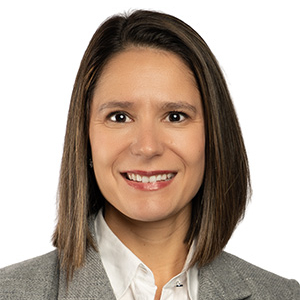
Tori Buffery
Dans cette série de balados, Zehra Sheerazi, associée chez Torys, s’entretient avec des chefs de file du milieu des affaires canadien pour discuter de leur parcours vers le succès, des enseignements tirés des défis et des occasions qui ont jalonné leur trajectoire, ainsi que des leçons apprises en cours de route. Visitez notre page d’accueil de In the Chair pour découvrir davantage de contenu et de nouveaux épisodes.
Ayant grandi comme seule représentante du monde des affaires au sein d’une famille de créatifs, la carrière pionnière de Tori Buffery dans le domaine des opérations dirigées par des sociétés commanditées a été tout sauf conventionnelle. À quel moment a-t-elle cessé de considérer son parcours comme une succession de moments où elle s’est retrouvée « au bon endroit au bon moment » pour commencer à reconnaître le rôle qu’elle-même avait joué dans sa réussite?
Dans cet épisode, Tori Buffery, directrice chez Neuberger, raconte comment elle a joué un rôle déterminant dans la création, à partir de zéro, du marché des opérations dirigées par des sociétés commanditées, et explique comment le fait de nouer des relations solides et durables et de refuser certaines offres d’emploi l’a aidée à saisir de nouvelles occasions.
Zehra Sheerazi (00:00:34)
Hello everyone, and welcome to In the Chair, a podcast spotlighting Canadian business leaders and the lessons and experiences that make them who they are today.
I had the pleasure of sitting with Tori Buffery, Principal and Senior Vice President at Neuberger, on their secondaries investment team. We discussed Tori's very diverse background and career path, and I was so impressed by her boldness in making strategic and increasingly entrepreneurial moves both around the world as well as in emerging areas, including secondaries, where Tori is now an undeniably industry leader.
It was fascinating hearing from her on how she went from having “great luck” as she called it earlier in her career to eventually thinking she might actually have something to do with her success, too.
One of the very interesting things about Tori's journey is that while she's taken a series of smart, strategic risks throughout her career, her decision making in taking those risks is grounded in key relationships—sounding boards for her to bounce ideas and opportunities off—and a fundamentally strong sense of self. This conversation was so interesting, real and unique and I really hope you enjoy it.
[Music]
Today I'm pleased to be sitting with Tori Buffery. Tori is a leader in the private equity space, possessing a wealth of experience across the primary and secondary private equity transactions, investments and advisory arms of the business. Currently and very recently, Tori serves as Principal and Senior Vice president on Neuberger’s Secondaries Private Equity team, where she brings deep expertise across GP-led continuation vehicles, single asset secondaries and portfolio level transactions.
Previously, Tori led the secondary strategies at Nicola Wealth and before that served as Partner at Morningside Capital, where she played a pivotal role in building its reputation and the GP-led secondaries market, scaling the firm to over $400 million in assets. Prior to her more recent leadership positions, Tori's strong track record consists of over five years of CPPIB, working with global private equity funds and executing numerous primary and secondaries transactions throughout North America and Europe, and before that with BMO Capital Markets, where she started out as an analyst.
Wow, that was a mouthful.
[Laughter]
You've done so much, Tori. Tori has been widely recognized for her contributions to the private equity industry. She's been named Woman of Influence in Private Markets and one of Top 25 Women in Private Funds on the Move. She also serves her community and industry through board roles, including Women in Private Capital Canada and North York Harvest Food Bank.
I don't know how you do it all. This is so impressive.
Thank you, Tori. Thank you for sitting with us today. It's really special to have you here. I met Tori about a year ago, although I feel like I've known you forever. And I had heard about her through many people—people that I work with, mutual friends—and everyone said the same thing: “Tori is so nice, and she has this energy to her. You have to meet her.” So I remember Torys was hosting a, a Women in Private Equity event at an art gallery in Yorkville, and I first met Tori there, and I knew instantly that we would be fast friends. And we have seen each other quite a few times since then, and I've already learned so much from you, including things like making sure to take care of myself, which I feel like you're really good at.
You have this positive energy to you. You always have fascinating travel stories, and you make people feel like you're genuinely interested in them, and that's such a nice feeling.
For listeners who don't know your full story. I want to share that with them and there's no better way than asking you about it, because we were just saying, you've pivoted a lot and you joked that you've had only one promotion. But many moves.
[Laughter]
So maybe take us back to where you started and whether these moves have been sort of intentional, and you've always thought you'd wanted to try new industries, new spaces, or whether when you started as an analyst at BMO, that's where you thought you'd spend your time.
Tori Buffery (04:04:19)
Oh, okay. Well, first of all, thank you. Thank you for saying all those kind things. I feel exactly the same way about you, so I really appreciate that and I love the friendship that we built. And also, thank you for hosting all the women's events at Torys. I try to attend every single one.
Zehra Sheerazi (04:21:43)
I know you do. Thank you for doing that.
Tori Buffery (04:23:35)
Thank you. Yeah, I, I have moved around more than I probably intended. And a lot of it is just luck. I think if you try to sit down and plan where your life is going to go, you will not end up doing that.
So—and it's interesting, growing up, my family is all creatives. So my parents are artists, my brother is in the music industry. I knew early on that I didn't have those genetics.
[Laughter]
And I really wanted to work somewhere with a steady paycheque where my job was a little bit less subjective. And so going to business school, going into finance was kind of very natural for me. And I find—
Zehra Sheerazi (05:06:06)
Where did you go to business school?
Tori Buffery (05:07:17)
I went to Laurier. I really liked the idea of the co-op program, and that was amazing because I got to try different placements. So, my first placement was actually Kraft Canada, in finance. And then my second one and I really think this really shaped my future was at Teachers’ Private Capital, and I was really into reading the newspaper and researching companies, and I had seen teachers buying things. And I didn't know private equity-wise, but I thought it was so cool that they would buy companies and own companies. And so, I remember going for my interview and I was telling them about all the deals they had been doing. And the people interviewing me, like, didn't know.
[Laughter]
Zehra Sheerazi (05:45:47)
And that was a time when you have to read it on—in the newspaper.
Tori Buffery (05:48:29)
Yeah, exactly. Yeah, I love to—I still have a newspaper, even though I can't remember the last time—do you get?
Zehra Sheerazi (05:53:04)
I have an app—do you have a subscription at home?
Tori Buffery (05:53:49)
I have a subscription, but it's the app.
Zehra Sheerazi (05:57:29)
Oh, okay. Not the physical.
We tried to get one. My husband wanted The Times. And we get the weekend edition, but it would come three days later and so we'd be reading the news from the weekend on Wednesday.
Tori Buffery (06:07:31)
Oh, that’s not helpful.
Zehra Sheerazi (06:08:29)
So now we have to go to the grocery store or somewhere to pick up the—
Tori Buffery (06:12:44)
That's kind of nice.
Zehra Sheerazi (06:13:59)
Yeah.
Tori Buffery (06:14:25)
Well, back in the day I would buy a lot of newspapers as a student. I was a very nerdy student living my best life, not being an artist.
[Laughter]
Zehra Sheerazi (06:21:54)
Having a steady paycheque.
Tori Buffery (06:22:52)
Yeah, exactly. So—and it was funny because Teachers’ at the time was at Yonge and Finch. They, for finance jobs didn't pay very well.
Zehra Sheerazi (06:29:58)
Yeah.
Tori Buffery (06:30:14)
And they were having trouble attracting people. And I was so gung ho. And so I joined, and I was working with amazing people. And I just thought what they were doing was so cool. I worked on the U.S. team—by then it was organized by geography—and some of the people there have gone on to do such amazing things.
So I feel really lucky to have been there at that time. And all of them had come from banking, so I felt that I needed that training ground. There was someone there who, he just decided he was going to take me under his wing, and he would take away my mouse and get me to use Excel without it.
And, you know—
Zehra Sheerazi (07:05:20)
That is incredible training. That's what the banking, the training they got.
Tori Buffery (07:08:32)
Yeah, yeah, maybe we didn't have a lot going on at the time.
[Laughter]
But he just decided to like, quiz me and teach me about banking. So I decided, “I'm going to do banking. And then I'll go back to Teachers’.”
Zehra Sheerazi (07:18:00)
Okay.
Tori Buffery (07:19:05)
So I, I went to BMO, did it for, you know, two and a half years. Again. Very good training ground. I think having all of your time like, ripped away from you is really important whenyou leave, because now I still, to this day, appreciate having weekends generally free. And then I started interviewing, and I—well, I was talking to Teachers’, but I decided to go to CPP, to do funds and secondaries. I thought it was like a really interesting role. Secondaries was totally new.
Zehra Sheerazi (07:46:38)
Exactly. Yeah.
Tori Buffery (07:48:04)
And I actually think joining there at the time I did was the best luck I've ever had in my life. It was totally right place, right time because at, at that point—this was almost 16 years ago today, or around this time—that I joined. And I know you've had also guests from CPP.
Zehra Sheerazi (08:09:14)
That's right.
Tori Buffery (08:09:55)
I can't even describe to you what it was like at that time. You know, even for a pension plan, it was so innovative. CPP was a pioneer of all these things, secondaries included. And they had just started doing secondaries really in the last two years when I joined.
Zehra Sheerazi (08:23:53)
And so you got to see it and grow it from the ground up.
Tori Buffery (08:25:59)
Exactly. And then although I—and I moved to the UK for four years, our office was 15 people, when I joined the UK office and then when I left, it was 150. And there I was doing mostly fund investing. So, I got to meet—
Zehra Sheerazi (08:40:13)
[Inaudible] Europe?
Tori Buffery (0842:06)
Yep. [Inaudible] Europe. And we were pretty teeny, like, it was global coverage. But because I was in London—and the interesting thing about London was all the private equity firms were in London, so everyone was always passing through, coming to see me. My boss at the time went back to Toronto and had a baby, and I was a junior person, the most senior funds person to—
Zehra Sheerazi (09:02:22)
Yeah, de facto in control.
Tori Buffery (09:04:00)
--which was terrifying.
[Laughter]
Zehra Sheerazi (09:06:00)
Yeah, but it probably forced you to learn pretty quickly. Had to make decisions, things you wouldn't have otherwise had the opportunity to do. Part of that is a little bit of luck. Right place, right time. Yes.
Tori Buffery (09:13:34)
Yeah. And I recognize that now. But it's funny, we would have, you know, the head of some firm come get a meeting with CPP, they're all excited and then they'd see me.
[Laughter]
Zehra Sheerazi (09:20:59)
Yeah.
Tori Buffery (09:23:44)
And they would look disappointed. But I also think too, you know, if I walk into a room and people see young women, I don't care.
Zehra Sheerazi (09:28:48)
I just going to say, were there a lot of women in this space? Like you said, your boss was a woman. She went on mat leave. But at the time, was there a lot of women in the space?
Tori Buffery (09:36:16)
Yes. CPP Funds, lots of women. And then when they did hire someone, he was really wonderful. And he had come from another firm and he, you know, you’re at CPP everyone wants to come see you. Everyone wants to invite you to places. And so, it can be easy to just kind of rest on your laurels. And he joined and talked about being more proactive and getting to know people and hustling a little bit. And so he was really great. And he also joined and encouraged me to go out, take meetings, generate deal flow. So that was a great learning experience to, to work with him at that time.
Zehra Sheerazi (10:13:54)
Yeah. And then you, you—so you were in London for four years.
Tori Buffery (10:16:49)
Yes.
Zehra Sheerazi (10:17:16)
And then did you move out of CPP from London to…
Tori Buffery (10:21:17)
No. We moved back. And it was honestly culture shock coming back.
Zehra Sheerazi (10:26:51)
Yeah. Even though you've lived here, you were from here, just in four years your perspective had changed.
Tori Buffery (10:34:13)
Totally. Yeah, I found it very different. And also CPP had grown so much. I didn't even—I couldn't find the infrastructure team, they were on a different floor. And before, you know, before I'd moved to London, our IC was just all of us.
Zehra Sheerazi (10:48:29)
Yeah.
Tori Buffery (10:48:51)
Opining on deals. Yeah. And CPP, it needed to institutionalize. And it did: it formalized and when I came back to Toronto, I just—it was a bit formal for me, and I felt I didn't really have a place naturally for me to, to fall back into. So I waited about, kind of, six weeks and then I decided to leave.
Which was a tough decision, but my best friend at CPP at the time, he had started a secondary firm and he had come and said to me, “I want you to join my firm.” And we talked about that when I was in London. And I said, “Absolutely no way. I'm the most risk averse person ever. I am not entrepreneurial. Zero percent.” But I guess he wore me down slowly. So when I resigned from CPP, I kind of knew I had this in the background. I wanted to take some time off. I went to chef school. I ran a half marathon. I threw my mom a birthday party.
[Laughter]
Zehra Sheerazi (11:46:18)
Oh my gosh, these are the things we need to talk about more is, is forced downtime. And you were just talking about this, because your husband's kind of doing the same thing now. And, and I think as a generation, our generation, we are more aware of taking forced breaks and being intentional about going back to roles that we are really invigorated by.
And so good on you. You went and did really interesting things. You put yourself first in those spaces and you did things to help you grow and things you were genuinely interested in. So did you go to George Brown?
Tori Buffery (12:20:06)
Yes, I did, and I ended up doing four subsequent courses.
Zehra Sheerazi (12:23:51)
Now for you.
Tori Buffery (12:24:20)
Which is great. Yeah. But my husband really encouraged me to do that. I—
Zehra Sheerazi (12:27:32)
Having a supportive partner—
Tori Buffery (12:29:08)
—I, yeah, honestly. And every single move I've made, especially this one that I'm at now, he was so encouraging. He asked me those tough questions. And—you know, obviously he’s biased.
[Laughter]
But he says it in a way that doesn't seem biased.
Zehra Sheerazi (12:44:20)
Yeah.
Tori Buffery (12:44:21)
So—and he was very encouraging, and he said “Go and do this. Whether it works or doesn't work, I'm here for you. I have a solid job.” And so now it's my turn to kind of do that for him. Although now we have children, so—
[Laughter]
Zehra Sheerazi (12:56:01)
So it makes it a little complicated.
Tori Buffery (12:59:10)
More bills. But, but I am really happy to kind of return the favour to him.
Zehra Sheerazi (13:02:08)
That is so nice. So you went to Morningside?
Tori Buffery (13:04:30)
Oh, yes. I went to Morningside.
Zehra Sheerazi (13:05:33)
For how long?
Tori Buffery (13:07:09)
Eight years.
Zehra Sheerazi (13:08:03)
That's a long time.
Tori Buffery (13:07:46)
It was a long time. And honestly, it was so hard. We were so young. We had no committed capital. We had no—of our own money.
Zehra Sheerazi (13:15:31)
How many of you—so it was you and your friend from CPP?
Tori Buffery (13:18:14)
Yep. It was us for a long—
Zehra Sheerazi (13:20:09)
The two of you?
Tori Buffery (13:20:18)
For a long time. And then we brought on another colleague who we had worked with at CPP who's lovely—he's still there, his name’s George. And then, and then some junior people. And slowly we were about—we were about eight people when I left. But oh my God, I think everyone should live the entrepreneurial life for like a second.
[Laughter]
Zehra Sheerazi (13:39:01)
Yeah. And, and just—
Tori Buffery (13:41:38)
Even—so, we had a deal-by-deal model. So we would find a deal, and then we would have to find someone to fund it. And we were doing GP-leds. In 2016.
Zehra Sheerazi (13:52:32)
When people were not doing GP—
Tori Buffery (13:53:28)
And we called them GP restructurings.
[Laughter]
Zehra Sheerazi (13:54:27)
Now they have a formal name. People have, like, whole groups organized around them.
Tori Buffery (13:59:15)
Yeah. So we would literally call a firm and say, “Do you want to restructure your fund?”
[Laughter]
And most of the time they'd be offended. Obviously.
Zehra Sheerazi (14:06:55)
They’d think you were crazy. Yeah. Yeah.
Tori Buffery (14:10:58)
And some of them said yes. And then we would have to go and try to explain to people, “We're doing this thing called a GP restructuring. Do you want to pay us a finder's fee and some carry for this deal?” And so Northleaf was our first backer.
Zehra Sheerazi (14:22:00)
Wow.
Tori Buffery (14:22:11)
On our, on our first deal, actually. So, Henry, I did—just to back up, I did wait until Henry had done, like, two deals before I joined. Just to make sure—
Zehra Sheerazi (14:28:07)
Just a little bit. Right. Yeah, yeah. Like, “I’m not, like, fully joining you till you have something.”
Tori Buffery (14:32:31)
Yeah. And so, he had, he had two deals. And so, we closed two. And then the first deal that that I, the first—the first year we did nothing. We had no deals. We were, like, chasing staff, nothing came to fruition. And then I remember when we did our first deal and Northleaf backed us. And they are a wonderful group of people, to this day, we still get together.
Zehra Sheerazi (14:50:23)
That is so nice.
Tori Buffery (14:51:17)
And we got to know each other super well. And then eventually I started to specialize in single asset GP-led. And that was an area that I really loved. And my proudest achievement in my whole career to this day is raising our single asset, GP-led fund.
Zehra Sheerazi (15:08:32)
Wow. How big was that?
Tori Buffery (15:09:43)
It was $22 million.
Zehra Sheerazi (15:12:12)
Yeah, I mean I guess—yeah, yeah.
Tori Buffery (15:13:33)
And I cried when I when we got the first commitment. I remember being in my car and I found out someone had—and it was a big cheque for the size of the fund. It was enough that we could do a few deals, and if no one else came into our fund, like, you would be a very small fund, but we can at least deploy.
And I remember crying happy tears. And I try not to cry because I'm a very ugly crier.
[Laughter]
But I remember just thinking like, “Wow, I can't believe this. I can’t believe this.”
Zehra Sheerazi (15:41:02)
Well, I mean, after a year of not having deals—
Tori Buffery (15:43:11)
Yeah. And this is in year six.
Zehra Sheerazi (15:44:59)
Yeah.
Tori Buffery (15:45:46)
That we raised the fund.
Zehra Sheerazi (15:46:36)
Right, so resilience and patience and all of the things you learned about building relationships through CPP, all of it probably went so strongly into doing this for six years and then waiting—I mean, huge, momentous occasion.
Tori Buffery (16:00:18)
It was it was a big moment because I felt, you know, I've had a lot of luck in my career, again, right place, right time. And this was the first time where I thought, “Maybe I have something to do with it too.”
Zehra Sheerazi (16:09:01)
It's not just like luck.
Tori Buffery (16:10:29)
It was my, it was my first time—
Zehra Sheerazi (16:11:34)
Yeah, yeah. So you stayed at Morningside for eight years? And then you pivoted?
Tori Buffery (16:16:56)
Yes.
Zehra Sheerazi (16:17:23)
And you went to Nicola?
Tori Buffery (16:18:11)
I went to Nicola Wealth and I was pitching them the fund and they said, “Why don't you come here to work—”
Zehra Sheerazi (16:26:15)
“Why don’t you just come work for us instead?”
Tori Buffery (16:27:13)
Yeah.
“—and we will—” Yeah. “We will give you, like, HR.”
[Laughter]
“And, like, a back office, and you can build a team and like, we’ll pay you the salary.” And I was like, “Oh why would I not do that?” And so yes, I joined them and I, I really enjoyed my time there. I actually had one of the best managers and bosses I've ever had. He just believed in me so much and just let me kind of do my thing.
Because it was weird going from being a lone wolf—
Zehra Sheerazi (16:51:53)
To now having, going back to sort of a system with infrastructure and processes and teams. Yeah.
Tori Buffery (16:58:28)
And, and they had just enough, like, flexibility for me that, that it was good. And I really enjoyed my time there. And I thought I would not leave.
[Laughter]
Zehra Sheerazi (17:09:32)
Yeah.
Tori Buffery (17:10:08)
And then I got a call from my now-boss, Ben, and the head of our Canada office, Clay from Neuberger, asking me to join them. And also remember that phone call because I was at Tim Hortons getting a bagel for lunch, and I think it was Clay who called.
And we were actually looking at partnering with a GP-led firm, so we were actually interviewing eight secondary firms to give them a fund commitment. And in return, get, deal flow through them. And I thought Clay want to talk about that. And he made this offer and, and I was so shocked. So shocked.
Zehra Sheerazi (17:46:27)
So it came out of nowhere?
Tori Buffery (17:46:52)
Came out of nowhere. And I said, “No.”
[Laughter]
And I, and then I gave him the name of some other people he should call.
[Laughter]
Zehra Sheerazi (17:53:06)
You should—yeah. “I'm not interested but—"
Tori Buffery (17:56:30)
And then I came home and I said to my husband, like, “Oh, I had a really interesting day today.” And I was telling him about this and, I think I turned around to like, continue making dinner. And he stopped me and he's, like, “I think you should just talk to them. Why don't you just have lunch with them?”
You know, you—he also, like, knows the secondaries space well and he said, like, “This is a firm you like. You've talked about them. Why wouldn't you have lunch with them?” So I was like “Fine. I'll have a coffee.”
Zehra Sheerazi (18:21:19)
Yeah.
Tori Buffery (18:21:46)
“And then I'll have lunch. And then I'll go to New York and meet the team.”
[Laughter]
Zehra Sheerazi (18:26:07)
And it happened pretty quickly?
Tori Buffery (18:27:10)
Yeah, it happened—no. It took a year. It took a year. Yeah.
Zehra Sheerazi (18:32:47)
And you started with them in September?
Tori Buffery (18:33:57)
Yeah, so it's been four months.
Zehra Sheerazi (18:35:02)
Okay. And you took some time off in between.
Tori Buffery (18:37:37)
I took two weeks off.
Zehra Sheerazi (18:38:58)
Okay. And what did you do in your two weeks?
Tori Buffery (18:41:16)
So I'm a golfer. My—I never thought I would be a golfer. I only picked it up about seven years ago. To spend time with my husband.
Zehra Sheerazi (18:48:40)
A good reason to pick up a sport, to connect with people.
Tori Buffery (18:51:44)
Yeah. It works. Yeah. It worked. And he was very smart. He bought me some cute outfits and took some nice courses.
[Laughter]
Zehra Sheerazi (18:58:07)
Okay.
Tori Buffery (18:59:17)
So we—I also turned 40, around that time. So we went to Kiawah Island, the two of us, for my 40th birthday.
Zehra Sheerazi (19:08:03)
And you golfed.
Tori Buffery (19:08:12)
And we golfed and it was amazing and wonderful. And then—and then you know what? I don't do well with time off, to be honest.
Zehra Sheerazi (19:14:20)
Okay. So two weeks was felt like the right the amount of time?
Tori Buffery (19:16:15)
It was good and I was really excited to kind of start. Yeah. But I find if I'm at home, I just go into “Mom mode.” I probably, like, cleaned out the fridge.
Zehra Sheerazi (19:23:51)
Yeah. All the things we need to do, but try to delay.
Tori Buffery (19:26:28)
I actually had a woman—my husband's gift to me was a woman came and helped me with my closet.
Zehra Sheerazi (19:31:48)
Oh. That's nice. So before you start a new job.
Tori Buffery (19:33:43)
Yes. We went through every single article of clothing.
Zehra Sheerazi (19:35:17)
And Tori’s dressed impeccably today.
Tori Buffery (19:37:53)
Thank you. This is, yeah, this is from the women's event.
Zehra Sheerazi (19:39:41)
There you go. There you go.
Tori Buffery (19:42:07)
So, yeah. No, it was good. But it was just enough time.
Zehra Sheerazi (19:44:52)
Yeah.
Okay, so you've had an incredible journey. You've seen the industry from so many different angles. Banking, larger investment platform, smaller entrepreneurial firms. I imagine that range of exposure comes with some pretty hard lessons. You've alluded to some of them: being out there on your own, not getting deal flow, knocking on doors, getting “no's”.
Are there any lessons or experiences or moments that you recall that you carry with you today in this role? Something that maybe still shapes how you approach decision making?
Tori Buffery (20:21:47)
Yeah, that's a great question.
And I think, I think CPP really set the bar for rigorous due diligence and excellence. And I was there when they institutionalized and started to get very serious about process. And so—and that was the time I was forming my career. So I knew what a good process should look like.
And then going and being kind of two people was, was really interesting. And we tried to keep some of the process. But when you're on your own, you just have to do things that you didn't think you would have to do. And I think that's really valuable. Like, we didn't, we didn't have assistants. We had to do all our own stuff. The buck stops with you.
And I think that was very, very important. Because when I joined—even Neuberger, when I joined Neuberger, someone said to me the other day, “Why are you making these slides?”
[Laughter]
And I think you just learn that, like, “I don't care who I am, like, this has to get to get done.”
Zehra Sheerazi (21:15:46)
I can just do it. And if—yeah.
Tori Buffery (21:17:14)
Yeah. Yeah. Again, I need to work on my delegation. That's like number one. But I think just being open to just getting stuff done and, and putting your ego aside and just working as a team and getting things complete.
And also understanding how things work on the back end is really important. I don't think I did that enough of CPP because we had, like, all these resources.
Zehra Sheerazi (21:36:34)
A full system. And then you got thrown into it.
Tori Buffery (21:38:20)
Yes. And then no raising my own fund, learning about, like, KYCand registration and all that stuff is not something you would seek to learn about, but it's important. And when you're thinking about creating a new product, you need to understand how those things work. Because you might have a great idea, but it can't be implemented.
And I find myself now at Neuberger or something will come in, we'll think about something, and I have ideas of how it can work because I've seen it all come together. I've seen the back end and it's not glamorous. But that knowledge does help.
Zehra Sheerazi (22:08:45)
And you can ask questions and you can be strategic in the way you think about it. Keeping all of those processes in mind.
Tori Buffery (22:14:23)
Yeah. And I appreciate it now. I appreciate all those people and all those processes. And I try to tell them all the time.
Zehra Sheerazi (22:20:20)
All those awful KYC forms that lawyers are constantly, “Can you please fill out this form again?” Like, “Oh, do I have to.” “Yes, you do.”
Tori Buffery (22:27:24)
“Thank you for your service.”
[Laughter]
Zehra Sheerazi (22:30:15)
“Happy to be of service.” How big is your team?
Tori Buffery (22:32:40)
Neuberger? So—
Zehra Sheerazi (22:33:00)
In Canada, you're the first hire.
Tori Buffery (22:35:09)
I'm the first private investment professional at Neuberger. So, our team here in Toronto is 30, is about 30 people. Growing super quickly. So that could be a different number in a few weeks. But we have a sales team of about nine, ten people. And then we have also a trading team as well, that Neuberger had bought, I don't actually know when, a few years ago.
And then me on the private investment side, and I was very nervous because I am an extrovert. I like to be surrounded by people. And most of my team’s in New York. There's some people in London. So I was, I was scared. That was actually my biggest consideration for joining. But the group I have joined is extremely collaborative and team-y. If I wanted to ignore them and work by myself, I couldn't.
[Laughter]
Zehra Sheerazi (23:17:30)
They force you to hang out with them.
Tori Buffery (23:19:36)
Yeah. [Inaudible] I feel very seen. And I also go to New York a lot now.
Zehra Sheerazi (23:24:23)
And London too?
Tori Buffery (23:26:04)
Ah, I've been, I've been once since I joined. We had our, like, London AGM and that was actually my second week. So, I got to actually go be thrown in and learn about what Neuberger does because I only knew the secondaries team.
Zehra Sheerazi (23:37:33)
Sure. Okay.
You played a pivotal role in building Morningside Capital's reputation in the GP-led secondaries market. And then you scaled the firm for Nicola, up to $400 million.
Tori Buffery (23:51:44)
Well, Nicola, they were trying to grow institutionally and, and actually they didn't have a secondaries program, so—
Zehra Sheerazi (23:58:23)
So you started that for them?
Tori Buffery (23:58:59)
Yes. It was actually interesting. I had raised two funds at Morningside Capital. So I did the first one where I cried.
[Laughter]
Zehra Sheerazi (24:03:59)
Yeah. And then the $2 million—
Tori Buffery (24:05:22)
And then the second one where I was like, “This is easy.”
Zehra Sheerazi (24:08:19)
“This feel so—” Yeah.
Tori Buffery (24:09:04)
And then the third one, actually at Nicola, and we did a partnership with Morningside as well. And so, all my investors came over to Nicola, which was great because they were—
Zehra Sheerazi (24:18:02)
Which is so—yeah.
Tori Buffery (24:19:02)
That was, that was amazing. I didn't know if that was going to happen. I was very nervous about that.
And, and my boss at the time had said, “If, if zero people come, we don't care. We're happy to have you and you're going to grow this thing.” And then almost all of them came, which is great.
Zehra Sheerazi (24:30:56)
Okay. That's amazing. So, let's talk about your, your teams then. So you, you went from CPP, where you worked in a large team. Then you went to a two-person team. And you went to Nicola, that was more institutionalized. Now you’ve started at Neuberger, which is kind of a team, but you're starting something by yourself. And you've always, you've—or, a few times you've worked with teams that are international, so you've got people in other spaces. And that, you've worked in London.
Help me think through how you build teams, because so much of what you talk about is building relationships and having the foresight to develop long-term, meaningful bonds with people. How do you do that? I feel like it comes naturally to you.
[Laughter]
I think part of it probably does. Right? Like you, you're genuinely interested in people. And so, when you talk to them, they feel like they had this connection with you, which is sort of what I felt: like, I had met you, and then I was like, “I feel like I've known her forever. I could tell her anything.” Is it something you think about? Like, how do you, how do you build teams?
Tori Buffery (25:30:15)
That's hard. And honestly, I, I think there's a difference between relationship building and team building. And, you know, even in my role now, yes, I am the sole private investment professional in Toronto, but I am part of a larger team, and I don't know if I'm going to grow here. I don't know if I'm going to hire people and have a bunch of people.
Zehra Sheerazi (25:52:01)
Interesting.
Tori Buffery (25:52:07)
Yeah, I know. I, I find delegation challenging.
Zehra Sheerazi (25:54:53)
Yes.
Tori Buffery (25:55:20)
I don't seek to be a manager, but I love working with groups. I love teamwork. I love to be part of a team.
Zehra Sheerazi (26:01:48)
But you want to roll up your sleeves and, like, be part of that. Not sort of stand at the front and be the leader telling people what—
Tori Buffery (26:06:29)
Exactly. I don't want to tell people what to do. I want to be in it. I want to be part of it. And I think that's this rule really suits me. And I as much as I don't think I'm entrepreneurial, maybe I am.
Zehra Sheerazi (26:16:36)
I mean, you couldn't be more entrepreneurial than going into this.
Tori Buffery (26:21:15)
Grudgingly, begrudgingly. But, like, I like to be out there meeting people, and, you know, if someone needs me to be with them every single day—then maybe this is why I find parenting hard.
[Laughter]
I just want to go off—
Zehra Sheerazi (26:32:12)
That is a whole different podcast, my friend. Why parenting is hard.
Tori Buffery (26:35:08)
I think that has made me a better professional.
Zehra Sheerazi (26:37:55)
Being a parent.
Tori Buffery (26:38:36)
Oh, yeah. Because no one’s, like, yelling at me naked, running around—
[Laughter]
Oh well, not me anyway. But it does give me appreciation for those moments where I am at an office.
Zehra Sheerazi (26:49:17)
Yeah.
Tori Buffery (26:51:12)
With adults.
Zehra Sheerazi (26:52:11)
Yes.
Tori Buffery (26:51:30)
And it's made me really realize that I do love my job.
I think when we—and sorry, I don't want to take this off a tangent, but I think before you have kids and if that's something you want to do—and I always did want to have kids. In my mind, I thought, “Well, I'm gonna have children, and then I'm not going to want to work anymore.”
That was, that's kind of just what I thought was the reality. I don't think anyone told me that. And then I had kids and I remember, like, I really didn't like mat leave. We, we got someone to come in two or three times a week and I started going to the office.
[Laughter]
Zehra Sheerazi (27:27:10)
That's hilarious.
Tori Buffery (27:28:17)
I know, I was like, “I'm just going to go to the Eaton Centre.”
Zehra Sheerazi (27:28:43)
Yeah.
Tori Buffery (27:29:03)
And go into the world, into the office, and see people.
[Laughter]
Zehra Sheerazi (27:31:09)
To be around adults, to have conversations, to drink your coffee.
Did your mum work growing up?
Tori Buffery (27:37:35)
Yes. But again, like they're artists so, but yeah. No, my mom, they—my parents have a very equal relationship. So. And she, she was a model and an artist and then, you know, she's very beautiful, but she's also 70. And so, you know, she recognized that people were hiring, not 50, 60, 70-year-olds. And so, she went and got her makeup degree so she could be a makeup artist as well.
Zehra Sheerazi (28:04:01)
Wow.
Tori Buffery (28:04:11)
I know. My family is very cool.
[Laughter]
Zehra Sheerazi (28:04:07)
Your family is very cool.
Tori Buffery (28:06:31)
Yes.
Zehra Sheerazi (28:07:41)
So you did—you grew up with, like, a strong female role model in your house that works. It didn't come from there. The idea that you may want to stop working.
Tori Buffery (28:14:41)
Yeah. No. Exactly. And I remember her saying people judged her because she went straight back to work. Also, my family too is very, it's very project-based. So, I think there's also a recognition that, let's say we had a holiday planned and my mom could be in a commercial or something came up. We would just not go on the holiday because she would do that.
And that was very normal. So, dropping things to work or needing to like work in the evening or—you just do those things.
Zehra Sheerazi (28:40:53)
You just, like, grew up thinking that was normal.
Tori Buffery (28:42:25)
Yeah, exactly.
Zehra Sheerazi (28:42:54)
Which is super helpful in the kind of job that you do.
Tori Buffery (28:44:29)
For banking, it was helpful. Yeah. Except when it's downtime, you can't leave.
[Laughter]
But I think, I think I did. Also, I was a national-level figure skater.
Zehra Sheerazi (28:55:20)
You were?
Tori Buffery (28:56:05)
Yeah.
Zehra Sheerazi (28:54:49)
Oh. Tell, tell us about that.
Tori Buffery (28:56:21)
So that was really interesting—and very intense. Very, very intense. And I missed a lot of school. I missed, like, the first two hours of school every single day.
Zehra Sheerazi (29:06:31)
When did you do this till?
Tori Buffery (29:07:17)
Till grade seven.
Zehra Sheerazi (29:10:14)
Okay. So for a while.
Tori Buffery (29:11:29)
Yeah. And so I was, and I was pairs—at one point second in Canada, so it was—yeah.
Zehra Sheerazi (29:18:05)
Wow, Tori.
Tori Buffery (29:18:24)
It was a lot of sacrifice and, and I, I don't know if I would do this for my children.
[Laughter]
Zehra Sheerazi (29:21:42)
Yeah. But the work ethic and the, sort of, structure that you got from that probably helped.
Tori Buffery (29:27:10)
Yeah. But it also gave me, like, another side life that I could be kind of proud of: my achievements. And so, you know, I think that helps me not get wrapped up in the minutia of like, life sometimes. Like in high school, you think of—what a fragile age and hormones and all this stuff, and I, I think it just helped me be distracted and have this other thing to focus on.
And I remember kids being worried and stressed about things, and I was, like, “I have the Canadian Championship.”
Zehra Sheerazi (29:56:01)
Yeah. You had something to be focused on.
Tori Buffery (29:56:53)
And then when I retired, it was joyous because I could, I had time to—like I picked up. What did I do? I played badminton.
Zehra Sheerazi (30:08:31)
Yeah.
Tori Buffery (30:09:07)
And I took drama classes, and I did all the things. I took piano, all the things I wanted to do that I wasn't very good at, by the way.
[Laughter]
Zehra Sheerazi (30:15:07)
Yeah, but good for you, right? Pivoted, found other things you enjoyed doing.
Tori Buffery (30:17:54)
But I think the skating was, was really, really formative. And my parents just, like, supported me. They just, like, drove me and they just did it. Which is pretty amazing. And I felt really grateful. Hopefully I showed I was.
[Laughter]
Maybe it didn't. Thanks, Mom and Dad.
But yeah. So really, really interesting background. But I also like, part of me wished that I could draw well and be a good painter.
Zehra Sheerazi (30:42:00)
Yeah, I mean, we all have things we want to work on. I have a, I have a long list.
So, do you have any advice for people who are thinking about making career moves? And it doesn't even have to be advice, it could be like how you thought through or what your criteria were. Clearly having somebody that you trust that will sort of push you to think—you know, your husband, could be a friend, could be a parent—and ask you some tough questions, even when you think you don't want to pursue an opportunity to sort of ask you to rethink it and reconsider it.
Tori Buffery (31:17:38)
Yeah, I think having an open mind is so much easier said than done, but I think it's critical. And actually, it's funny because every job I've moved to since CPP, I've said no to first.
Zehra Sheerazi (31:30:33)
Yeah.
Tori Buffery (31:31:32)
And I've ended up there. But I think don't be rushed into the decision and do your diligence. So even Nicola, I had been talking to them for a very, very long time. And I actually, midway through, said no. And I walked away. And then, I got to know Rob, who would be my boss, much better. And I felt that by the time I was joining, like, we were already a team.
And, and same with Neuberger. I wasn't sure at the beginning. I said no because that was my immediate reaction. I didn't want to be also seen as someone who was, like, letting a bunch of people down and moving—which is not a good reason, by the way, and sometimes when you say those things out loud, you realize how silly they are.
But I really got to know everyone from the team. I went to New York because we were doing diligence on them, too, I got to reference them. And so just make sure you have all the information before making your final decision, because sometimes it's hard, you're interviewing somewhere and they give you two days to decide, like, talk to as many people as you can. And it's hard because you don't want it to get out, but I think that's where my relationships really helps. There's a few trusted people that I talk to about thinking through this decision, and I really value their advice.
And sometimes in the moment it wouldn't sink in. But then when I reflected on it two days later—
Zehra Sheerazi (32:54:01)
It would help.
Tori Buffery (32:54:24)
Yeah. And, and like, this is so cliché too, but like, trust your gut. It's so annoying that you do all this analysis in your life and at the end you're like—
Zehra Sheerazi (33:02:37)
Like, yeah, yeah.
And it seems like a lot of the decision making or like the feeling was based on the relationships that you had, but like, it took time to get to know people. And now you talk about these people that you worked with as friends and people that you came to trust and enjoy working with. And that's probably also why you said you had the feeling of letting people down, because over the years, you've built these wonderful relationships. And so, leaving a place is hard for you.
Tori Buffery (33:31:32)
It is hard, but there's no right time.
Zehra Sheerazi (33:33:47)
There's never a right time.
Tori Buffery (33:34:37)
And it was, it was, it was a sad day when I left. But I'm really—honestly, I think joining Neuberger is the best thing I've done. I'm really happy with my decision. But it was it was not a fun couple of weeks to transition.
Zehra Sheerazi (33:46:21)
Yeah.
So let's zoom out for a moment. In 2025, you were recognized as a Woman of Influence in Private Markets. That's super impressive, given the fact that you said you just turned 40. You were named a Top 25 Women in Private Funds on the Move.
From your vantage point, what steps actually make a difference in creating pathways for women to get into leadership roles? Because we, we kind of joked about this before the podcast started, but you said you often walk into rooms where you are still the only woman, and there's a lot of men you are often even in, in rooms, you're often the youngest person there, and that can be hard to overcome, I imagine just, you know, by the way you look, and being younger and, and so is there anything you do? I mean, you're smart, you're capable, you've all of these accolades behind you. What helps women succeed in in roles that are still primarily male-dominated?
Tori Buffery (34:46:03)
Yeah. I think, I think there's a few things, but like me—I would say probably three main things. First is surrounding yourself with positive other people. So, like, I would talk to you and feel good and think if things that—this also is like a lame thing but fill your cup. You know, like, I sometimes I swear I can feel it. When I'm having a tough time and I get together with a girlfriend and I find people that I can be super open with, and honestly, I try to just be open because I want to find other people that are open. And if I'm not open with them, how can I find out? And I feel my cup, like, refilling. And you just got to find your girl gang or guys too.
Zehra Sheerazi (35:29:37)
Well, that's really interesting, because you said people: like, fill your cup with people, like, not women or men. And a few times you the podcast, you've alluded to strong men who've given you really good opportunities, who've brought you under their wing, who've given you sort of like the learning and the tools. And most of them have been men.
So the, the collaboration with that is—right?
Tori Buffery (35:50:56)
Like, yeah. Maybe, like, peer girl gang. And—well, also there's a lot of men so they're the easier ones because they’re there. But a lot of—yeah, it is interesting and a lot of the people I've reported to have really believed in me, actually have been men.
Zehra Sheerazi (36:07:23)
That's very interesting, very insightful.
Tori Buffery (36:10:10)
But yeah, it doesn't, it doesn't matter. But you find the people that you feel psychological safety with, and I'm someone who—I find just talking it out helps me too. So whatever works for you. So that's number one.
Number two is to, you know—everyone's always focused on working on their weaknesses, which I think is important, but more important is playing to your strengths. So, someone said to me, like, “What's your super, what's your superpower?” And I think sitting down with people and getting them to, like, open up and tell me things is a superpower that I bring to my job.
And if someone sees me and they're intimidated by me and they're nervous, my superpower isn't going to work. So if someone sits down and thinks “This girl is low stakes” and you know, underestimates me a little bit, that's actually helpful. And that helps me use my superpower.
So I kind of reframe it a little bit that way. And so whenever I—and this doesn't happen very much anymore., but sometimes I would sit with someone and I could tell they'd, you know, underestimated me or thought I was, like, the assistant showing them the room.
[Laughter]
But I just think, like, well, you're probably going to be more open to, like, telling me things. And that's just from experience. And then it stings less and less. And now I don't care at all.
Zehra Sheerazi (37:28:00)
Yeah.
Tori Buffery (37:29:03)
And then number three is, as you mature in your life, and that could involve family planning, having systems and support in place is so absolutely critical. And I think that's where you see a lot of women, like, leaving the workforce because you can't have two jobs, right? You need some people to pick up the slack.
I've been super fortunate that we all, we have help at home, and my husband is 50/50 with me, honestly, in the childcare and, and believes in me and supports me without those things.
Like, I don't know how—
Zehra Sheerazi (38:05:00)
Like, he needs to listen to this podcast. He got a lot of really good shout outs, so please ask him to do that.
Tori Buffery (38:07:59)
I will, I will.
Zehra Sheerazi (38:11:20)
You talked about, you know, when you were younger, you'd read the newspaper. What do you do now? How do you stay on top of things maybe that are relevant to the work that you do? But, but generally, do you read books? Listen to podcasts? How do you consume your news?
Tori Buffery (38:23:41)
So, there's work me, and then there's not work me.
So work me, I, like, I love the secondaries market. I love it so much. It's changing all the time. It's amazing to be at the forefront. I like to know what's going on. So, I sign up to like, all the newsletters. There's—all of the placement agents and secondaries put out reports which are super interesting, super pieces of analysis.
I also am always trying to update our slides to have the most relevant things. And then meeting with people is also a great way to compare notes and learn about things outside of work. I wish I could say I'm like listening to some finance podcast or reading some—
Zehra Sheerazi (39:04:47)
But you're really going to tell us?
Tori Buffery (39:07:21)
Yeah, yeah. So I read every single night before bed, but I only read fiction.
Zehra Sheerazi (39:10:35)
Okay. So what's on your bedside table?
Tori Buffery (39:12:18)
So I love reading, like, classic literature because I don't want to waste my time reading something that is not good. And so, if something is a classic, it's probably, you know it’s good. Yeah. So I, like, recently read Dracula because I had never read it before.
Zehra Sheerazi (39:29:22)
Oh, good for you.
Tori Buffery (39:30:13)
It's amazing. Kind of scary. So, I read that and then I'm constantly—I try to read all the Pulitzer winners and all the Booker winners.
So, one of my favorite books is the Hilary Mantel, the Henry the Eighth book—Bringing Up the Bodies is the second one—oh, Wolf Hall.
Zehra Sheerazi (39:42:02)
Okay, Cool.
Tori Buffery (39:42:22)
Wolf Hall is one of my favorite books ever.
Zehra Sheerazi (39:44:06)
I’ll add it to my list.
Tori Buffery (39:44:53)
And I like historic fiction. So, so at least I'm kind of learning.
Like, yeah, like fake—learning fake news.
[Laughter]
So I read every night before I go to bed, but, like, nonfiction and also when I'm traveling I had an epiphany recently that on flights, I just don't do very good work.
Zehra Sheerazi (40:00:46)
Yep.
Tori Buffery (40:01:05)
Unless it's super long one.
Zehra Sheerazi (40:02:07)
You have to know who you are.
Yes.
Tori Buffery (40:03:27)
And so I watch Real Housewives.
Zehra Sheerazi (40:05:15)
Good for you.
Tori Buffery (40:06:36)
That’s what I do. Or Below Deck. Those are my things. And, you know, when I find other people who are into it, too, it's a great bonding experience.
Zehra Sheerazi (40:13:14)
It sure is. It sure is.
So, before we wrap up, you know, you talked about your husband quite a bit. You talked about your mom. Can you think about an influential person in your life, career-related or not, that has helped, sort of, shape who you are or maybe some of the decisions that you've made?
Tori Buffery (40:30:29)
Oh, yes. Yeah. I think, you know, my parents growing up, as I said, they're artists, but they love food and they love culture and they love experiencing things, and they love travel and even some of their friends I've gotten to know and have become close to, and some of them have been in finance, which has been really interesting.
And so, early on, when my dad went to high school with Ed Clark, who was the CEO of TD Bank. And he is a wonderful man. He has spent a lot of time to me, with me, talking about, careers and moving up. And actually, my first university job was working in some small little team within TD Bank.
Zehra Sheerazi (41:16:06)
Okay.
Tori Buffery (41:16:28)
And I remember going downtown and looking at the tall buildings, thinking like, “I've made it, this is where I belong.” And I really, really, like, appreciate some of the introductions I would have met through, through them, even though they're not actually in that industry.
So he's been pretty amazing. And then, just like some of my peers, like, a lot of the women I worked with at CPP, we, we still stay in touch with as well. And we all kind of became moms around the same time, too.
Zehra Sheerazi (41:48:10)
You have that bonding experience.
Tori Buffery (41:48:55)
Yeah. And so, yeah, I think having kids too has made me really—and I have two boys.
Zehra Sheerazi (41:54:37)
Yes.
Tori Buffery (41:57:01)
Which I know you do too.
[Laughter]
So, actually, since my kids have started school, there's, like, a good mom group that we've kind of informally, like, started. And sometimes I just need, I said—this is the “fill the cup” thing, we were at a birthday party last week. The kids were all playing. We kind of stood there in a corner and I was like, “I feel my cup filling.”
Zehra Sheerazi (42:15:03)
Yeah. “This is this is my moment.”
Tori Buffery (42:15:12)
So I think, yeah. Not like—but I feel really lucky, I've had a lot of amazing people help me.
Zehra Sheerazi (42:20:02)
That's great. One last question before we wrap up.
So, we're all, like you said, we're all trying to learn, unlearn. We're all trying to strive to be better. Is there something you're currently working on or wanting to do or get better at?
Tori Buffery (42:33:42)
A million things.
[Laughter]
Zehra Sheerazi (42:34:52)
Yeah. So what's, what's on the top of that list?
Tori Buffery (42:36:36)
Yeah. So—well, it's really interesting. My team at Neuberger, the senior level turnover has been zero.
Zehra Sheerazi (42:44:51)
Oh what you said, people have been there for years.
Tori Buffery (42:46:23)
They've been there forever. And so, walking in, although everyone has been very welcoming and wonderful, I don't have the background. And so, I'm trying to go back in time and learn the history of the firm, learn about every single deal we've done. So, my professional resolution for this year is to try to learn all of our deals.
Which is going to take a while. But I'm—and you know what? It's great because I can call someone up who worked on it and, and have a little chat with them. So, I'm trying to just download into my brain the history of this team that I've joined. Because in my past life, all of the slides would have been mine. All the deals would have been mine, everything, and now I don't—
Zehra Sheerazi (43:28:06)
You’re getting up to speed.
Tori Buffery (43:29:09)
That's hard. So, I'm learning about that. I'm also focused on learning AI tools. I am technologically, like—
[Laughter]
Zehra Sheerazi (43:35:30)
But you're excellent at Excel without a mouse.
Tori Buffery (43:38:21)
And at making decks.
[Laughter]
I don't know about that. You know, I can make some slides, but then I need someone to beautify them for me. But we have a really great AI team, actually, within Neuberger. I'm just so bad at using the tools, and I know there are things that can make me more efficient and better, so I just need to be—but I also really worry about technology just passing me by.
So, trying to learn how I can use the stuff. Copilot, I never use. And I see the little thing all the time.
So that and then delegating. I'm very bad at delegating.
Zehra Sheerazi (44:12:53)
Yeah, you said that.
Tori Buffery (44:13:34)
It's just something I need to practice and work on. I just want to, like, be part of it.
Zehra Sheerazi (44:17:04)
It’s kind of helped you along the way, right?
Tori Buffery (44:21:18)
It has.
Zehra Sheerazi (44:22:02)
Like, you weren't, you weren't great at delegating, and then you fell into a role where you had nobody to delegate to. So you better have known how to do everything, otherwise you wouldn't have been able to do it.
Tori Buffery (44:27:03)
Exactly. But now I think it's important to have time to think. And think about strategy and think about things. And if you don't have time to think about things, you don't think. So, I gotta, I gotta get better at that.
Zehra Sheerazi (44:39:16)
Thank you for sitting with me. I'm so grateful that you made time in your new role and your busy job in the new year. I always love chatting with you, genuinely. You're always so open and honest and this was no different.
Tori Buffery (44:55:08)
Thank you.
Zehra Sheerazi (44:56:02)
Thank you for making time.
Tori Buffery (44:54:28)
My pleasure.
Si vous souhaitez discuter ces enjeux et ces questions, veuillez contacter les auteurs.
Cette publication se veut une discussion générale concernant certains développements juridiques ou de nature connexe et ne doit pas être interprétée comme étant un conseil juridique. Si vous avez besoin de conseils juridiques, c'est avec plaisir que nous discuterons les questions soulevées dans cette communication avec vous, dans le cadre de votre situation particulière.
Pour obtenir la permission de reproduire l’une de nos publications, veuillez communiquer avec Bryn Turnbull.
© Torys, 2026. Tous droits réservés.