April 2, 2026•Calculating...
Featuring
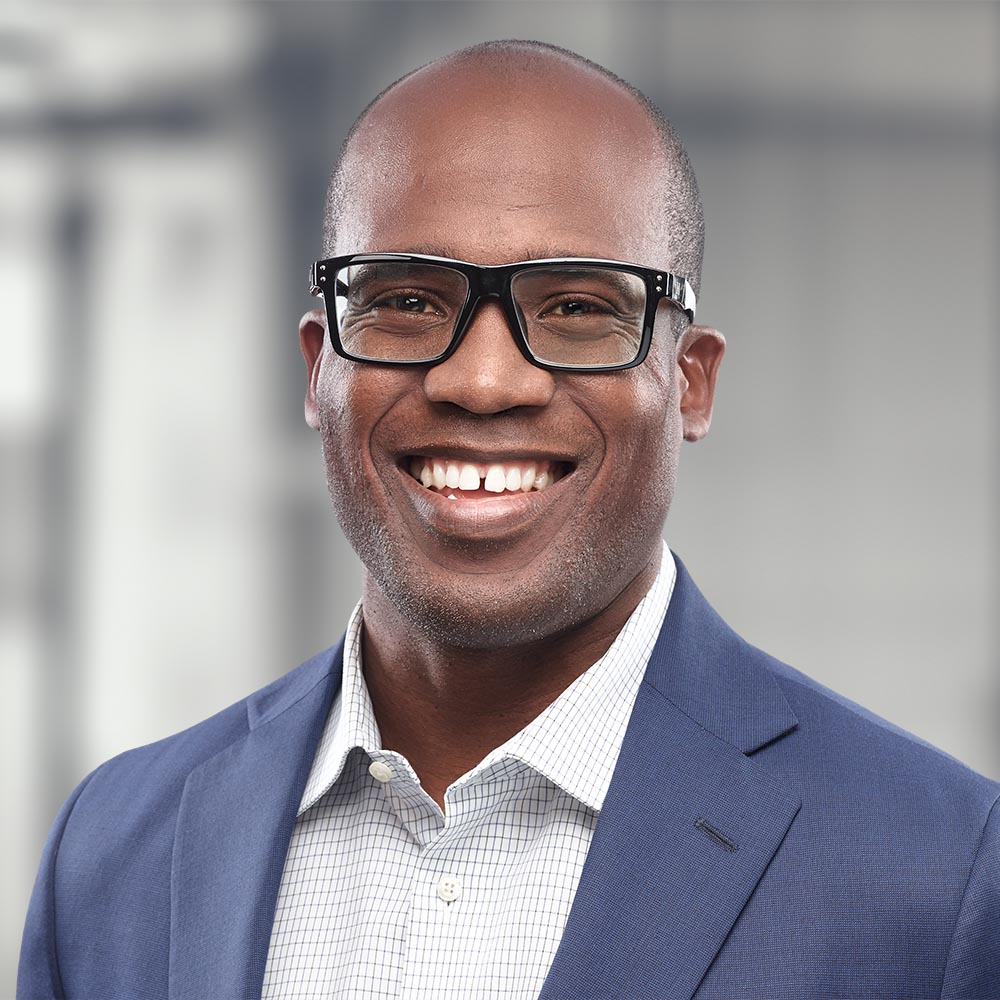 Konata T. Lake
Jamie Greenberg
Read about the deal terms shaping the Canadian startup ecosystem in our venture financing report.
Konata Lake: As an AI-driven data company, there are several security and privacy regulations that you must meet while navigating the lack of a Canadian AI framework. Can you speak to how that balance is met?
Jamie Greenberg: I think security, privacy, and AI are three highly intertwined elements. We ingest 20 times the amount of video that YouTube does each month. That's over 700 million hours of video, 600-plus petabytes of storage, nearly 400 integrations, 30,000 locations, and tens of thousands of servers. At that scale, security, privacy, and AI aren't separate concerns: they are embedded into everything.
Security is the cornerstone of our business. We are SOC 2 compliant and have security elements built into the platform, from building every feature with the concept of least privilege to encryption at rest and transit, and this dovetails well into our approach to privacy.
Our advantage, from a privacy standpoint, is that our customers own their data. That's the premise of our service. We only process the data that they specifically ask us to. We have someone in-house who manages our pretty robust data privacy practice. Of course, we are compliant with GDPR, which is one of the most well-known and strictest privacy laws. Our biggest market is the US, so we also look at regional US laws, whether it's CCPA or various laws in Nevada or Massachusetts, for example. In Canada, where we are based, we adhere to PIPEDA and will follow any data privacy law that will be enacted.
As AI products are developed, it’s my personal view that no AI governance is better than bad AI governance. The pace of change has accelerated massively over the past year. So, the likelihood that government can grasp that speed and regulate in a way that preserves the ability of Canada to be a leader in AI is slim. Thus far the government has refrained from this, and we commend them. Their AI initiatives have been quite helpful for smaller companies like ours.
Konata Lake: What are your thoughts on how AI is regulated? How can regulation better support innovation?
Jamie Greenberg: The issues that current AI laws are trying to regulate may not exist in a couple of weeks. This results in companies having to abide by a patchwork of regulations. We’ve seen that having disparate regulations, particularly in areas like privacy, can cause chaos.
Ultimately, I think regulations will move toward more principle-based governance versus heavy-handed regulation. The worst thing that the government in Canada can do is try to heavily regulate AI in a country that, currently, is not considered at the genesis of most new AI companies and technologies. We need to do everything we can to spur innovation in Canada and, unfortunately, it’s hard to imagine a scenario where government regulation would do so.
No AI governance is better than bad AI governance.
— Jamie Greenberg, Solink
In terms of supporting innovation in Canada, we have to encourage builders. Canada needs to be a place where entrepreneurs feel comfortable building AI companies. We can do that through light-touch, principled governance versus heavy-handed regulation.
Konata Lake: Solink recently expanded its headquarters to scale both its team numbers and logistical capabilities. What advice do you have for founders as they scale?
Jamie Greenberg: Scaling is hard, and there's always a lot of bumps along the way.I think it is most important to scale process before you scale people. The problems that you have with $1.5 million versus $10 million or $100 million of revenue don't go away—they only get bigger with scale. So, as you grow your company, the most important thing to do is to scale the process.
I've always worked in technology startups and the first thing I do when I come into a company is look at what needs to change to allow for scale, to unblock processes and to allow for velocity in contracting or in sales or any other function that legal touches. You can throw as many people as you want at a problem, the problem will still be there.
Of course, the second key is hiring amazing people, and in this world of AI, that is going to be more important than ever. The winners will be people who can scale themselves with AI.
It is most important to scale process before you scale people.
— Jamie Greenberg, Solink
Lastly, you should identify and really focus on the things that matter. My old boss, Allen Lau (the co-founder of Wattpad), had a really good decision-making framework that I've borrowed from. Allen would say, “You shouldn't dwell on decisions that are either inconsequential and/or reversible.” Basically, at a startup the only advantage you have is speed and you need to use that across the board and not dwell on decisions that either don’t matter or can be changed quickly. This also empowers your team to make decisions and promotes independence and leadership in the people under you, as they know they don’t need to escalate every single decision. Move quickly and don’t dwell for very long on things that you can change later.
Konata Lake: How do you see the wider intelligence industry being impacted by AI in the years to come? What use cases do you see the most value in?
Jamie Greenberg: At Solink, we have two types of AI products. One is a forensic product that we have had in market for about a year, which gives you actual data that you can use in your business. The other has an active security element where AI can monitor your cameras and action them. For example, it can be a security agent that actively monitors your loading door and calls the police if someone looks like they are breaking in. All of which can be done autonomously. Instead of having to comb through video, our agents can proactively identify theft and fraud and inefficiencies.
AI agents don't take breaks, and they don't misidentify things. They are always following the specific task you train them on. This offers a huge level of value to customers.
Konata Lake: What is your twenty-year forecast for the industry?
Jamie Greenberg: A twenty-year forecast is nearly impossible when news cycles seem to move on an hourly basis. I was reading about how during the 1980s everyone predicted that people wouldn't be needed anymore because software would replace them. That's been a theme throughout technological advancement eras. But in reality, the answer has always been that we need more people to guide this innovation. I think that's going to keep on being the case. I think that really good, smart, and creative people who think outside the box are going to be very important.
In the last six months, there's been more change than in the last five years. Technology has always moved quickly, but I think it will only accelerate more quickly moving forward—and companies moving quickly at scale will be at a distinct advantage.
Companies like Solink, that have a unique intermediation layer over these big general models, that are a system of record or have a real moat, will be successful. Folks that build companies without a differentiator, without some type of physical or technological barrier to these other models, will get swallowed up. That's the biggest challenge many companies will face.
As of right now, it is a great time to be building in Canada. And as far as Solink, we are going to continue building in Canada, hiring in Canada, and innovating in Canada.
Jamie Greenberg is the General Counsel and Corporate Secretary at Solink, a Goldman Sachs, OMERS Ventures, Valor Equity Partners and BDC backed business with an industry-changing video monitoring system, offering brick-and-mortar businesses a smart way to manage operations, security, and loss prevention. In addition to managing the legal team, he manages a team of corporate development and policy professionals who all work to advance the interests of the business with partners, investors and government.
To discuss these issues, please contact the author(s).
This publication is a general discussion of certain legal and related developments and should not be relied upon as legal advice. If you require legal advice, we would be pleased to discuss the issues in this publication with you, in the context of your particular circumstances.
For permission to republish this or any other publication, contact Bryn Turnbull.
© 2026 by Torys LLP. All rights reserved.
Subscribe and stay informed
Stay in the know. Get the latest commentary, updates and insights for business from Torys.
Stay in the know. Get the latest commentary, updates and insights for business from Torys.
Subscribe Now