Speakers
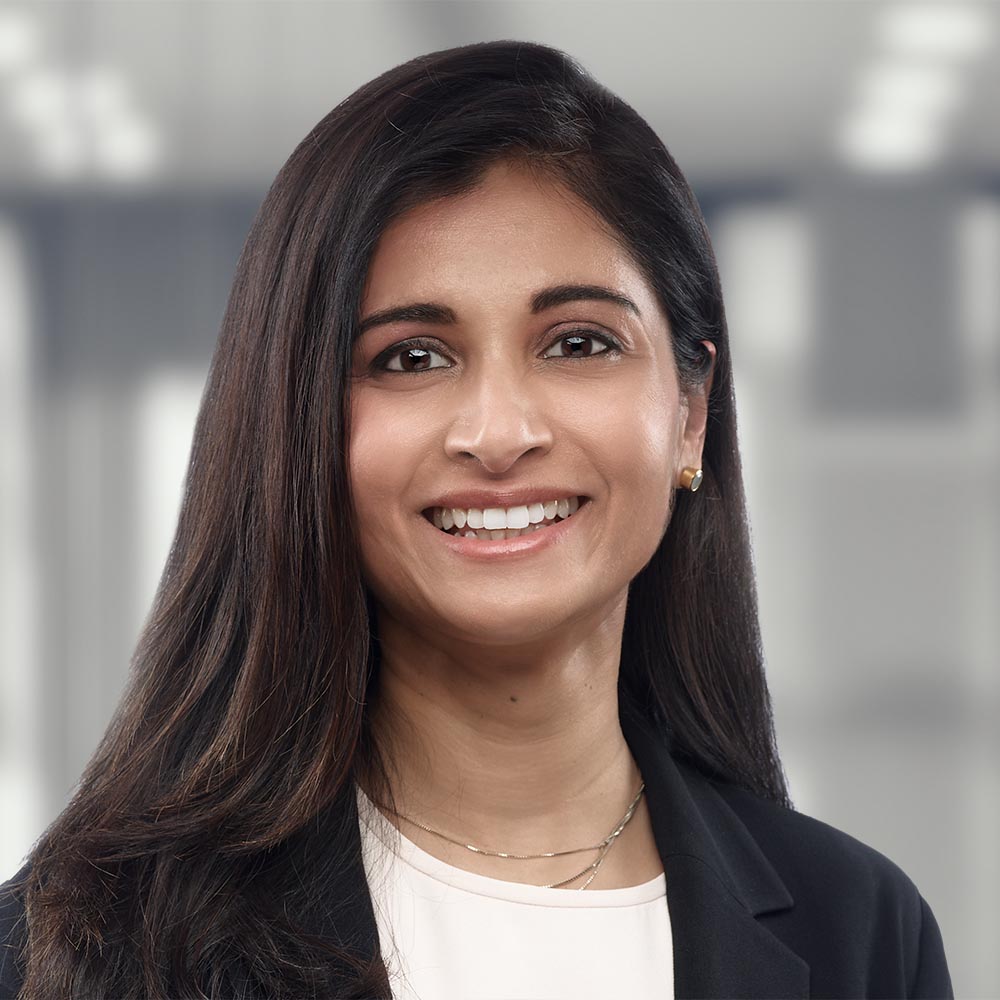 Zehra Sheerazi
Chloe Berry
In this podcast series, Torys partner Zehra Sheerazi sits down with leaders from across Canada’s corporate landscape to discuss their road to success, the insights they’ve gained from facing challenges and opportunities, and the lessons learned along the way. Visit our main In the Chair page for more content and new episodes.
In her final years of undergrad, Chloe Berry had a decision to make: stand on an Olympic podium, or have a hand in building the stadium?
Thankfully for the world of infrastructure, Chloe chose the latter path, embarking on a career in investment banking and corporate finance that has taken her across the globe in a succession of roles that has led to her current position as Managing Partner in Brookfield’s Infrastructure Group and Head of the Brookfield Infrastructure Income Strategy.
In this episode of In the Chair, Chloe Berry discusses her career trajectory with Zehra Sheerazi, sharing her views on corporate leadership, building a strong culture across global offices, and how she laid the groundwork for a new investment model by launching, growing and managing an infrastructure fund for private wealth worth nearly $6.5 billion.
Zehra Sheerazi (00:00)
Hello everyone, and welcome to In the Chair, a podcast spotlighting Canadian business leaders and the lessons and experiences that have made them who they are today.
I had the pleasure of sitting with Chloe Berry, Managing Partner in Brookfield’s Infrastructure Group and Head of the Brookfield Infrastructure Income Strategy. In this discussion, Chloe shared with us her remarkable career accomplishments from her early days in investment banking to now leading capital markets and treasury activities for Brookfield’s Infrastructure Group.
We explored how she approaches investment strategy in a rapidly evolving global market, the importance of long-term thinking and infrastructure, the impact of AI, and her role in managing the fund. This conversation was so engaging and interesting, and it's not one that you'll want to miss.
[Music]
Zehra Sheerazi (00:46)
I'm delighted today to be sitting down with one of my favorite people, Chloe Berry. Chloe is a Managing Partner in Brookfield’s Infrastructure Group and Head of Brookfield Infrastructure Income Strategy. For those of you who may not know, although I imagine most people have heard the name, Brookfield is one of the world's largest asset managers, with over a trillion in assets under management and $220 million of that—billion—is in infrastructure assets, which makes it one of the world's largest—if not the largest—owner and operator of infrastructure.
Chloe is responsible for their capital markets and treasury activities. She's also the portfolio manager and Head of Brookfield Infrastructure Income Fund. And we'll come back to that, because this is a fund that Chloe launched very successfully. And that fund provides individual investors and high-net-worth wealth investors with access to private infrastructure through this very unique platform.
A bit of a back story, Chloe and I met a few years ago, and we have connected more recently. And, for those of you who haven't met Chloe, the one word I would use to describe her is stable and constant. And I feel like no matter in what situation I meet Chloe, whether it's over lunch or whether she's got her kids around or we're talking about work, Chloe is always calm and collected, and it feels as though on the outside she always has everything together.
I'm not sure how she does it, given her extremely demanding career, two kids and her partner, who also has a very demanding job. But hopefully through this podcast, she'll share some of those insights with us and give us some advice along the way.
Chloe, thank you for sitting with us today. For our listeners, maybe to give them a sense of your journey and how you got here, it would be helpful to understand where you started and how you ended up at Brookfield.
Chloe Berry (02:36)
Thanks, Zehra. And I, I think you must be one of my favorite people as well [laughter] or I would not be in the chair opposite you talking about myself for the next—
Zehra Sheerazi (02:44)
[Laughter] I had to coax Chloe to come in.
Chloe Berry (02:46)
—thirty minutes. But here we are. So, love you too.
Look, thank you for having me. You know, it's been a pleasure to get to know you over the last few years as well. So, happy to appease.
So, just a bit of background on me. I guess my path wasn't quite straightforward. I didn't know what I wanted to do from you know, the age of five. So, I did science at university, where I went to McGill. And I was also a very competitive athlete when I was.
Zehra Sheerazi (03:10)
What was the sport?
Chloe Berry (03:11)
It was badminton, actually.
Zehra Sheerazi (03:13)
Oh, I don't think I knew that.
Chloe Berry (03:14)
Oh, yes, I was very competitive. So, I went to McGill because they had a national training centre in Montréal and trained there, and, effectively had to make the decision of whether I would play full-time or start working in fourth year when I, you know, reality hit on, “What are you going to do after university?”
Zehra Sheerazi (03:31)
Yeah.
Chloe Berry (03:31)
And so, I decided that I would—as a science kid, I would try on-campus recruitment for business jobs and see if that translated at all. And, kind of made, you know, a little deal with my parents that I would actually try to get a job [laughter] and—
Zehra Sheerazi (03:45)
And not be on their payroll anymore.
[Laughter].
Chloe Berry (03:47)
Yes, and not be on their payroll, which I would have needed had I done badminton full time. But if I got a job, then I would do that. And, and I was interviewing for sales and trading and investment banking jobs, and if I didn't, then I would do full-time badminton, you know, Olympics route kind of thing—
Zehra Sheerazi (04:02)
Wow.
Chloe Berry (04:03)
—And, and I got a job.
Zehra Sheerazi (04:04)
And, Chloe, was it obvious to you with a science background what a job in finance, sales and trading would be? Because as a finance person myself, with a business degree that didn't spend a lot of time in the finance sphere, I didn't know what that job would look like. And so—
Chloe Berry (04:22)
I think it's safe to say I had no idea what investment banking was.
[Laughter]
Zehra Sheerazi (04:26)
Yeah [laughter] “Which is why I took the job.”
[Laughter]
Chloe Berry (04:30)
I didn't know the hours and the intensity that it would have—look, I don't regret it at all. It was an amazing experience. And, and I think really provides an unbelievable opportunity to set a grounding for your career and that kind of, base-level communication skills, attention to detail, modeling, financial acumen, etc. But I had two older sisters who were five and eight years older than I am, and one of them went to Western and had a bunch of friends at the Ivey School of Business who had been into banking andsales and training, so I had some—
Zehra Sheerazi (04:57)
So, you knew you had some people around you.
Chloe Berry (05:00)
Yeah, they were amazing, setting up conversations with some of their friends. When I realized that I didn't really want to do science post-undergrad, I didn't really want to continue on in school or be a professor or kind of take that route. And so I needed to find options, and so over the summer, between third and fourth year, they set me up with lots of conversations. And I kind of thought, “Oh, well, my science brain, you know, it's not too far from a business brain.”
Zehra Sheerazi (05:22)
Yeah! Logical thinking and critical thinking and—
Chloe Berry (05:22)
Exactly. So, so went in, I'd say, with very little expectation. But, you know, was—that when the investment banks came onto campus to do on campus recruitment, I was, you know, that eager, keener.
Zehra Sheerazi (05:39)
Right up in the front, yeah.
Chloe Berry (05:40)
Yeah. Talking to them. And I always made through it, made sure I threw in badminton in my conversation with them so that when they saw my resume come across, they'd say, “Oh, the badminton—”
Zehra Sheerazi (05:48)
“That’s the badminton girl.”
Chloe Berry (05:51)
“—the badminton girl. Like, she could actually have a conversation. Like maybe we, you know, maybe we should bring her in.” And so, I really worked hard at those —
Zehra Sheerazi (05:55)
And it worked!
Chloe Berry (05:56)
It did.
Zehra Sheerazi (05:57)
So, you ended up in investment banking and you did that for a couple of years?
Chloe Berry (06:02)
I did. I did that for four years. Started in Toronto and then moved to London, with, with Credit Suisse, migrated from Credit Suisse to two large multinational companies in London, one in the mining centre—one in the mining sector, and one in pharmaceuticals, in M&A, and then moved over to corporate finance: capital markets and corporate finance.
And then, after ten years—well, nine years—in London my husband, who's American, said, “You know, we, we can look at moving back,” or we agreed we could look at moving back. And, and that's when I joined Brookfield to move back home to Toronto.
Zehra Sheerazi (06:40)
Oh, amazing. And you joined Brookfield Infrastructure?
Chloe Berry (06:43)
Correct. I joined Brookfield Infrastructure about nine years ago and have been in the infrastructure platform since.
Zehra Sheerazi (06:49)
Got it. For the benefit of everybody listening. We said you do capital markets and treasury. What does that actually mean? What do you have to do? What do you do day to day?
Chloe Berry (07:02)
Way to distill it down [laughter]. So, I kind of wear two hats at, at Brookfield now. One of them is Capital Markets and Treasury, which I've been in and around for my tenure at, at Brookfield. And really, what that entails is I'd say we look at three levels of the organization. So, I work, as I said, within the Brookfield Infrastructure platform. We have a publicly-listed infrastructure company called BIP (hopefully there's some investors listening). Great company.
[Laughter]
And so, for BIP, I look at—or my team and I look at—capital markets issuances. So, if we're issuing debt, preferreds, hybrids, equity—we look at bank facilities, so our RCF and our banking relationships more broadly—FX and interest rate risk management, all of the public company.
We also—Brookfield raises private funds, private infrastructure funds, so we look at that level as well. That's our second level where we look primarily there at liquidity bank facilities and FX and interest rate risk management.
The third layer of the organization is the portfolio company. So, we are in the business of buying companies, improving them and selling them again. And so, we work with our portfolio of infrastructure companies on their capital structure, so how much leverage to put on the business—we employ very conservative leverage strategy—but how much leverage put on the business, what debt products to use, what banks to use to access the market, when to access the market. And so, we, we work with our—call it the “C suites” at our portfolio companies on their financing and capital structure and risk management, really.
Zehra Sheerazi (08:26)
How many portfolio companies are part of the fund? Approximately?
Chloe Berry (08:31)
So, within the Brookfield Infrastructure Platform today, we probably have, you know, over 50.
Zehra Sheerazi (08:36)
It's a lot of teams to be managing, right?
Chloe Berry (08:39)
It is, but it varies. So certain management teams are smaller. It's maybe a smaller company with less kind of capital markets and treasury expertise. And so, we will play a much more hands-on role. Others, you know, we may have taken a multibillion-dollar company private that was public and so has a fully-fledged treasury and corporate finance and capital markets team who can do what they do and we really act as a sounding board to them. Ultimately, we're responsible for the financings, but the level of day-to-day interaction and handholding we have to do is very different across our portfolio companies and regions.
And we have people, you know, in Australia, in Brazil, India, and Europe that help us kind of manage that in those local jurisdictions as, as you can imagine, financings change given market dynamics and, and, kind of, local customs.
Zehra Sheerazi (09:24)
And so that—maybe to clarify, you do have portfolio companies across the globe?
Chloe Berry (09:29)
Correct. Brookfield’s in 30 different countries, Infrastructure’s in most of them. So primarily North America, certain countries in South America, Western Europe and India, Australia, New Zealand and, and certain Asian countries. So, Korea, Japan, that would be the big ones.
Zehra Sheerazi (09:47)
And so that means you travel quite a bit.
Chloe Berry (09:49)
I do, but I actually tend to travel more for my other role than I do for that one.
Zehra Sheerazi (09:53)
Oh, interesting. Okay. So, so tell us about the other role then.
Chloe Berry (09:56)
So, in my other role you mentioned at the start in—you're very flattering, thank you [laughter]—my introduction. So, I head up a fund called the Brookfield Infrastructure Income Fund. And this is a fund that provides individuals or the private wealth network—so think private banks, wire houses—with access to our Brookfield Infrastructure Platform.
And so, it's the first time we're really offering in infrastructure (and we were one of the first funds to market) to offer access to—really the individual access to—private infrastructure. And so about almost four years ago now, I was asked to structure and bring this product to market. And so, we spent a year doing that. And then, we've been in market since raising, raising capital and—
Zehra Sheerazi (10:42)
And how big is the fund, Chloe?
Chloe Berry (10:44)
The strategy now, we have a—kind of two ways to access it, through international and then through the U.S. But we're about six and a half billion—
Zehra Sheerazi (10:54)
Wow.
Chloe Berry (10:56)
—dollars.
Zehra Sheerazi (10:55)
In four years.
Chloe Berry (10:57)
Three years.
Zehra Sheerazi (10:58)
Three years. That's really impressive.
Chloe Berry (10:59)
It's amazing.
Zehra Sheerazi (11:00)
Well done.
Chloe Berry (11:00)
It's been really fun.
Zehra Sheerazi (11:00)
Yeah. And it's giving access to a group to an asset class that didn't have it before.
Chloe Berry (11:07)
Correct.
Zehra Sheerazi (11:07)
So it's changing the market pretty significantly and setting standards for other players. Like, has anyone else done something similar?
Chloe Berry (11:14)
Yeah, so we—so it's an asset class that institutions have been invested in for a long time and, and has been really a cornerstone of, you know, your, your pension plans and insurance company and sovereign wealth funds allocations for a while. And so—
Zehra Sheerazi (11:30)
Because the cheque sizes are so big.
Chloe Berry (11:31)
The cheque sizes are so big, the asset class is a fantastic asset class, which we can go through if of interest. But, but really, it, we partnered and we're speaking with you know, big private banks around the world, and, and our infrastructure platform is unparalleled. We have, you know, the best infrastructure platform in the world. And so, they said, you know, “We want our clients to have access to private infrastructure and all the benefits that that come with it. And we think you guys should, should do this. And if anyone can do it, you guys can.” And so, it took us a few years to wrap our heads around doing this. As you can imagine, it's a highly regulated product, to provide individuals with access to private assets, alternatives. And then once we did, you know, took us a while to structure this fund and bring it to market, we were the first official one, really, to launch.
Zehra Sheerazi (12:22)
Yeah.
Chloe Berry (12:23)
Now it feels like there's a new infrastructure fund for private wealth coming out every other week. But obviously they all pale in comparison to us.
[Laughter]
Zehra Sheerazi (12:31)
Look at Brookfield! Is your team spread across the globe, then?
Chloe Berry (12:35)
Brookfield is a very flat organization. And so, we have people, I guess, helping and working with us in different capacities.
Zehra Sheerazi (12:47)
Okay.
Chloe Berry (12:48)
So, if we take the capital markets role and the team there, I said we have people in, you know, Brazil, Australia, Europe, India. Some of the teams there will have local capital markets teams in Brazil and in Australia that actually work for all of Brookfield, so they'll work for the infrastructure platform, renewables, private equity, real estate—
Zehra Sheerazi (13:06)
Got it. Okay.
Chloe Berry (13:06)
Because they are really local markets, capital market experts.
Zehra Sheerazi (13:10)
Experts. Yeah.
Chloe Berry (13:11)
And so, there are people that might be, do more infrastructure, some that do more real estate, etc., but they don't necessarily report directly into us but have kind of dotted lines and help us when we need that with local markets.
And then in India and Europe, it's more infrastructure people sitting in those seats, that, that work with us on the financings in those regions. And then similar on BII or Brookfield Infrastructure Income (which we call “BII”) we have teams in—all over the world that are contributing to the fund, the biggest being our, our sales network, obviously, to go out and sell to individuals in $2,500 tickets, it takes a lot of, a, a lot of calls.
Zehra Sheerazi (13:47)
Yes. And so, how do you—do you have an approach or, I—I know you're very thoughtful and, and sometimes—you and I chatted about this before, Chloe said, “I just, I just do it, like, that's just how I am.” So, part of it feels like it's so natural to you and that's just who you are. But if you had to reflect on it and think about it, what do you think you do to, sort of, create these teams across the globe that need to be high functioning and reactive and sophisticated experts in their local jurisdictions but also see the same vision and strategy that you are thinking about sitting here in Toronto. How do you build teams like that and how do you keep them motivated?
Chloe Berry (14:26)
It's a really good question. We have within Brookfield a very strong culture, and that's really important to us. The main point really being is that we all—I'm really bad at saying this, but we all grow in the same direction. I think I got that right?
Zehra Sheerazi (14:38)
Yeah, a great one [laughter]. Good rowing analogy.
Chloe Berry (14:41)
So, never rowed. But I tried it. And so, we really look for people that, you know, don't have or don't view their jobs in a box. Don't, you know, quote the job description and what they will or will not do. We really look for people—and I do in my team—that are driven just to make Brookfield a better place.
And, and that's a really incredible group of people to work with and to have. It means, you know, there's no egos, there's no self-promotion. Everything is about, how can we, you know, make Brookfield a better place? How can we make those around us better at their jobs?
You know, part of the reason why this is so uncomfortable, me talking about me, is because it's, it's, it's not in our nature—
Zehra Sheerazi (15:24)
It’s not about you at Brookfield.
Chloe Berry (15:25)
Exactly.
Zehra Sheerazi (15:26)
Right? Like you—it's about the institution and, and growing together.
Chloe Berry (15:28)
Exactly. And, and I think it's, it's such a unique environment where everyone is just trying to make everybody better at what they do. And it's really hard to believe, I think from the outside, that an organization can exist that way. We've been fortunate. I think that, you know, we've been growing and so there's always room for everyone. Your roles can expand, you can take on more.
You know, I look at BII, as I said, a six-and-a-half-billion-dollar fund strategy with a team and everything in place that didn't exist four years ago.
Zehra Sheerazi (15:56)
Four years, yeah.
Chloe Berry (15:57)
Right? And so, there's always stuff like that we're doing. We're innovating, we're giving people new opportunities. We work hard to do it, and we, you know, we put in hours and we put in, you know, brain damage to get things right and, and to be and do the best we can, but with it comes an incredible amount of autonomy, responsibility. And if you look for those people that are willing to really be part of the team and do what's needed and flex up to, you know, a managing partner level and down to an analyst level—
Zehra Sheerazi (16:24)
Yeah, willing to roll up their sleeves.
Chloe Berry (16:26)
—in the same day because that's just what's needed. And if that's what's needed, that's what you do. It really creates an unbelievable environment.
Zehra Sheerazi (16:32)
And, and that's why people stay for so long. I always find it amazing when I talk to people at Brookfield how many of them have pivoted within the organization to different roles and have tried new things. And I guess that's part of their, sort of, what they bring to, to an organization is when you are able to sit in different roles and have different hats and different lenses with which you are able to view things.
Chloe Berry (16:52)
Yeah, you know, we, I had a conversation with someone in my team—actually the most junior person in my team today, actually this morning, just about how, you know, I'm going to move the responsibilities in our, in my capital markets team around within the group—kind of the, the more standard activities around within the group so that we have, we build in redundancy. People know how to do different things in the team so that when one person says, “I'm ready for that next challenge,” we can easily let them go.
Zehra Sheerazi (17:17)
When they’re actually ready.
Chloe Berry (17:17)
I don't have to say, “I can't let you go because I need you here.” I never want to be in that position. And I think we are very good at Brookfield with ensuring that we create that space.
And so, I was talking to, again, the most junior person on the team, but saying like, “Look, I'm moving around the more senior people's roles in the team to create space so that one of them can move on and you can step up into their role. And, you know, that's what we're seeing for you.” So, you know—
Zehra Sheerazi (17:40)
Yeah. Proactively giving people opportunities to grow.
Chloe Berry (17:43)
Exactly. And, and we're always you know, I, every review I have—mid-year review, annual review, catch-ups with my team—I'm always saying, you know, “Let me know when you're ready. Don't let me know the day you're ready because some of these take some time.”
Zehra Sheerazi (17:57)
Yeah.
Chloe Berry (17:57)
“But you know, if you're going to be ready in a year, 18 months, two years, you want a new challenge, you want to try something new, that's okay. Just let us know and we'll start putting feelers out. We'll start making sure that we create that space so that you can move on.” And, you know, it's, it's really fantastic to work at an organization like that. I mean, at one point in the middle of my nine-year tenure at, at Brookfield, I was asked to go and cover a maternity leave to head up our fund administration, or our fund operations team, which is really a group—at the time who is 40 accountants.
And I'm not an accountant.
[Laughter]
Zehra Sheerazi (18:30)
Yeah. And, and you, and you did it!
Chloe Berry (18:32)
And, and I did it, and I did it for 18 months. Then they asked me to come back to capital markets. So maybe I wasn't the greatest at it, but—
[Laughter]
Zehra Sheerazi (18:38)
But they could pluck you and move you.
Chloe Berry (18:41)
Exactly.
Zehra Sheerazi (18:42)
And it didn't cause too much disruption because of the mentality that people have there. But it’s positive.
Chloe Berry (18:47)
Yeah. And, and looking at it, I would not have seen it. I was actually very thankful at the time because I got exposure to that in a fixed period. I could not do reporting every quarter for the rest of my life. I'm very thankful for those who can.
Zehra Sheerazi (18:58)
Yes. But you have an appreciation for that job and what it entails.
Chloe Berry (19:02)
Definitely. And I got exposure to it, and it actually helped me when we were launching BII, or the Brookfield Infrastructure Income Fund. It helped me immensely because I understood how to structure a fund and how it worked and how you report and how you, I mean, we don't call capital in BII, but how you call capital and how you report results and everything was, was invaluable to my experience on it.
So, it all builds, right? Different experiences.
Zehra Sheerazi (19:24)
So, when we talk about infrastructure and I think about infrastructure, our traditional and typical view of infrastructure is, sort of, hard assets. Right? So, railroads and bridges and toll roads. But more recently, and with the introduction of AI, infrastructure looks a little bit different. So, we still have those traditional categories, but we also have, you know, data centres are hot.
So, talk to us a little bit about how Brookfield Infrastructure and you are thinking about infrastructure in this new technologically-advanced world we are living in and, and what that means on a going-forward basis. And is it changing the way you are thinking about investing?
Chloe Berry (20:03)
Just to start—or is it helpful if I just go like, “What is infrastructure?”
Zehra Sheerazi (20:08)
Yes. Please.
Chloe Berry (20:08)
We view it—just so that the audience because often I find especially, you know, as I talk to individuals who are investing now, they kind of say, well, exactly like you said, “What, bridges and tunnels? Is that what we're talking about here?”
So just to give people a sense of what we're really, talk about when we talk about infrastructure and you're very right, it’s data centres, AI infrastructure, it's all very topical right now. So, we could talk about that for three hours. But I'll touch just quickly on what is infrastructure first.
So, infrastructure in its most basic sense, you can think about it as networks and systems that transport stuff. So that stuff could be goods, could be commodities, people, data—so, very relevant, data—and, and effectively as the owner and operator of the network or system, for the most part, we just get paid a tolling fee for our customers to transport their stuff on our network.
So, we don't own that stuff. We just maintain the network where our customers can transport it. And so, what that really parlays into, if you think about kind of sectors, you do have your traditional transportation—so, bridges and tunnels—for us it's really more ports. We have some—we do some toll roads, rail, airports as well, we don't own any, but airports would be, would be transportation. It's also utilities. So that's another when people kind of think about when they think about infrastructure. So could be electricity or gas transmission and distribution, things like that. Midstream: so, pipelines is a big one. Gas, storage. And then more modern-day infrastructure being the data infrastructure sector. Now, “modern day,” I mean, telecom towers has been a known infrastructure, kind of, subsector for, you know, 20 years already, but it really spans telecom towers, fibre networks and data centres.
And so that's really the universe of what we're talking about. We also include renewable power in that as well, so for instance, my fund, Brookfield Infrastructure Income, does both, all four of the kind of utilities: transportation, data, midstream, and renewable power and transition investments. In Brookfield we have a pure-play renewable company. So, it sits a little bit alongside the infrastructure group. But we would consider that one in the same as well.
So, coming back now that we know what is infrastructure, on the AI side, AI build out is, is immense. Everyone's talking about it. The amount of capital that's required to build out AI is really remarkable. But most people, they think on the face of it, from an infrastructure perspective, it's data centres.
Zehra Sheerazi (22:46)
Yeah.
Chloe Berry (22:46)
And it is. It is data centres. We have a huge data centre platform. We have multiple companies. There's an incredible amount of capital that's required there, but it is so much more than just data centres as well.
Zehra Sheerazi (22:56)
So talk just about that, because you hear about data centres a lot, but you don't hear about the other supports in place to probably facilitate some of that.
Chloe Berry (23:04)
Yeah. So, I think the other one that people are starting to talk about, especially if you're in the industry, is power.
Zehra Sheerazi (23:13)
Yep.
Chloe Berry (23:13)
Right? The data centres—
Zehra Sheerazi (23:15)
Take up a lot of power.
Chloe Berry (23:17)
The inferential learning. Yeah, they take a lot of power. And so, it's, “Where is this power going to come from?”
Zehra Sheerazi (23:20)
My husband reminds me every time I use ChatGPT. He’s like, do you know how much power—
Chloe Berry (23:24)
How much—ten times more power than a typical Google search?
Zehra Sheerazi (23:26)
—it takes to generate one response to a ChatGPT question.
Chloe Berry (23:32)
That’s right. But it's so much fun.
Zehra Sheerazi (23:34)
It is so great. I, I actually don't know what we did before.
Chloe Berry (23:35)
You know what, I can't stop, when I'm writing ChatGPT and it asks me if I want a follow-on, I can't stop saying please and thank you.
Zehra Sheerazi (23:42)
Yeah, I know. You have to be polite because you think you're talking to a real person.
Chloe Berry (23:48)
I know, me too [laughter].
Zehra Sheerazi (23:48)
They also make me feel smart. “That was a great question you asked.” “Yes, thank you.” Validation.
Chloe Berry (23:52)
I’m like, “Yes, please follow up with that.” Chloe, why are you writing “please”?
[Laughter]
Zehra Sheerazi (23:56)
Okay, we digress.
Chloe Berry (23:57)
So, so, yes. So it's the power, gas, renewables, nuclear. We need more power. And there's lots of things driving more power, but including AI, is the big one.
Zehra Sheerazi (24:08)
Yes.
Chloe Berry (24:08)
Big driver. But then it's also midstream and transmission assets. So, you know, if it's gas-fired power, how do you get the gas there? You get it through pipelines.
If it's electricity coming from renewable power generation, how do you get that renewable power from its source to the grid and from the grid to the data centre? That's electricity transmission. So, pipelines, electricity transmission, that's infrastructure. The data centre’s infrastructure. As I said, renewable power build-outs, infrastructure, we do nuclear servicing. That's infrastructure. And so, it's just a huge amount on that side as well.
And then you think about it, I mentioned towers and fibre.
Zehra Sheerazi (24:43)
Yeah.
Chloe Berry (24:43)
Right? You need to get the data to the end customer. Right? Our cell phones are pinged by tower signals. We need the 5G build-out. We need to get to rural areas. They need to be underpinned by fibre connections to our homes. And so that is all infrastructure.
And so, there's just a huge amount of spending across the whole, kind of, supply chain of AI. And that's even just getting it to the shell of the data centre. Right?
Zehra Sheerazi (25:10)
Then it’s the processing it, yeah.
Chloe Berry (25:11)
And then, the next stage is going to be what's inside it. Right? And, and does that, or is that and can that have the characteristics of infrastructure, you know, long term contracts that pay you back your capital you spend to build it, plus a return of capital with investment-grade counterparties, inflation linkage, can you get all the things you want from an infrastructure investment inside the four walls of a data centre?
Zehra Sheerazi (25:31)
Yeah, so a lot of things to be thinking about.
Chloe Berry (25:33)
It is.
Zehra Sheerazi (25:34)
Yeah. And so, given how quickly things are changing and the fact that you have a global platform, are there sources of news or information that you take in consistently that you would recommend to anybody who's interested in the infrastructure space or investing?
Chloe Berry (25:53)
Definitely. I mean, I live and breathe it every day, so—
[Laughter]
Zehra Sheerazi (25:56)
Part of it is just osmosis, like it’s… yeah.
Chloe Berry (25:57)
For me it’s filtering the information, exactly.
Zehra Sheerazi (26:00)
And if you're not listening to infrastructure, like, what else do you… tell us what you listen to, to, to get your—
Chloe Berry (26:04)
So first I would say part of my daily routine is walking to work. So, I live about five kilometers or three miles away.
Zehra Sheerazi (26:13)
It’s probably faster than taking the subway.
Chloe Berry (26:15)
It's a little slower, I'd say. My commute on the subway—I don't drive in, so my commute in the, on the subway is kind of, call it 30, 35 minutes. And my walk is 50, 55 minutes.
Zehra Sheerazi (26:25)
Oh, amazing.
Chloe Berry (26:26)
I used to run, but as I get old now, it hurts my neck, so I walk.
Zehra Sheerazi (26:29)
You have to carry stuff with you and—
Chloe Berry (26:30)
Yeah, it was okay. I manage the logistics, but the injuries and their painfulness now has stopped me running. But I walk, so I'll walk in, and I have a rule where my commute to work, I have to listen to news and things that are going to better my brain and mind.
Zehra Sheerazi (26:50)
Yeah.
Chloe Berry (26:51)
And then on my way home, I'm allowed to listen to whatever I want [laughter].
Zehra Sheerazi (26:52)
Also, let's get into like, what is the “whatever you want” when you can choose and you don't put boundaries around it?
Chloe Berry (26:58)
In terms of infrastructure, kind of, information and where to kind of get smarter on it, Brookfield actually has a podcast. It's called Brookfield Perspectives.
Zehra Sheerazi (27:09)
Okay.
Chloe Berry (27:10)
They didn't tell me to say that. That's what I actually listen to, when I see it coming out.
Zehra Sheerazi (27:14)
That’s great.
Chloe Berry (27:14)
And quite a few of our episodes recently have been on AI infrastructure and infrastructure more broadly. And so that's a really good place to go, they’re, kind of, 20 minutes, easy listening.
Zehra Sheerazi (27:23)
Easy to consume, yeah.
Chloe Berry (27:23)
On the commute. If you're at an airport, kids’ activities, put in the headphones.
The other one that has, you know, kind of 20 or 30 minutes on specific topics is Infrastructure Investor. Both of those you can look up on, I don’t know, wherever you get your podcasts.
My personal side, again, I have to listen to news. So, if it's not infrastructure on the way in, I have a slate of news podcasts that I’ll filter through, and sometimes I just see the one-liner heading on what they're looking at, but I really like Morning Daily Brew is what it's called, and it's kind of a light-hearted—it’s two guys. They do a podcast just on topical stuff. It's kind of 20 minutes, 25 minutes.
Zehra Sheerazi (28:02)
Also quick to consume.
Chloe Berry (28:03)
Yeah, it's just a bit more lighthearted, I'd say, but still hits all the headlines. I listen to the C—the CBC as well. It’s a ten minutes Canadian news, so I—
Zehra Sheerazi (28:11)
Okay. Yeah.
Chloe Berry (28:09)
—get that one always in and then I'll cycle through, whether it's Morning Daily Brew or The Economist, Wall Street Journal, one or two, or sometimes three—
Zehra Sheerazi (28:19)
Yeah.
Chloe Berry (28:19)
—depending on how long they are of those kind of news things to try to hit, you know, the headlines on my way in.
Zehra Sheerazi (28:24)
Yeah. That's awesome.
We talked about how, how much you have on your plate. You're managing almost like four different streams. You're, you're traveling, you've got two young kids, you've got a partner who's very busy. I said this at the beginning, but on the outside, it looks like you figured it out. Like you have it together.
Chloe Berry (28:40)
You fake it till you make it?! [Laughter]
Zehra Sheerazi (28:41)
Your voice, your voice doesn't really go up and down. It feels very level. But I'm confident it's not like that all the time. And it may not be like that behind the scenes. So, are there things you do to stay resilient through the busyness of your career and life, and do you have any advice on people who may be challenging, sorry, have challenging careers and lives on how to find moments to pause and reflect and focus on themselves?
Chloe Berry (29:09)
It's a good question. I think for me, my walk to work in the morning is a big one. It's as I said, it's about 50 minutes, 55 minutes. That's where I carve out the “me time”—
Zehra Sheerazi (29:22)
Time for yourself.
Chloe Berry (29:22)
Now, look, half those days I'm on calls on the way in, right? I can't, I can't take a call on my walk in where I need to be at my desk, quiet, but if I'm taking, you know, a call on a financing in India with the team or something like that, or I have to call in to, you know, a results call or something where I'm just listening in, I'll do that. So about half of my mornings I am taking a call or two on the walk in, but it's getting my legs moving. The fresh air is really important for me, but I've just figured out that's what I need. If I don't move my legs and get some fresh air, I start getting, you know, antsy.
Zehra Sheerazi (29:55)
Yeah.
Chloe Berry (29:56)
I'd say, and that's me. The other thing is, is that what I've realized over time for me, is it's not everyone is the same. You need to find your groove and what works for you in different ways. For me, I realized very early that, you know, getting home for bedtime if I can only make 20 minutes is not worth it.
Zehra Sheerazi (30:14)
Yeah.
Chloe Berry (30:14)
I find it very hard for me to switch from work to home for that short, short period of time. If I still have work in my mind, I'm just short—
Zehra Sheerazi (30:26)
Disconnected.
Chloe Berry (30:26)
Exactly. And then, you know, for me, I want to go home. I want a hug for my kids. I want to say, “I love you, how was your day?” And they say, “Oh, Mommy, we love you too. How was your day?” And then I say, “Great, now you can go to bed because Mommy has to log back on.”
Zehra Sheerazi (30:38)
Yeah. And that’s right, and that’s you.
Chloe Berry (30:40)
That's really hard for me. Some people can do it much better and they, they really strive to leave for bedtime. For me. I would much rather, if I need to put in a few nights of longer hours and then a few nights where I can get home a bit earlier and spend more time where I have that time to switch.
Zehra Sheerazi (30:52)
Yep.
Chloe Berry (30:52)
Yep. And weekends I'm very present, so I would much rather work longer at night on, you know, Thursday night, Wednesday night. Maybe I missed the bedtime, but I'm there on the weekend. I catch up. So, you know, I, people have said I have lots of energy and they don't know how I could do it during the day and then go but that's just me, right? I don't I don't need naps on the weekends. I don't need things like that. Like I am present. I'm taking my kids to whatever their activities are. If it's not an activity, we're going to do stuff. And that's where I carve it out. Whereas other people, maybe they don't work long hours, but—
Zehra Sheerazi (31:23)
They have to put in time on the weekends or—
Chloe Berry (31:25)
Yeah, they need their downtime or away time. I'm, I'm okay going. But that's, that's me.
Zehra Sheerazi (31:28)
Yeah. So, figuring out who you are, maybe what's important to you in order to, to function in high-stress, demanding environments and then implement it.
Chloe Berry (31:39)
Yeah. And what matters, you know, people ask you “What do you do outside of work?” [Laughter] and I'm like, “I walk to work.” But you know, my priorities right now, I got young kids and a, a job. So, it's work, it's family, and it's getting my legs moving—
Zehra Sheerazi (31:51)
Life changes, right? In ten years, you'll be in a different place and you'll reassess how you spend that time.
So, I have, you know, a million more questions for Chloe. But I also appreciate that we're, we're getting close to time. And so maybe I'll ask you one more thing before we wrap up, Chloe. When you think ahead the next 5 or 10 years, what are you most excited about? Professionally, personally, what's ahead for Chloe Berry?
Chloe Berry (32:16)
So, I would be remiss if I didn't cover, you know, the personal aspect, which is obviously my kids. I got a ten-year-old and a six-year-old at home. It's wild to hear, you know, to think that in ten years, my son could be graduating from university. Hopefully he goes [laughter].
Zehra Sheerazi (32:35)
He’ll figure it out! [Laughter]
Chloe Berry (32:35)
I think in five years we'll be figuring out if he's going to go and my daughter will be, you know, I don't know, what’s that her junior, senior in high school. Right? And just the people that they become. And so that's definitely exciting. I love watching them watching them grow.
And I think infrastructure, you know, and work-side you know I'm just open to interesting challenges. So, I don't have a view of where my job is going. I just look for, you know, what's interesting, what’s challenging, where am I going to learn, and so it's more, I think, for me and, and I'd say more the sector, and as—we talked about kind of the I, you know, the data centres, the transmission, the power, etc., but we haven't, you know, touch the surface on kind of what's inside the data centre. That could be the next foray but who knows? As I said, you know, data infrastructure wasn't a sector really 20 years ago.
Zehra Sheerazi (33:16)
Yeah. And so, 10 years—
Chloe Berry (33:17)
Could be, the world could be a different place—
Zehra Sheerazi (33:20)
We’ll come back and do this podcast.
Chloe Berry (33:20)
We should go ask ChatGPT. “Please, ChatGPT, tell me where it’s going to go.”
Zehra Sheerazi (33:24)
Where are the jobs in 10 years?
So, we thank you so much. I know you're busy. Chloe's traveling. So, to carve a time to come and sit and chat with us and let our listeners benefit from your wisdom, is very kind of you. Thank you.
Chloe Berry (33:39)
Thank you for having me.
Zehra Sheerazi (33:40)
Appreciate it. Always good to see you.
To discuss these issues, please contact the author(s).
This publication is a general discussion of certain legal and related developments and should not be relied upon as legal advice. If you require legal advice, we would be pleased to discuss the issues in this publication with you, in the context of your particular circumstances.
For permission to republish this or any other publication, contact Bryn Turnbull.
© 2026 by Torys LLP. All rights reserved.
Subscribe and stay informed
Stay in the know. Get the latest commentary, updates and insights for business from Torys.
Stay in the know. Get the latest commentary, updates and insights for business from Torys.
Subscribe Now